


Air Spring vs Shock Absorber: Different Jobs in One Corner
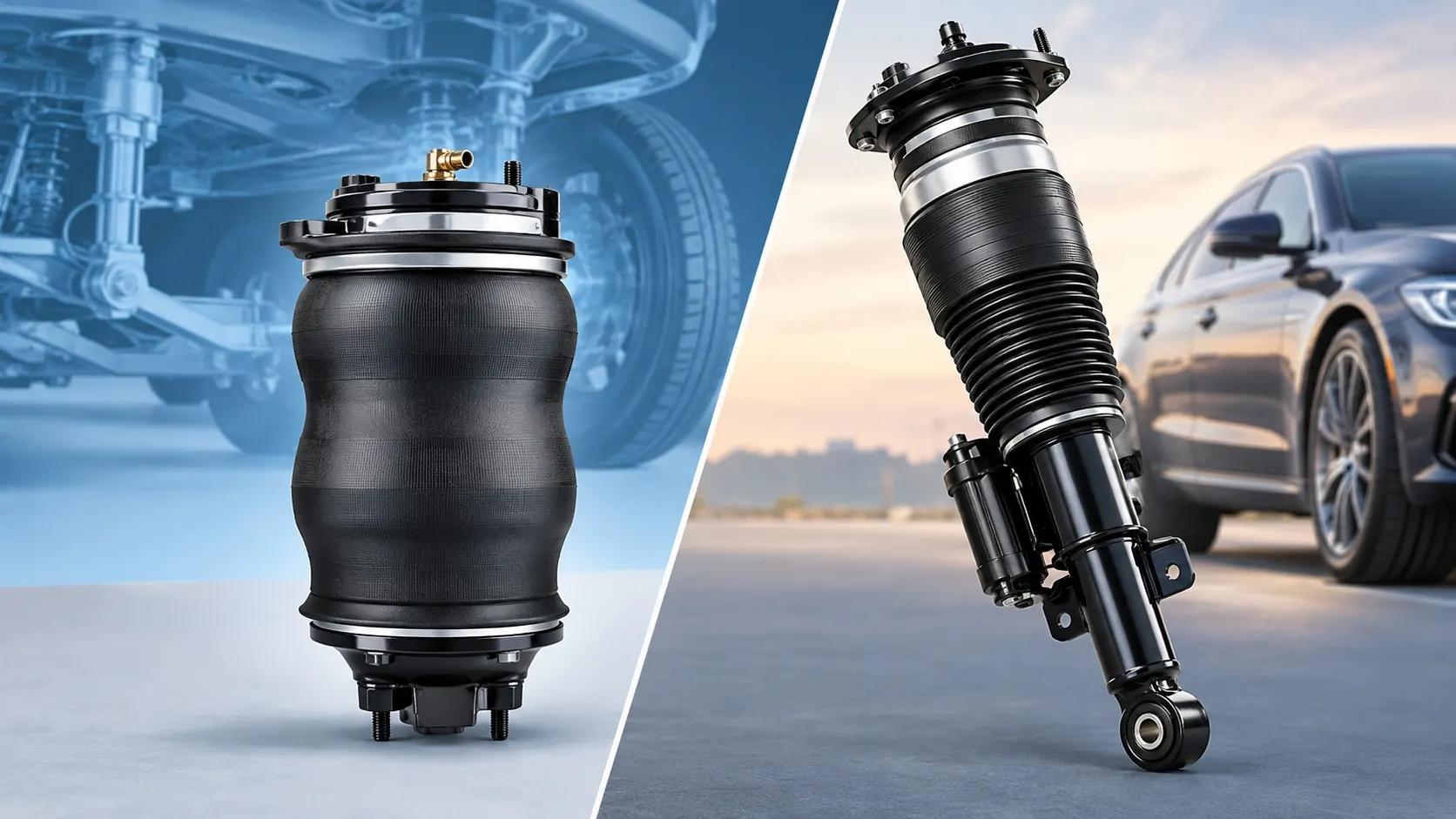

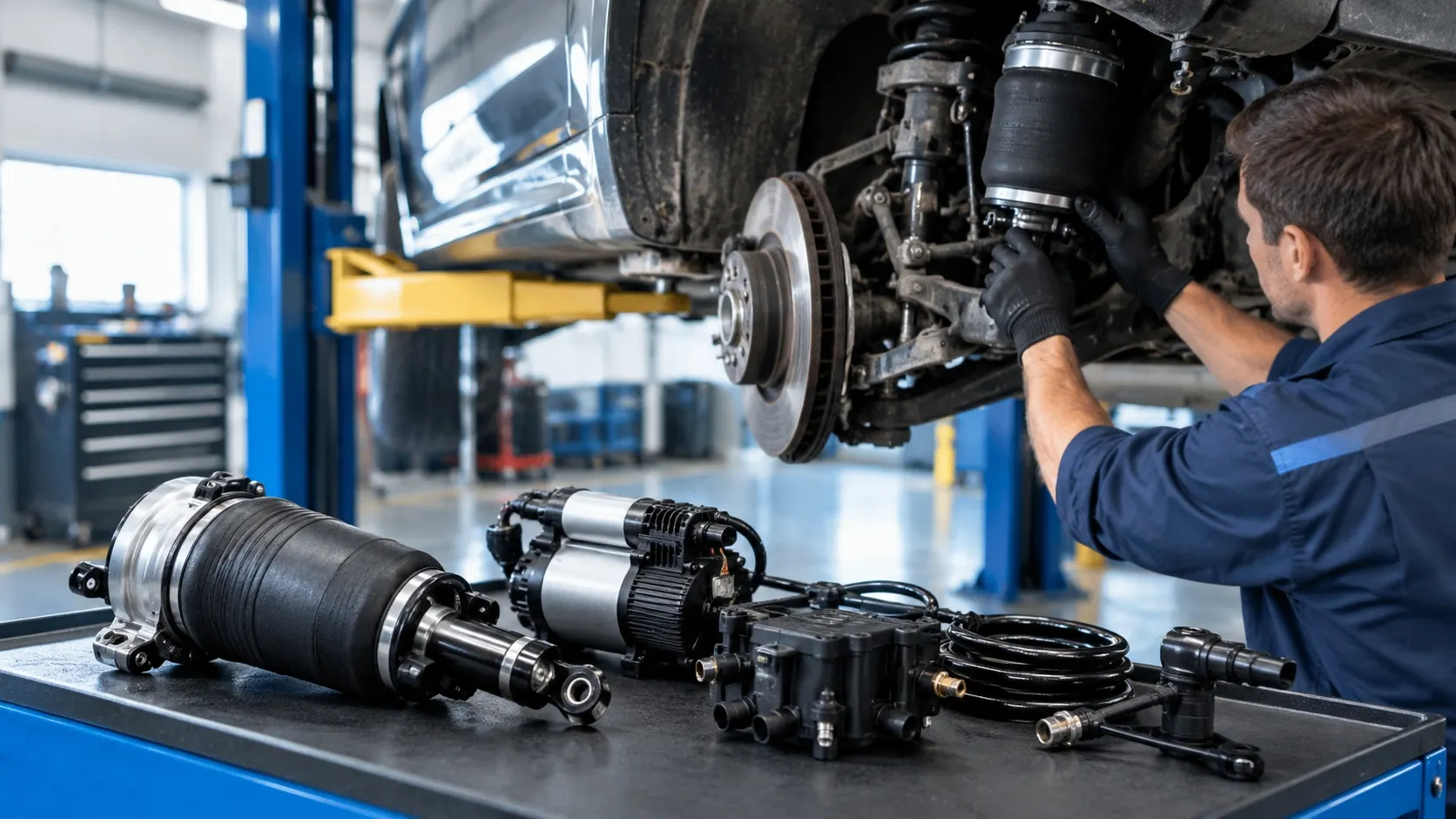
An air spring carries the vehicle's load, while a shock absorber controls suspension motion and helps stop the vehicle from bouncing. They are different jobs, but in some vehicles they sit in separate locations; in others, an air strut combines both parts in one assembly. Knowing which layout you have helps you order the correct replacement.
Key Takeaways
- According to Intrax Racing, springs support vehicle weight, while shock absorbers control spring movement and prevent bouncing.
- HUIJIE's air suspension airbags guide states that an air spring is part of a system that can also include shock absorbers, an air compressor, an air reservoir, airlines and suspension geometry.
- The same HUIJIE guide notes that air springs may help level a load but do not increase the vehicle manufacturer's gross vehicle weight rating or axle rating.
- HUIJIE describes a rear air strut as combining an air spring and a shock absorber in one assembly.
- The HUIJIE guide advises matching an air spring using vehicle application, suspension model, original part number, design height and mounting details.
What an Air Spring Does: Carrying the Load
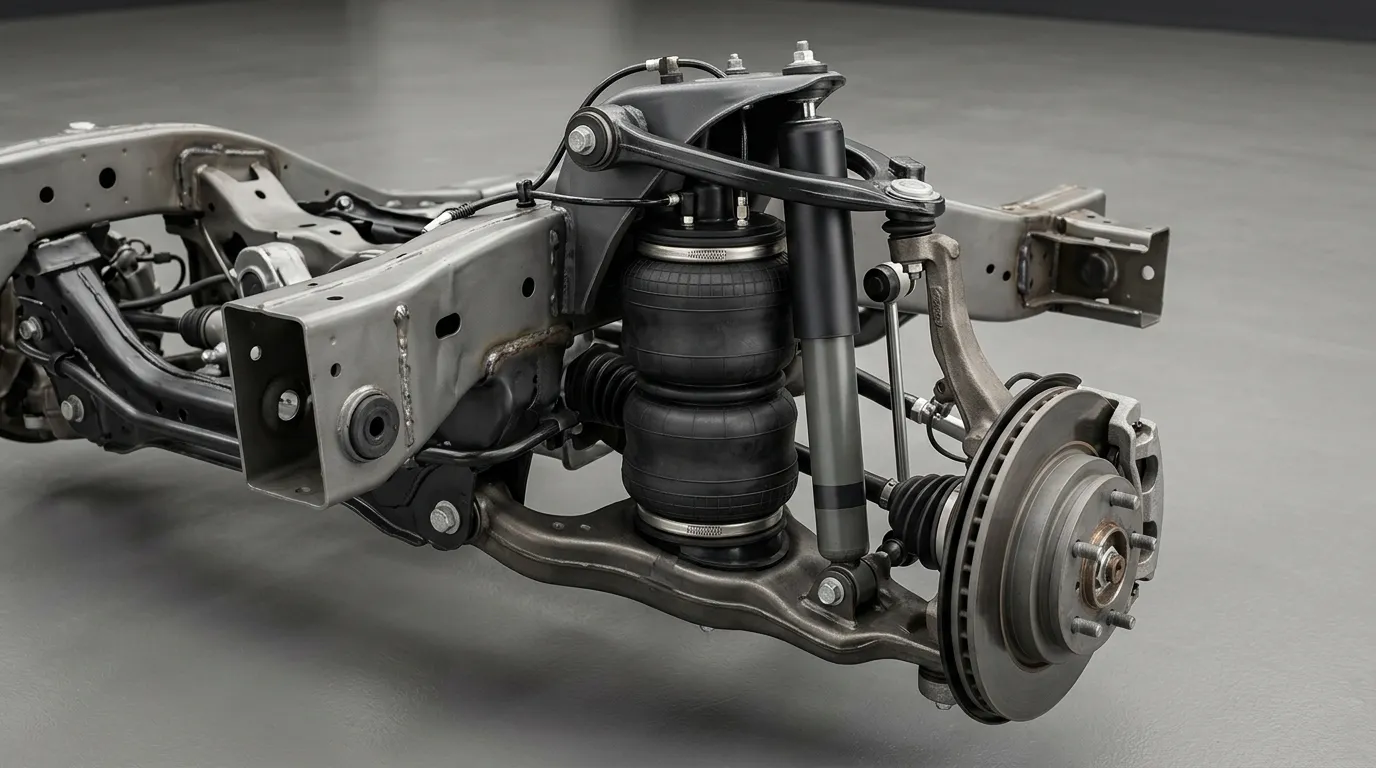
An air spring is a load-carrying suspension component that supports the vehicle's weight using pressurized air. Its primary job is to hold the vehicle at its designed height, not to control how quickly the suspension moves.
According to Intrax Racing, springs support vehicle weight while shock absorbers control spring movement and prevent bouncing. That division of labour is the foundation of any air spring versus shock absorber comparison.
An air spring is rarely alone in the system. HUIJIE's air suspension airbags guide states that an air spring is part of a system that can also include shock absorbers, an air compressor, an air reservoir, airlines and suspension geometry. The same guide notes that air springs may help level a load but do not increase the vehicle manufacturer's gross vehicle weight rating or axle rating — a limit worth remembering on vehicles used for heavy hauling.
Vigor Air Ride's March 2024 comparison describes air springs as supporting vehicle load independently of the regular shocks. For anyone replacing parts, the practical consequence is that an air spring and a shock absorber can sit at the same corner while performing unrelated jobs. HUIJIE manufactures vehicle air suspension spring products for a range of European and luxury vehicles, with parts identified by OE number.
[DIAGRAM: One suspension corner showing an air spring carrying the vehicle's load while a separate shock absorber controls suspension movement.]
What a Shock Absorber Does: Controlling Motion
A shock absorber, also called a damper, is a motion-control component. It resists the oscillation of the spring so the body does not keep bouncing after a bump, and it helps keep the tyre in contact with the road.
Intrax Racing states that shock absorbers control spring movement and prevent bouncing. That makes the damper the part that manages how the suspension behaves, not how much weight it carries.
Vigor Air Ride describes air shocks as adjustable shock absorbers and notes that inflation can increase spring rate and load support. That is why an air shock is not automatically equivalent to a separate air spring, and why the term "air shock" needs checking against the assembly actually fitted to the vehicle.
HUIJIE produces air shock absorber products alongside replacement air springs and struts, and supplies them to distributors, wholesalers and repair shops worldwide.
Air Spring vs Shock Absorber: The Core Difference
The core difference is load versus motion. An air spring carries the load; a shock absorber controls how the suspension moves. They are not interchangeable, even when they are sold or serviced together at the same corner.
| Component | Primary job | What it supports or controls | Separate or integrated | What to verify when ordering |
|---|---|---|---|---|
| Air spring | Carries the vehicle's load | Supports vehicle weight and ride height | Can be a separate part, or sit inside an air strut | Vehicle application, suspension model, original part number, design height and mounting details |
| Shock absorber (damper) | Controls suspension motion | Resists spring oscillation and helps prevent bouncing | Can be a separate part, or sit inside an air strut | Damper type and original part number; verify with the supplier |
| Air strut (combined assembly) | Carries load and controls motion in one unit | Combines an air spring and a shock absorber | One integrated assembly | Confirm the corner uses a combined unit, and match the original part number |
Reading the table left to right shows why the two terms are often confused: the jobs are different, but the packaging is not always separate. A vehicle can use an air spring at one corner and a conventional coil spring at another, so confirm the actual configuration before ordering.
Separate Parts vs. Combined Air Strut
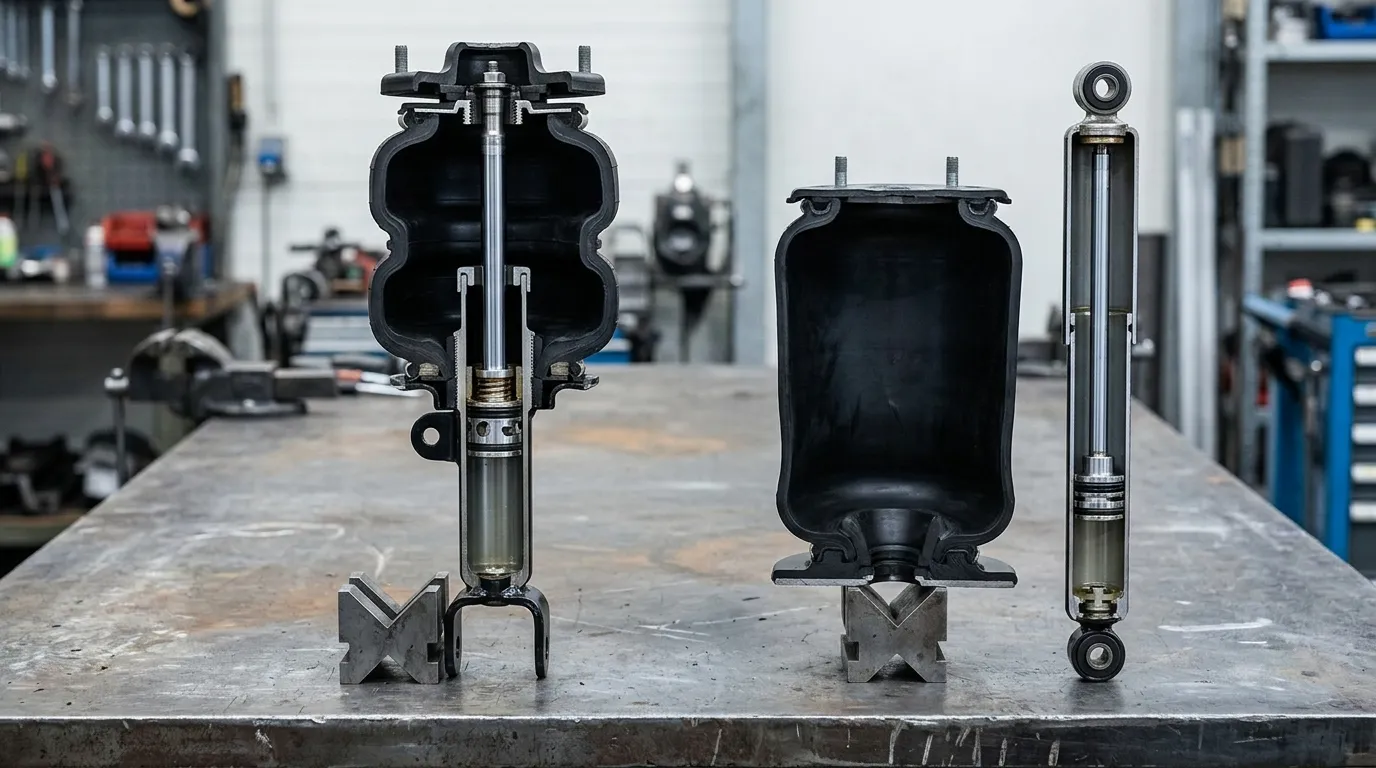
At a single wheel, an air spring and a shock absorber can be two separate components, or they can be combined in one assembly called an air strut. Which layout the vehicle uses determines what the replacement part actually is.
HUIJIE describes a rear air strut as combining an air spring and a shock absorber. On a vehicle that uses this design, ordering a shock absorber and an air spring as two separate items may not match what is fitted.
The assembly type decides the ordering route:
- Confirm the vehicle, model, year and axle.
- Identify whether that corner uses separate components or a combined air strut.
- Match the replacement to the assembly type before ordering.
[DIAGRAM: Cutaway view of a combined air strut, showing the air spring and the damper packaged inside one unit, beside a corner that uses separate components.]
How to Tell Which Replacement You Need
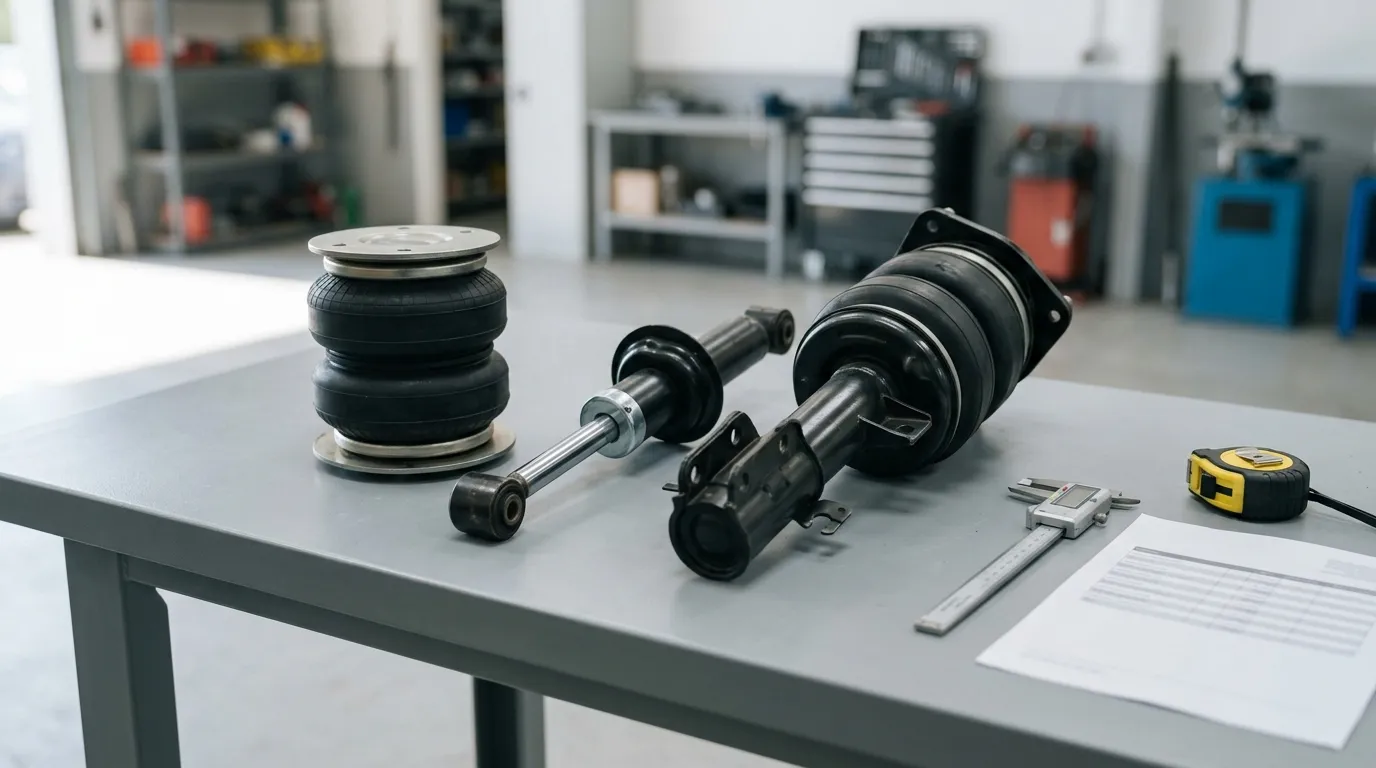
Start by identifying the assembly layout at the affected corner, then match the replacement using the data the supplier's catalogue uses. Do not assume an air spring and a shock absorber are the same part just because they share a corner.
Use this checklist before ordering:
- Confirm the vehicle, model, year and axle.
- Confirm whether the corner uses a separate air spring and damper, or a combined air strut.
- Record the original equipment part number and any suspension option codes.
- Compare design height and mounting details against the listed part.
- If a catalogue uses the term car suspension air bags, check whether it refers to an air spring or to a complete assembly.
HUIJIE's air suspension airbags guide advises matching an air spring using vehicle application, suspension model, original part number, design height and mounting details. With more than 2,000 products listed, HUIJIE identifies its air suspension parts by OE number, which is the reference most catalogues use for this kind of match.
[DIAGRAM: Replacement identification checklist showing vehicle, axle, assembly type, OE number, design height and mounting details.]
Symptoms and Cautions: Spring, Shock, or Something Else?
A failing air spring and a failing shock absorber can produce different symptoms, but symptoms alone do not prove which part failed. Load-height problems may point toward the air spring or the air supply, while motion-control problems may point toward the damper.
Because the two parts share the same corner and the same air system, a single symptom can have more than one cause. Vigor Air Ride notes that air shocks are adjustable and that inflation can change spring rate and load support, which adds another variable to how a corner behaves.
The safer route is to inspect the full air system — the air supply, airlines, compressor, valve block and damper condition — and confirm the failed part before ordering. Replacing a good air spring because the damper was worn, or the reverse, wastes both time and parts.
Frequently Asked Questions
How can I tell if the air spring or shock absorber is bad?
Symptoms alone cannot identify the failed part. An air spring may be linked to load or height problems, while a damper may be linked to motion control, but air leaks, sensors and other components can create similar signs. Inspect the full air system and confirm the part before ordering.
Should I replace air springs and shock absorbers together?
Not automatically. Whether they are separate or combined depends on the vehicle and the assembly. If the replacement is an air strut, it combines both functions in one unit. If they are separate, replace only the confirmed failed part unless the service information recommends otherwise.
What is the most common problem with air shocks?
The available sources do not provide a reliable failure-rate ranking, so no single fault can be named as the most common. Air shocks and air springs can develop air leaks, and dampers can lose motion control. Because the symptoms overlap, check the air supply, airlines and the specific assembly before deciding which part is faulty.
Share on Social:


Contact Us
In This Article
- 1 Key Takeaways
- 2 What an Air Spring Does: Carrying the Load
- 3 What a Shock Absorber Does: Controlling Motion
- 4 Air Spring vs Shock Absorber: The Core Difference
- 5 Separate Parts vs. Combined Air Strut
- 6 How to Tell Which Replacement You Need
- 7 Symptoms and Cautions: Spring, Shock, or Something Else?
- 8 Frequently Asked Questions
