


Air Strut vs Shock Absorber: What's Inside Each Part

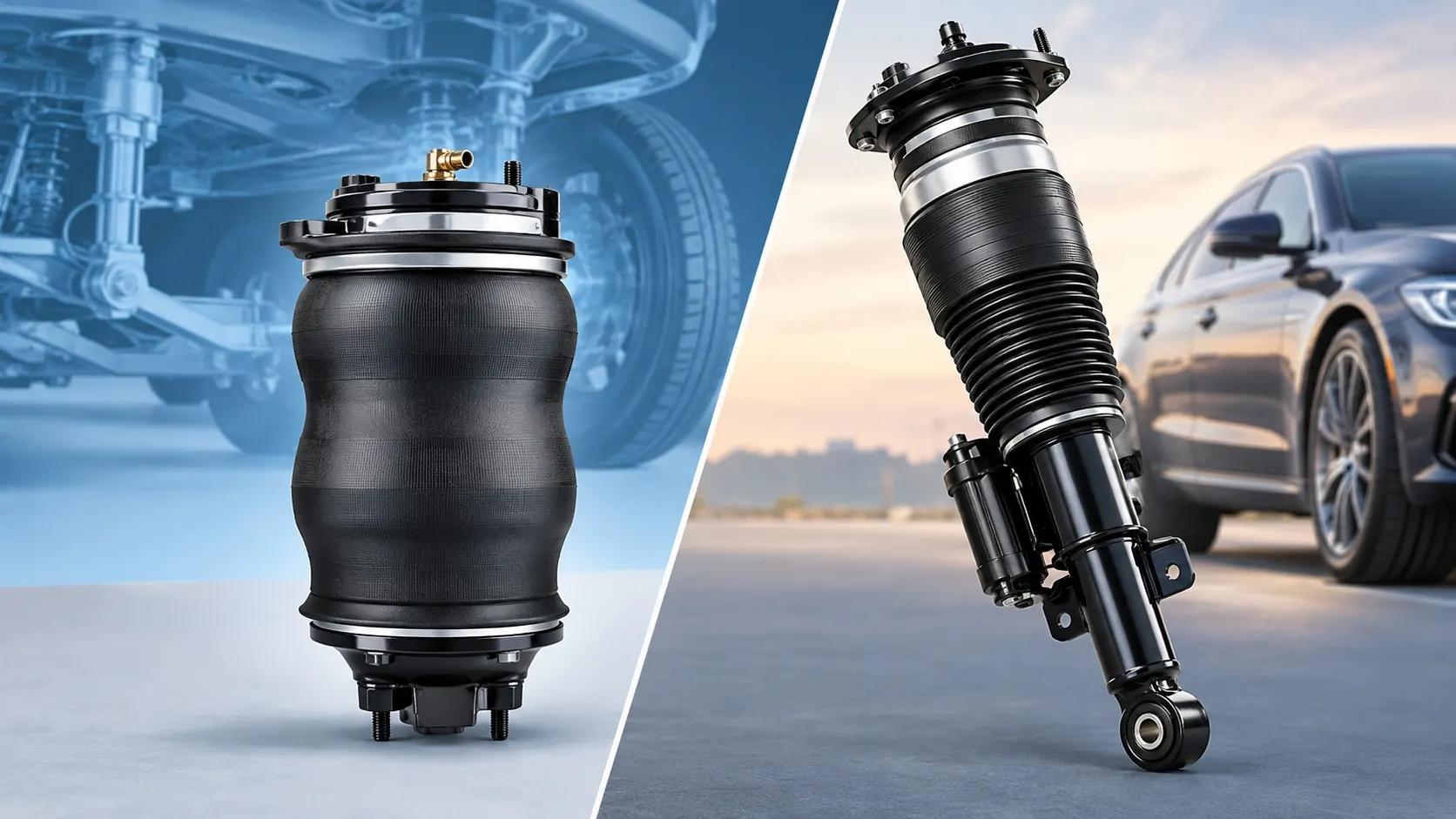
A complete air strut is an integrated assembly: it combines an air spring and a damper in one unit. A standalone shock absorber contains only the damping components. That difference changes what supports the vehicle, what sets ride height, how a fault is diagnosed, and whether replacement covers a full assembly or a separate shock.
Key Takeaways
- A complete air strut integrates an air spring and damper; a standalone shock absorber is a damping component, not a load-supporting air spring.
- Air pressure inside an air strut supports vehicle weight and can affect ride height; the damper controls suspension movement.
- According to Monroe, a conventional shock absorber converts suspension movement into heat and does not support vehicle weight by itself.
- "Air shock" is not a safe synonym for "air strut"; confirm the part by vehicle details and OE number.
- Replacement scope depends on whether the part is a complete assembly or a separate shock, plus vehicle-specific fitment.
What a Complete Air Strut Contains
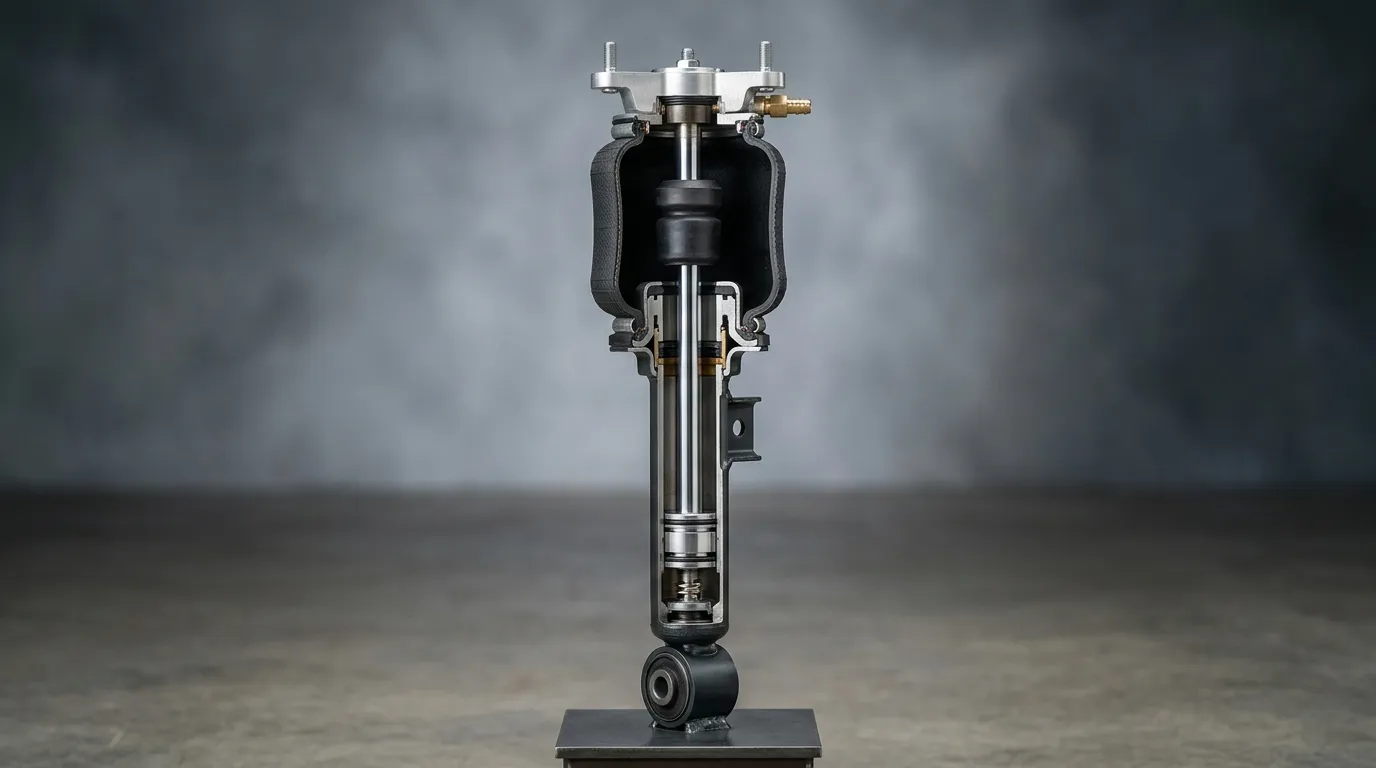
A complete air strut combines an air spring and a damper in one structural assembly. Depending on vehicle design, it can also include mounts, seals, air-line ports and electrical connectors. The compressor, valve block and height sensor are system components, not automatic contents of the strut.
HUIJIE's rear-strut guide defines a rear air strut as an integrated air spring and shock absorber that supports vehicle weight and absorbs road impacts and vibrations. The same guide lists air springs, shock absorbers, airlines, mounting hardware, electronic connectors and internal damping components among the parts associated with a complete rear air suspension strut or system.
That wider system also includes a compressor, valve block, height sensor and control unit. These parts manage air pressure and vehicle height, but they sit outside the air spring-and-damper assembly. Monroe's technical guide notes that a typical strut includes a structural housing and damping unit, and that a complete strut assembly can include a coil spring.
For a vehicle-specific example of an integrated rear air suspension strut, see the component and replacement overview.
[DIAGRAM: Cross-section comparison of a complete air strut and a standalone shock absorber, with labeled internals.]
What a Standalone Shock Absorber Contains and Does
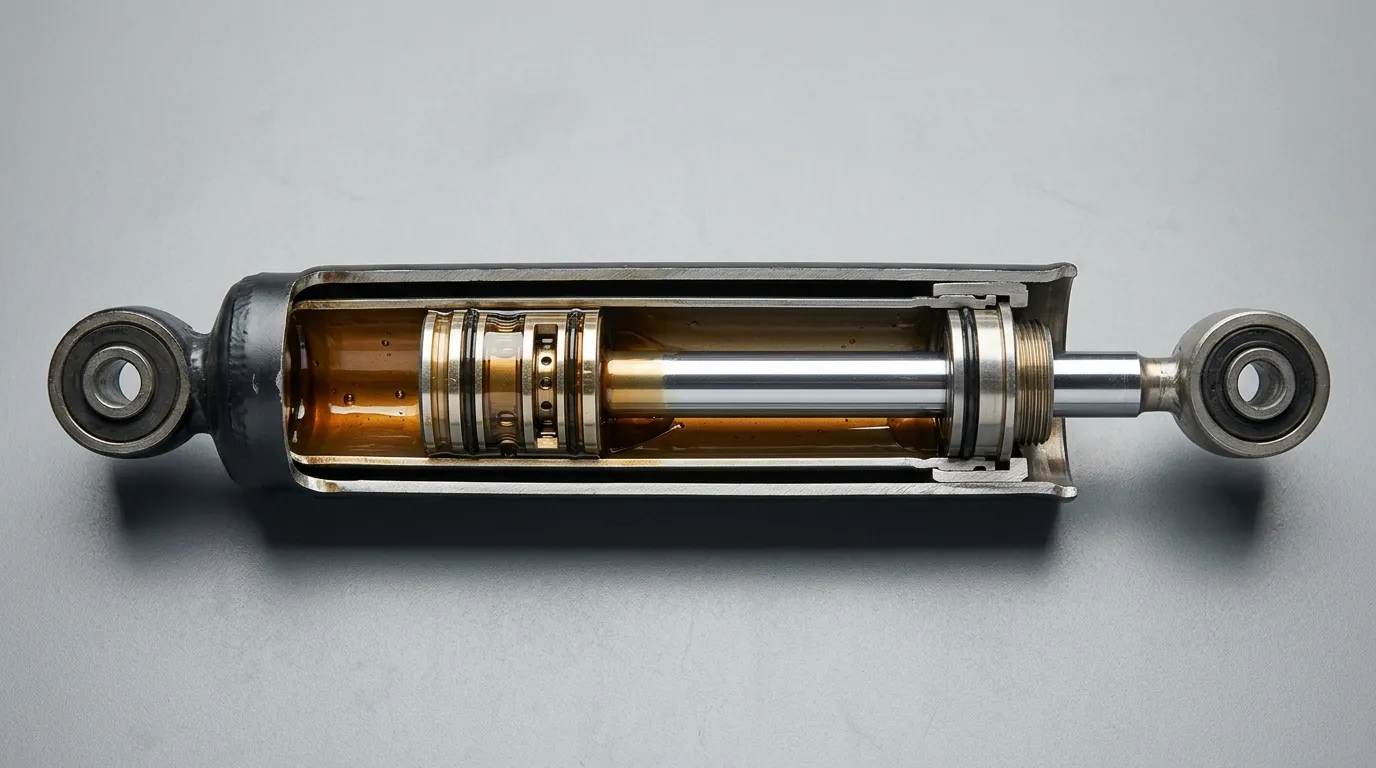
A standalone shock absorber contains a piston, piston rod, hydraulic fluid and pressure tube. It controls spring and suspension movement. It does not support vehicle weight or set ride height by itself.
According to Monroe, a shock absorber's primary purpose is controlling spring and suspension movement rather than supporting vehicle weight. Monroe also states that shock absorbers convert suspension movement's kinetic energy into heat dissipated through hydraulic fluid.
Monroe describes the shock as a piston attached to a piston rod, working against hydraulic fluid in a pressure tube, with fluid passing through piston orifices. That construction is what produces damping. Nothing in this design carries the vehicle's static load, which is why a shock absorber and an air spring are not interchangeable functions.
How the Air Spring and Damper Work Together in an Air Strut
In an air strut, the air spring carries vehicle load and helps set ride height, while the damper controls suspension movement. The compressor, valve block, height sensor and control unit manage air pressure but remain separate from the internal air spring-and-damper assembly.
HUIJIE's guide defines the air strut as an integrated air spring and shock absorber that supports weight and absorbs impacts, and lists the air spring, damper, airlines, mounting hardware, electronic connectors and internal damping components among the associated parts. HUIJIE also lists the compressor, valve block, height sensor and control unit as air-suspension system components rather than strut internals.
Monroe's explanation of the shock's role — controlling spring and suspension movement — applies to the damper inside the air strut as well. The two functions stay distinct: air pressure handles load and height, hydraulic damping handles motion control.
The car suspension air bags page is relevant for readers who need more detail about the air-spring element.
Air Strut vs Shock Absorber: At a Glance
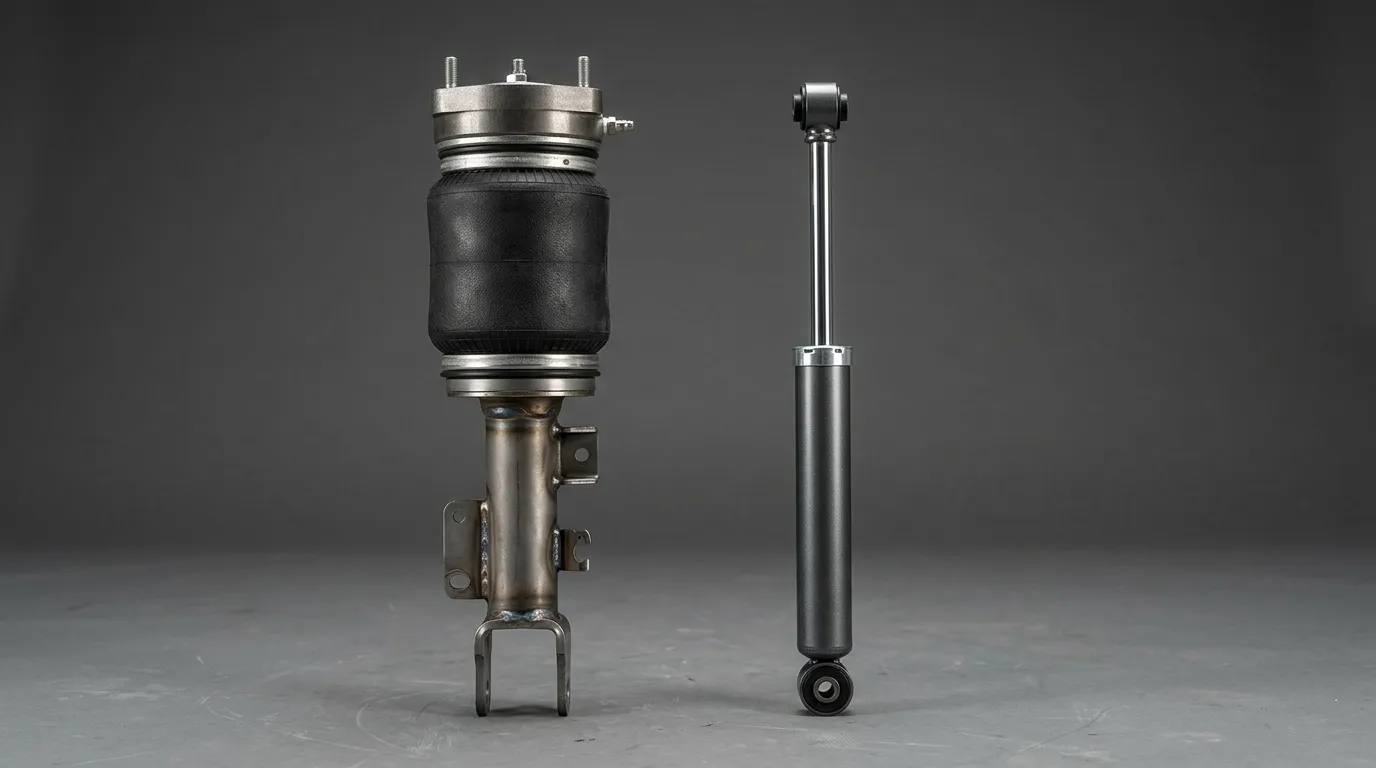
The main difference is scope. An air strut is a complete load-supporting and damping assembly, while a standalone shock absorber is a damping component. That single difference drives everything that follows about diagnosis and replacement.
| Feature | Complete air strut | Standalone shock absorber |
|---|---|---|
| Main contents | Air spring plus damper; housing, mounts, seals and connectors vary by design | Piston, piston rod, hydraulic fluid, pressure tube and valving |
| Primary role | Supports weight, helps set ride height and damps movement | Controls spring and suspension movement |
| Weight and ride-height support | Yes, through the air spring | No, not by itself |
| Damping function | Yes, via integrated damper | Yes |
| System components involved | May interact with compressor, valve block, height sensor and control unit | Typically not an air-pressure system component |
| Typical replacement scope | Often assembly or defined service unit | Separate damping component |
| Diagnosis focus | Air spring, air system, damper or a combination | Damper function and hydraulic condition |
How Construction Changes Diagnosis and Replacement Choices
Because an air strut combines an air spring and damper, a fault can involve the spring or air system, the damper, or both, and replacement may involve a complete assembly. A standalone shock only involves the damping component. That is the practical consequence of the construction difference described above.
Symptoms That Point to a Damper Problem vs an Air-Spring or Air-System Problem
If ride height is sagging, uneven, or the compressor runs frequently, inspect the air spring and air system first. If the vehicle bounces excessively or controls poorly while ride height remains stable, inspect the damper. A single symptom is not a definitive diagnosis.
This decision rule follows the component roles: HUIJIE's definition places weight support and impact absorption in the integrated air spring and damper, while Monroe's description limits the shock absorber's job to controlling spring and suspension movement. Use the pattern as a starting point for inspection, not as a conclusion.
[DIAGRAM: Diagnosis decision flow with two branches — sagging or uneven ride height and frequent compressor operation point to the air spring or air system; excessive bouncing with stable ride height points to the damper.]
Replacing an Air Strut Assembly vs Replacing a Shock Alone
A complete air strut is typically replaced as an assembly or defined service unit, while a standalone shock absorber can be replaced as a separate damping component. The correct scope depends on the vehicle design and whether the air spring and damper are integrated.
HUIJIE's guide defines the air strut as an integrated unit, and Monroe distinguishes a complete strut assembly from a separate shock function. Confirm which design the vehicle uses before assuming either replacement type.
Vehicle-Specific Fitment Details to Check Before Replacement
Before ordering, confirm the vehicle make, model and year, suspension type, axle position, OE number and connector or air-line configuration. Match the replacement to the assembly design, not just the words "air strut" or "shock."
- Confirm exact vehicle details.
- Identify the OE number and cross-reference it.
- Check axle position and left or right fitment.
- Confirm integrated air strut versus a separate shock and air spring.
- Verify electrical connectors, air-line ports and mounts.
- Confirm whether the replacement is a complete assembly or a component.
Check the configuration of the vehicle's automotive air suspension strut before comparing assembly and component replacement.
"Air Shock" vs Air Strut: A Terminology Check
"Air shock" is not a precise synonym for "air strut." It may describe a damper with air assist, or it may simply be a marketplace label. It does not confirm that the part contains an air spring and damper in one assembly.
GSW Auto Parts' 2025 comparison article discusses air shocks versus regular shocks as a choice shaped by vehicle use and trade-offs such as adjustability, complexity and cost, without naming a universal better option. That framing treats "air shock" as a category label, not as proof the terms are interchangeable.
An air shock absorber should not automatically be treated as interchangeable with an air strut. Confirm the part by vehicle and OE number.
What Can Affect Replacement Cost
Relative replacement cost depends on whether the part is a complete air strut assembly or a standalone shock, the vehicle-specific fitment, connector and air-line design, availability and labour. There is no universal figure for what either part costs.
GSW Auto Parts' 2025 article frames the air-versus-conventional choice as dependent on vehicle use and trade-offs such as adjustability, complexity and cost rather than a single answer. Treat cost as a set of factors to compare for a specific vehicle, not as a published price.
FAQ
Is a shock absorber the same as a strut?
No. A shock absorber is a damping component containing a piston, rod, hydraulic fluid and pressure tube. A strut is structural and can include a damper and spring. In air suspension, a complete air strut integrates an air spring and damper. According to Monroe, the shock's role is controlling spring and suspension movement, not supporting weight.
How do I tell if I need shocks or struts?
Sagging or uneven ride height and frequent compressor operation point toward the air spring or air system. Excessive bouncing with stable ride height points toward the damper. Confirm by inspection and OE number rather than symptom alone, because an air strut combines both functions in one unit.
What's the difference between air shocks and regular shocks?
A regular shock uses hydraulic damping, as Monroe describes: a piston working against fluid in a pressure tube. "Air shock" is ambiguous, and may mean a damper with air assist or a loosely used product label. An air strut is a complete assembly with an air spring and damper. Confirm the part by vehicle and OE number.
Share on Social:


Contact Us
In This Article
- 1 Key Takeaways
- 2 What a Complete Air Strut Contains
- 3 What a Standalone Shock Absorber Contains and Does
- 4 How the Air Spring and Damper Work Together in an Air Strut
- 5 Air Strut vs Shock Absorber: At a Glance
- 6 How Construction Changes Diagnosis and Replacement Choices
- 7 "Air Shock" vs Air Strut: A Terminology Check
- 8 What Can Affect Replacement Cost
- 9 FAQ
