


Air Suspension Compressor vs Air Compressor Explained

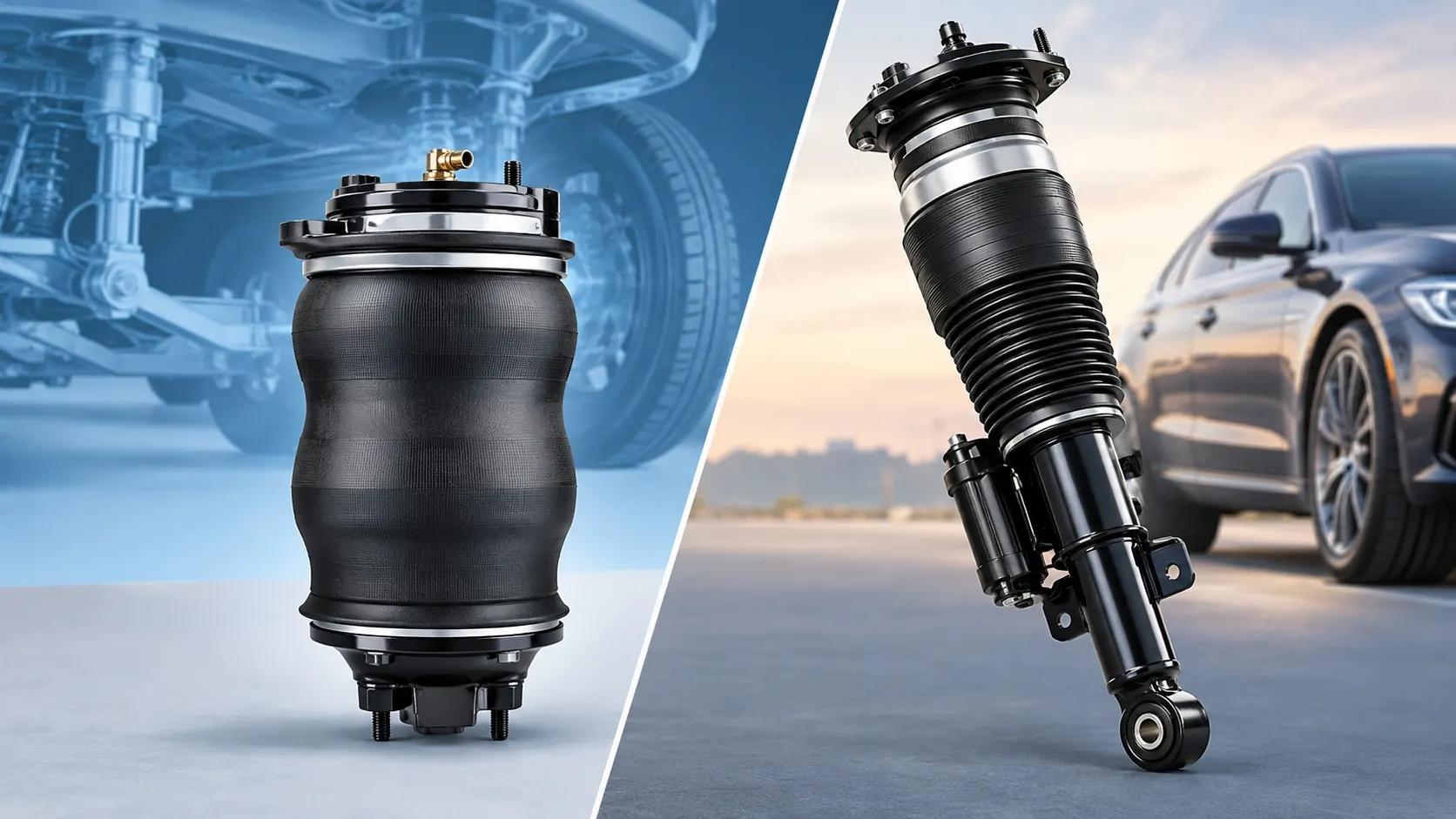
An air suspension compressor and a workshop or tyre air compressor both compress air, but they are not interchangeable. An air suspension compressor is a vehicle-specific, system-integrated component that supplies a vehicle's air suspension, while a workshop compressor is general-purpose shop equipment. Compatibility depends on the vehicle system, its controls and the exact fitment — not on pressure alone.
Key takeaways
- An air suspension compressor is defined by its job — supplying air to a vehicle's air suspension system — rather than by general shop-air use.
- According to AccuAir, the compressor in the system it describes is wired to a power source and may run when the vehicle starts or system pressure is low. That is one control strategy, not a universal one.
- HUIJIE's air suspension compressor replacement guide lists a motor, dryer, relay, valve-related components, tank, control unit and mounting bracket among parts that may accompany a suspension compressor — not every system contains all of them.
- VIAIR states its listed air suspension compressors are tested and rated for up to 100% duty cycle at 200 PSI. That is a vendor specification for those products, not a target for other units.
- "Air suspension pump" and "air suspension compressor" are frequently used for the same part, but the name does not confirm a direct replacement for your vehicle — the OE number and system do.
What is an air suspension compressor?
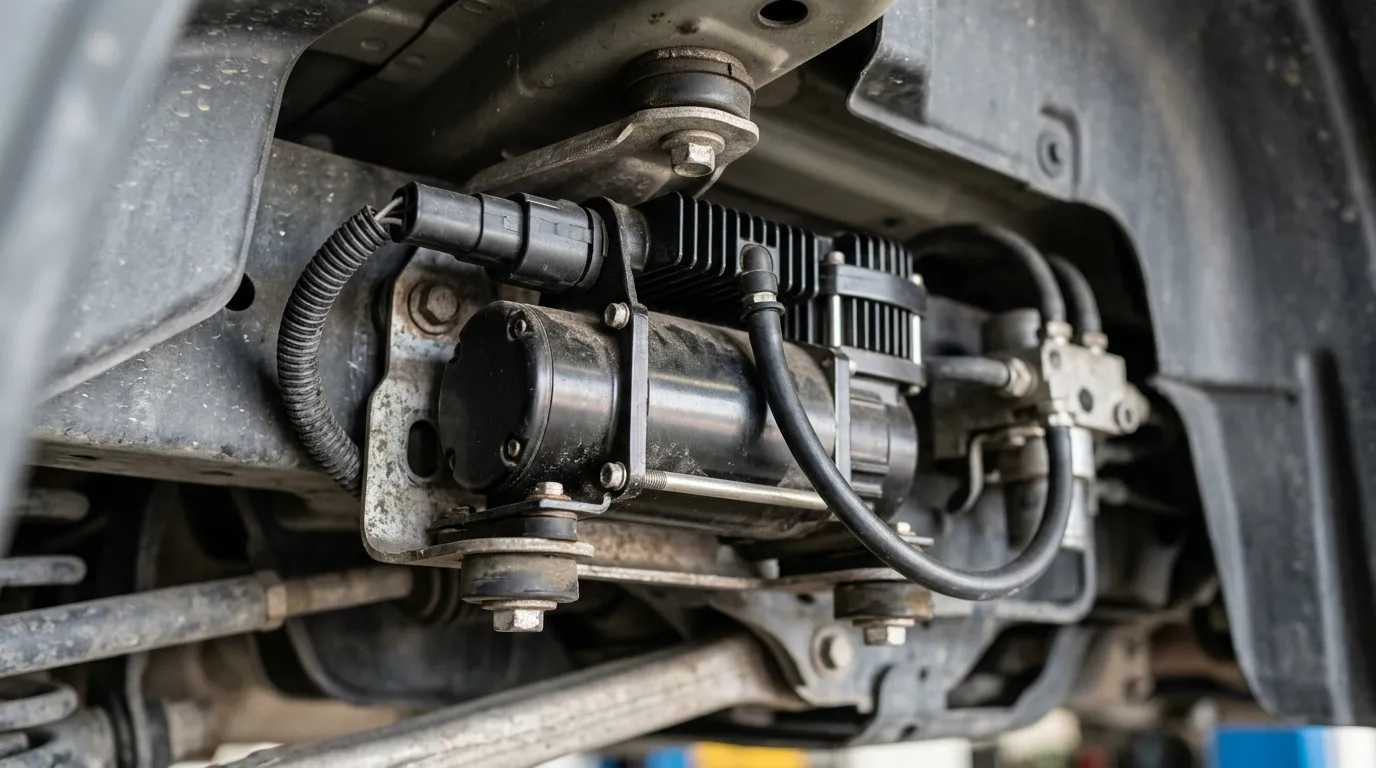
An air suspension compressor is a compressor built to compress air for a vehicle's air suspension system, so it is specified around that system rather than around general shop-air work. According to AccuAir, an air suspension compressor is exactly that: a compressor used to compress air for an air suspension system.
Because it belongs to one vehicle system, the compressor's role is tied to how that system stores and controls air. AccuAir notes that, in the applications it discusses, one compressor is usually enough for smaller cars, while two can provide more air for frequent use — vendor guidance rather than a universal sizing rule.
Terminology note: "air suspension pump" is often used for the same component, and HUIJIE lists parts under air suspension pump. The name alone does not confirm that a part is a direct replacement for your vehicle; the OE number and the vehicle system do.
What is a workshop or tyre air compressor?
A workshop or tyre air compressor is a general-purpose air source used to inflate tyres and equipment or to run air tools. It is not mounted to one vehicle, is not operated by that vehicle's suspension electronics, and its pressure and flow figures describe shop tasks rather than suspension fitment.
No sourced figure establishes a universal pressure, flow or duty-cycle value that a workshop compressor must meet to serve a suspension system, so this comparison avoids quoting one. The two categories differ in purpose, control and connection before any number is considered.
Air suspension compressor vs air compressor: side-by-side comparison
The two share only the basic act of compressing air. They differ in what they are designed to serve, how they are controlled and how they connect, as the table below sets out.
| Aspect | Air suspension compressor (vehicle) | Workshop / tyre air compressor |
|---|---|---|
| Primary job | Supply air to a vehicle's air suspension system (AccuAir) | General inflation, air tools, shop air |
| Intended installation | Vehicle-mounted and system-specific | Portable or fixed shop equipment |
| Control | Varies by vehicle; AccuAir describes its system's compressor as wired to a power source and able to run at start-up or low pressure | Operator-controlled, standalone |
| Air treatment / drying | Some systems include a dryer; HUIJIE's guide lists a dryer among possible components | Not an integrated vehicle dryer circuit |
| Storage / tank | Some systems use a tank; HUIJIE's guide lists a tank among possible components | Tank present on many shop units, unrelated to vehicle control |
| Connections and plumbing | Vehicle-specific air lines and mounting | Standard shop fittings and hoses |
| Direct replacement for a vehicle unit | Yes, when the part is OE-matched to that vehicle | No |
[DIAGRAM: two-column graphic contrasting a workshop air compressor with a vehicle air suspension compressor across job, control and connection — mirroring the table.]
How an air suspension compressor works inside the vehicle system
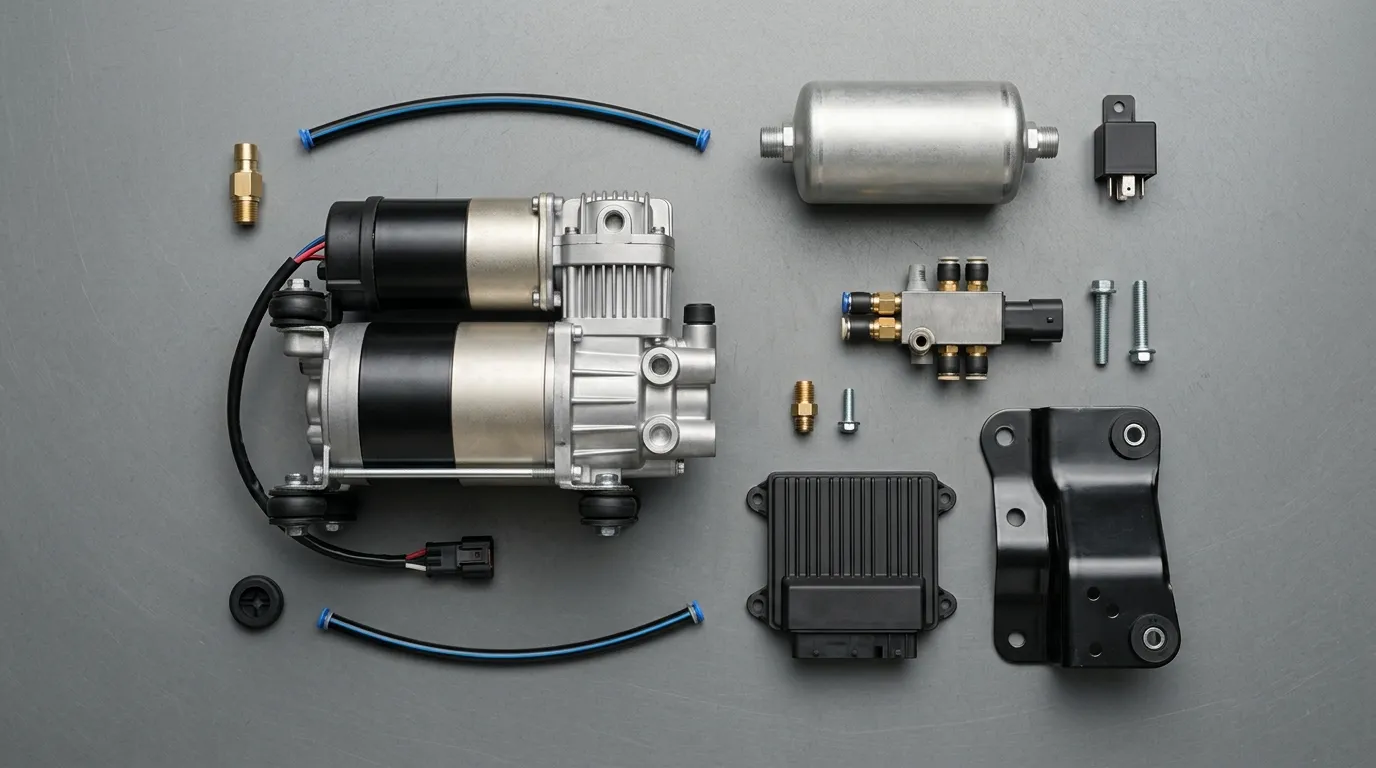
Inside a vehicle, the air suspension compressor is one link in a chain that reads ride height, decides when to add air and then runs the compressor to do it, so electrical supply and control are part of the component's job rather than add-ons. AccuAir describes its system's compressor as wired to a power source and able to run when the vehicle starts or when system pressure is low.
AccuAir also states that the compressor supplies air to its suspension system, and that dual compressors can provide more air for quicker "air-ups," without quantifying the improvement. For electrically driven units, electric air suspension compressor for vehicles covers this category of part.
The parts around the compressor vary. HUIJIE's air suspension compressor replacement guide lists a motor, dryer, relay, valve-related components, tank, control unit and mounting bracket among components that may be associated with a suspension compressor — a possible list, not a universal configuration, so do not assume that every suspension compressor is sealed, dryer-equipped or driven by a control module. Describe the arrangement only where a vehicle's service information or a supplier's product listing confirms it, and otherwise check per vehicle.
HUIJIE's guide states that many modern systems operate at 120–220 PSI depending on vehicle design. That range appears in the guide without a cited source and is not a value to match against; confirm requirements with the vehicle's own service information.
[DIAGRAM: cutaway-style view of a vehicle-mounted suspension compressor with the possible associated components named in HUIJIE's guide, captioned "parts vary by vehicle."]
Can a workshop air compressor replace an air suspension compressor?
No. A workshop air compressor can produce compressed air, but it is not the vehicle-mounted, system-integrated component that the suspension control logic operates, so it cannot stand in for the suspension compressor itself.
Pressure alone does not make two compressors equivalent. AccuAir's dual 485C kit lists a pressure switch specified as 165 PSI on and 200 PSI off — a configuration for that kit — and VIAIR states its listed air suspension compressors are tested and rated for up to 100% duty cycle at 200 PSI. Those figures describe those products, not a matching test for a workshop unit.
If a compressor has failed and you are ordering a replacement rather than a workaround, the air suspension compressor replacement guide covers symptoms, leak checks and replacement factors.
Can you use an external air compressor to add air to an air suspension system?
Sometimes, but only where the system has a designated service or fill point and the manufacturer's procedure allows it. On many vehicles the compressor and valve block are what fill the system, and bypassing them is neither necessary nor safe without documented guidance for that model.
Two rules apply. Only describe filling a system when the vehicle's own service information specifies a service port, pressure and procedure for that model. Never apply a universal pressure target or a generic connection instruction to an unidentified system.
Factory air suspension vs aftermarket air ride with a tank
Factory air suspension and aftermarket air ride with a tank are related but not the same design. A factory system is controlled by the vehicle for ride height and load, while many aftermarket setups add a tank, one or two compressors and their own management hardware — so component lists from one design do not carry across to the other.
| Factory air suspension | Aftermarket air-ride with tank | |
|---|---|---|
| Typical control | Vehicle ride-height and control logic | Aftermarket management hardware |
| Compressors | Vehicle-specific unit | One or two; AccuAir states one is usually enough for smaller cars and two provide more air |
| Tank | Some systems use one, per HUIJIE's component list | Commonly central to the design |
| Example setting | Varies by vehicle; verify with the supplier | AccuAir's dual 485C kit lists a pressure switch at 165 PSI on / 200 PSI off |
Aftermarket compressors are commonly sold as part of a kit or an air-ride build; parts in that category are grouped under air ride compressor for cars.
What to check before ordering a replacement compressor
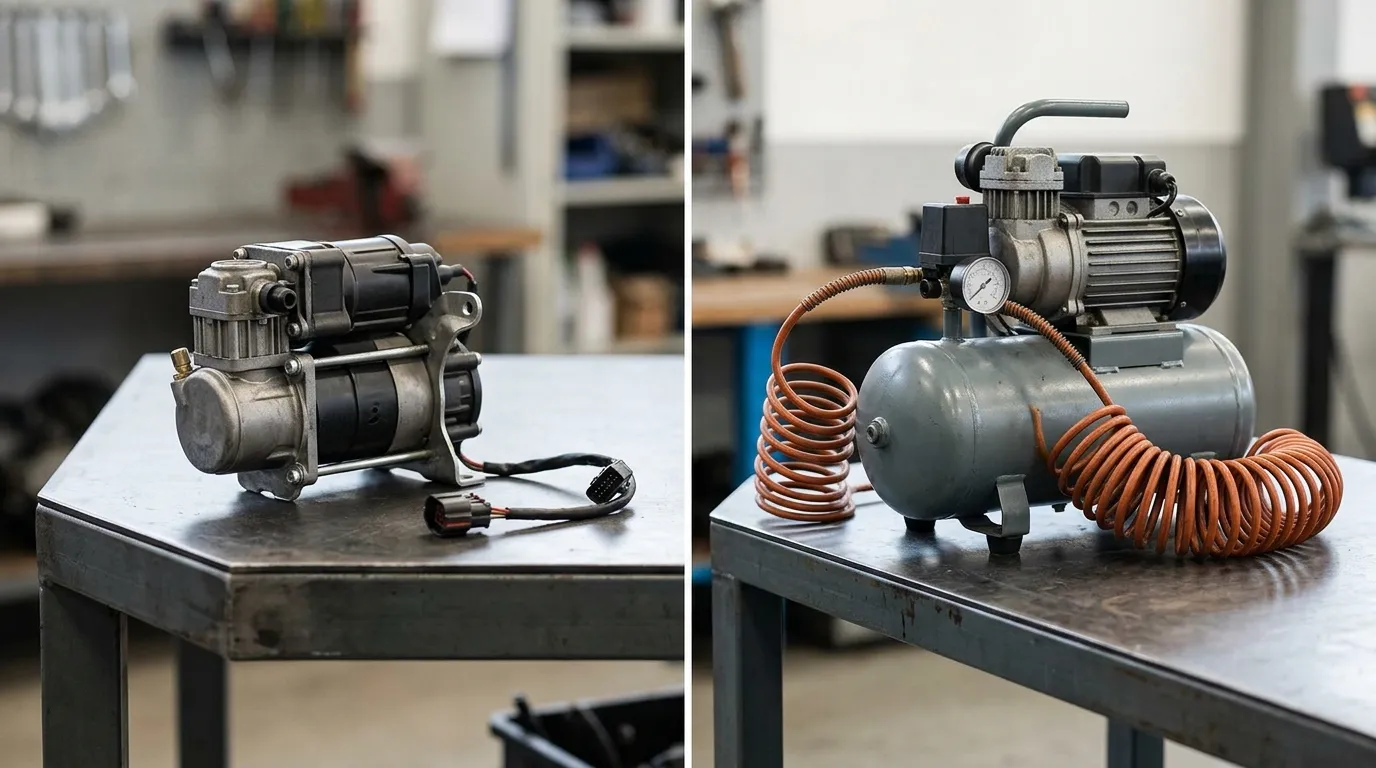
Order against the vehicle, not against a pressure number. Two compressors can both produce air and still not be interchangeable.
- Identify the system type — factory air suspension, or an aftermarket air-ride setup with a tank and management hardware.
- Read the original part number from the old compressor, or from the vehicle's service data, and cross-check the OE reference.
- Confirm mounting, air connections and the harness or plug arrangement against a matching part listing.
- Check whether the system uses a separate dryer, relay or valve block, and whether those are supplied separately; HUIJIE's guide lists these among possible components.
- Treat vendor pressure and duty figures — AccuAir's 165 PSI on / 200 PSI off kit switch and VIAIR's up to 100% duty cycle at 200 PSI — as specifications for those products only.
- If the unit failed, check for stored faults and leaks before ordering parts.
[DIAGRAM: flowchart from "compressor suspected faulty" to system type, OE-number check and ordering — not a "fill the system with a shop compressor" diagram.]
HUIJIE manufactures replacement air suspension compressors as part of a range of more than 2,000 listed products, most of which fit European and luxury vehicles and are identified by OE number. If you have your OE reference, it can be checked against the listing before you order.
FAQ
Do you need an air compressor for air suspension?
Yes. An air suspension system needs a compressor to supply air, and in a factory system that compressor is a vehicle-specific, system-integrated part rather than stand-alone shop equipment. A workshop or tyre air compressor cannot stand in for the suspension compressor itself, even if it produces the same kind of compressed air.
What are the two main types of air compressors in this comparison?
One is a vehicle air suspension compressor, which supplies air to a single vehicle's suspension system and is controlled as part of that system. The other is a general-purpose workshop or tyre air compressor, used for inflation and air tools. They compress air but are designed for different installations, controls and connections.
How can I tell if an air suspension compressor is failing?
Warning signs usually appear as vehicle-level behaviour rather than as a single compressor reading, so check for stored faults and leaks before ordering parts. A replacement guide that covers symptoms, leak checks and replacement factors is linked earlier in this article under the replacement section.
Share on Social:


Contact Us
In This Article
- 1 Key takeaways
- 2 What is an air suspension compressor?
- 3 What is a workshop or tyre air compressor?
- 4 Air suspension compressor vs air compressor: side-by-side comparison
- 5 Can a workshop air compressor replace an air suspension compressor?
- 6 Can you use an external air compressor to add air to an air suspension system?
- 7 Factory air suspension vs aftermarket air ride with a tank
- 8 What to check before ordering a replacement compressor
- 9 FAQ
