


Air Suspension Compressor vs Air Reservoir: Roles Compared

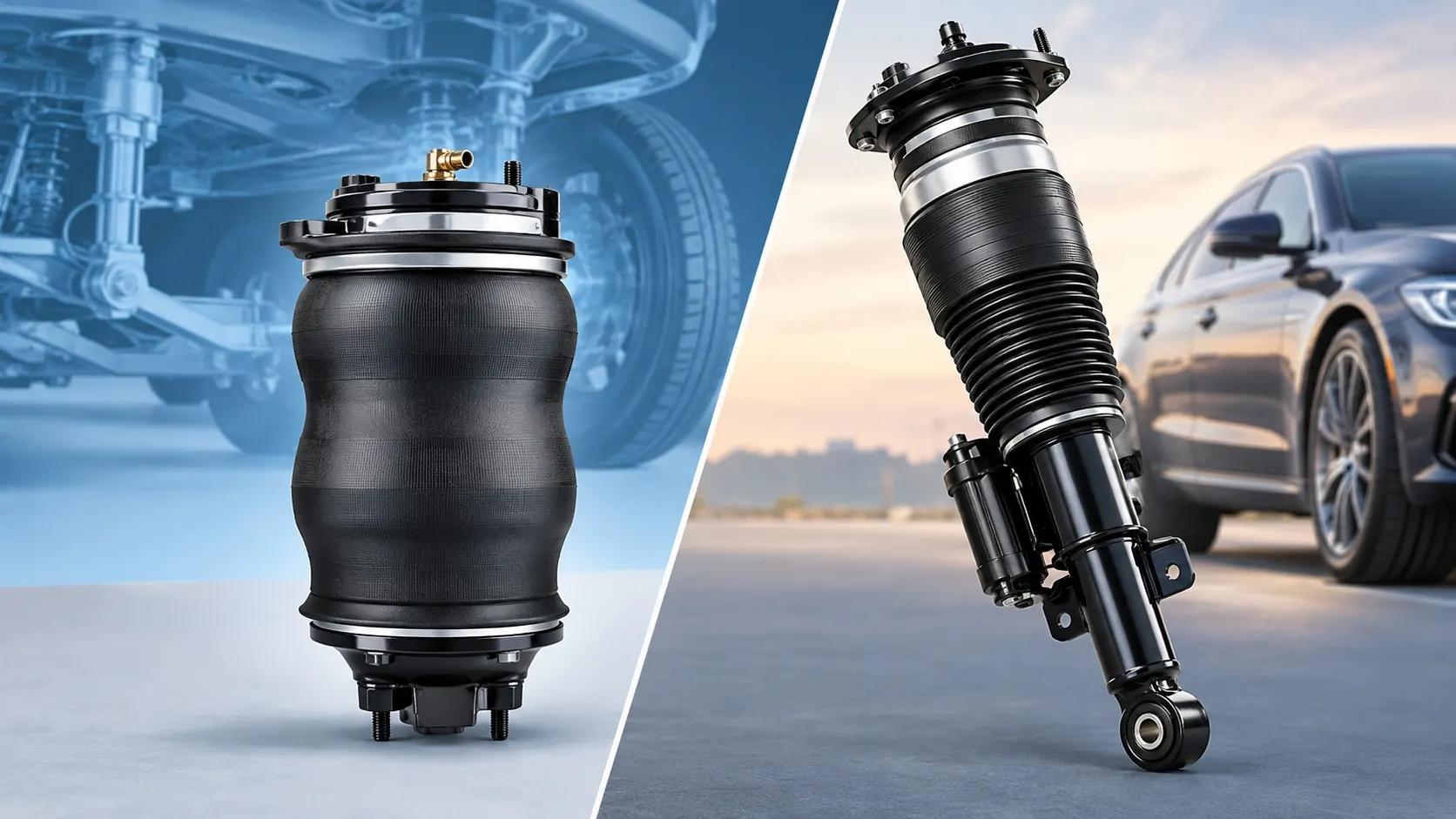
An air suspension compressor and an air reservoir do different jobs: the compressor generates pressurized air, while the air suspension reservoir stores that compressed air so the system can adjust height quickly. They are not interchangeable, and not every air suspension system uses a separate reservoir or an onboard compressor.
Key takeaways
- The air suspension compressor creates pressure; the air suspension reservoir stores it.
- Stored air lets a system adjust height faster, while a compressor-only setup can operate but is slower, according to AirRide.
- A valve block distributes air to air springs and struts; it does not generate or store pressure.
- Some basic motorhome and van systems may use an external tyre inflator through a Schrader valve instead of onboard air, AirRide notes.
- Not every vehicle runs a separate reservoir, so confirm the layout before ordering parts.
Air Suspension Compressor vs Air Reservoir: What Is the Difference?
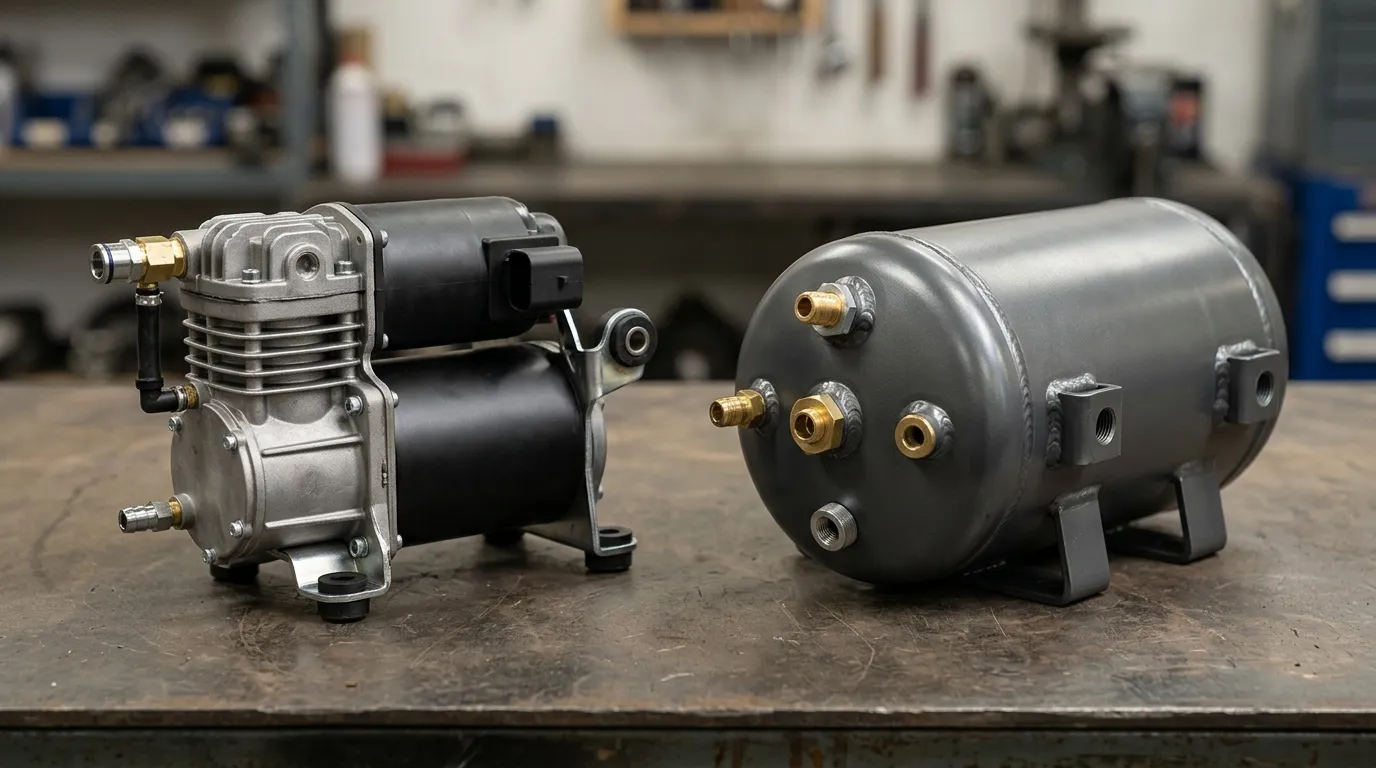
An air suspension compressor is the pump that creates pressurized air, and an air reservoir — often called an air tank — is the vessel that holds it. The compressor is the air source; the reservoir is a buffer that keeps compressed air available when the system calls for a height change.
According to AirRide, a compressor is a pump, usually powered by the vehicle's 12-volt electrical supply, that pumps air into a tank. AccuAir describes compressors as pumping air into an air tank and says tanks are usually located in the trunk of cars or the bed of trucks. HUIJIE's valve block page puts the relationship in one line: the compressor develops pressure, the reservoir holds it, and the valve block distributes it.
[DIAGRAM: Side-by-side comparison of an air suspension compressor generating pressure and an air reservoir storing compressed air]
| Component | Primary job | Air role | Effect on response | Configuration note |
|---|---|---|---|---|
| Air suspension compressor | Generates pressurized air | Creates pressure from the vehicle's air supply | Slowest path when used alone; depends on run time and cooling | Not present in some external-air-source systems |
| Air suspension reservoir (air tank) | Stores compressed air | Holds air produced by the compressor | Stored air is available immediately rather than waiting for the compressor (AirRide) | Not fitted on every system |
| Valve block | Distributes air | Routes air to the correct air spring or strut | Determines which corner lifts, not how fast air is produced | Fitment varies by vehicle |
What Does an Air Suspension Compressor Do?
The air suspension compressor generates the pressurized air an air suspension system needs. AirRide describes it as a pump, usually driven by the vehicle's 12-volt supply, that pumps air into a tank, while HUIJIE's compressor replacement guide says the unit supplies compressed air to air springs, air suspension struts and a storage reservoir.
Because a compressor builds pressure rather than holding it, it works in cycles. AirRide defines duty cycle as the proportion of a ten-minute period a compressor can run before it needs rest to cool and recover. That figure is model-specific, so check the specification for the compressor fitted to the vehicle instead of applying one number to every unit.
Readers may meet the same part named as a car air suspension pump in some catalogues, or described in suv air suspension compressor listings elsewhere; the naming changes, the job does not. HUIJIE manufactures replacement air suspension compressors as part of a range of more than 2,000 listed products, identified by OE number and supplied to OEM and aftermarket buyers worldwide.
What Does an Air Reservoir Do?
An air reservoir, also called an air tank, stores compressed air produced by the compressor. It does not create pressure. Its job is to hold air so the system can draw on it when a height change is commanded.
AccuAir describes tanks as holding compressed air used to raise the vehicle, and its air supply range lists single- and dual-compressor kits. One maintenance point comes from a supplier: airslamit recommends draining its 5-gallon steel tanks monthly to reduce condensation. That is that vendor's guidance for its own tanks, not a universal service interval — reservoir size, material and drain requirements vary by system.
How Do the Compressor, Reservoir, and Valve Block Work Together?
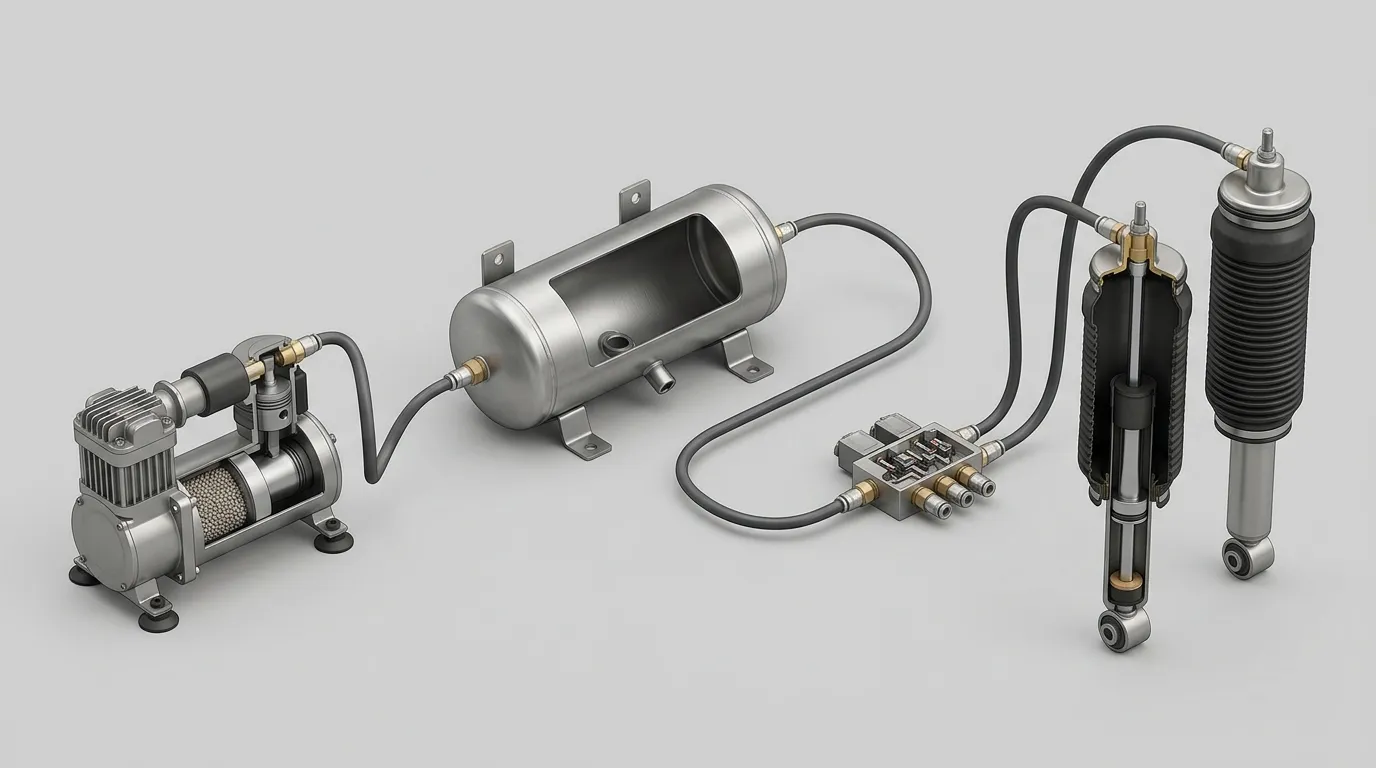
In a common layout, the compressor creates pressure, the reservoir stores air where one is fitted, and the valve block distributes that air to air springs or struts. According to AirRide, a tank provides air immediately rather than making the system wait for the compressor.
- The compressor draws air in and pressurizes it.
- Where a reservoir is fitted, compressed air is stored there until it is needed.
- The valve block routes air to the correct air spring or strut.
- Height sensors and the control unit decide when an adjustment happens; stored air supports a faster response.
Exact control logic and component layouts vary by vehicle, so treat this as the typical flow rather than a fixed diagram for every model.
[DIAGRAM: Air path from compressor to reservoir (if fitted) to valve block to air springs and struts, with an optional external air source branch]
Where Does the Valve Block Fit?
The valve block is the distribution point in the air path; it neither generates pressure nor stores it. HUIJIE's suspension control valve block page describes the sequence as the compressor developing pressure, the reservoir holding it and the valve block distributing it. A fault at the valve block can therefore produce symptoms that look like an air supply problem, which is one reason diagnosis should cover the whole path.
Can an Air Suspension System Run Without a Reservoir?
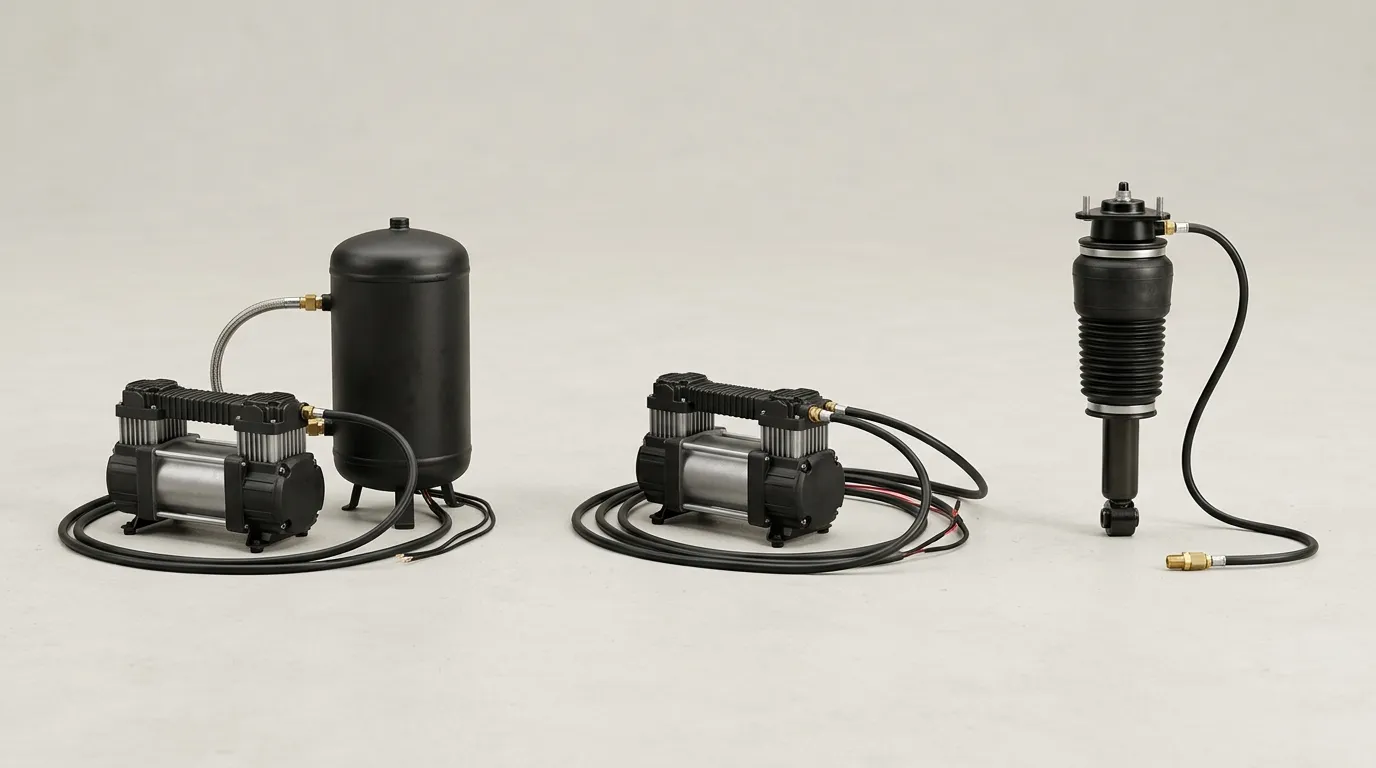
Yes. A system can run without a separate reservoir, but response may be slower because each adjustment depends more directly on compressor output. AirRide states that a compressor-and-no-tank setup can operate but will be slower, and that a tank provides air immediately rather than making the system wait for the compressor.
Do not assume a vehicle has or lacks a separate reservoir from its model name alone. Check the air-supply diagram or the OE parts listing for that vehicle before ordering or diagnosing.
- With a separate reservoir: stored air is available for faster adjustments.
- Without a separate reservoir: compressor output feeds the system more directly, so expect slower response.
- Neither confirmed: verify the configuration against the vehicle's own documentation.
[DIAGRAM: Three system configurations — with a separate reservoir, without a reservoir, and using an external air source]
Can an Air Suspension System Run Without an Onboard Compressor?
Yes, some systems use an external air source instead of an onboard compressor. AirRide notes that basic motorhome and van systems may use an external tyre inflator through a Schrader valve instead of onboard air, and adds that most onboard-air systems contain a compressor. That description covers those vehicle types as the source presents them; it is not a rule that applies to every air suspension design.
If a vehicle has no obvious compressor or reservoir, look for an external fill point before concluding that parts are missing.
Why Does Stored Air Make Height Changes Faster?
Stored air makes height changes faster because the system can draw from the reservoir instead of waiting for the compressor to build pressure from scratch each time. AirRide puts it directly: a tank provides air immediately rather than making the system wait for the compressor, while a compressor-and-no-tank setup can operate but will be slower.
The trade-off is that a reservoir adds a component, a mounting location and, in some designs, a drain routine. What a reservoir does not do is generate pressure — if the compressor is weak or leaking, stored air only delays the symptom.
What Symptoms Point to Compressor Trouble Rather Than a Reservoir or Leak Issue?
Symptoms alone cannot confirm a faulty compressor, because a leak, a valve block fault, a height sensor problem or a control fault can all produce similar complaints. The reliable approach is to test the air path in order: generation, storage, distribution and control.
HUIJIE's replacement guide explains that the compressor supplies compressed air to air springs, struts and a storage reservoir, while the reservoir holds pressure and the valve block distributes it, so a fault at any of those stages can slow or prevent a height change. Check for leaks, confirm valve block function, review height sensor signals and verify compressor operation before ordering a part. If compressor replacement is confirmed, HUIJIE's guide to air suspension compressor replacement covers the job.
Frequently Asked Questions
Is an air tank the same as an air compressor?
No. The compressor is the pump that creates pressurized air, usually from the vehicle's 12-volt supply. The air tank, also called a reservoir, stores that compressed air so it can be used later. Many systems use both, but they are separate components with separate jobs.
Do you need an air compressor for air suspension?
Most onboard air suspension systems include a compressor to create pressure. AirRide notes that basic motorhome and van systems may instead use an external tyre inflator through a Schrader valve. The correct answer depends on the original design of the vehicle, so verify the air supply layout first.
What are the symptoms of a bad air suspension compressor?
Slow or failed height changes are the usual complaint, but leaks, valve block faults, height sensor issues and control faults can look the same. Diagnose the full air path before replacing the compressor, and replace it only when testing confirms the compressor is the cause.
Share on Social:


Contact Us
In This Article
- 1 Air Suspension Compressor vs Air Reservoir: What Is the Difference?
- 2 What Does an Air Suspension Compressor Do?
- 3 What Does an Air Reservoir Do?
- 4 How Do the Compressor, Reservoir, and Valve Block Work Together?
- 5 Can an Air Suspension System Run Without a Reservoir?
- 6 Can an Air Suspension System Run Without an Onboard Compressor?
- 7 Why Does Stored Air Make Height Changes Faster?
- 8 What Symptoms Point to Compressor Trouble Rather Than a Reservoir or Leak Issue?
- 9 Frequently Asked Questions
