


Air Suspension Compressor vs Valve Block: Which Is Failing?
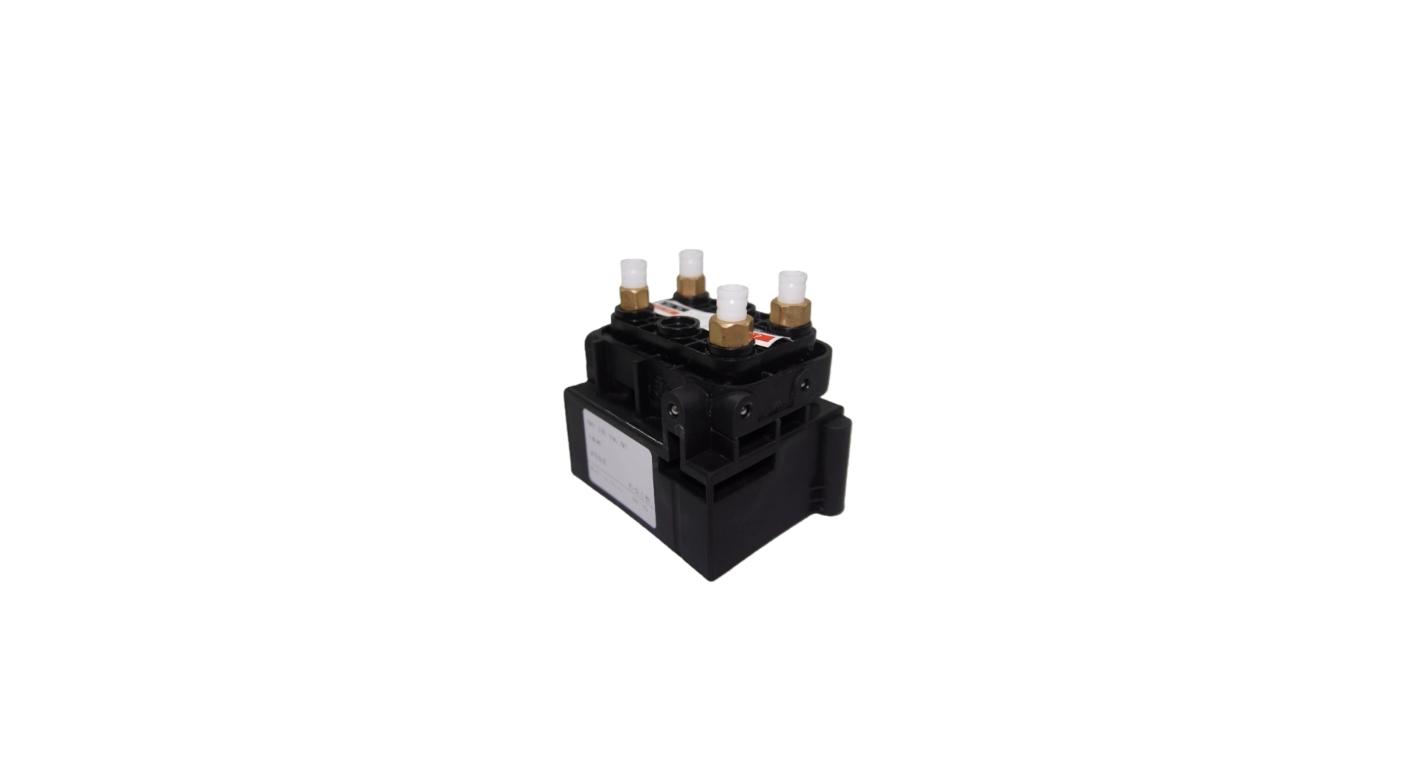
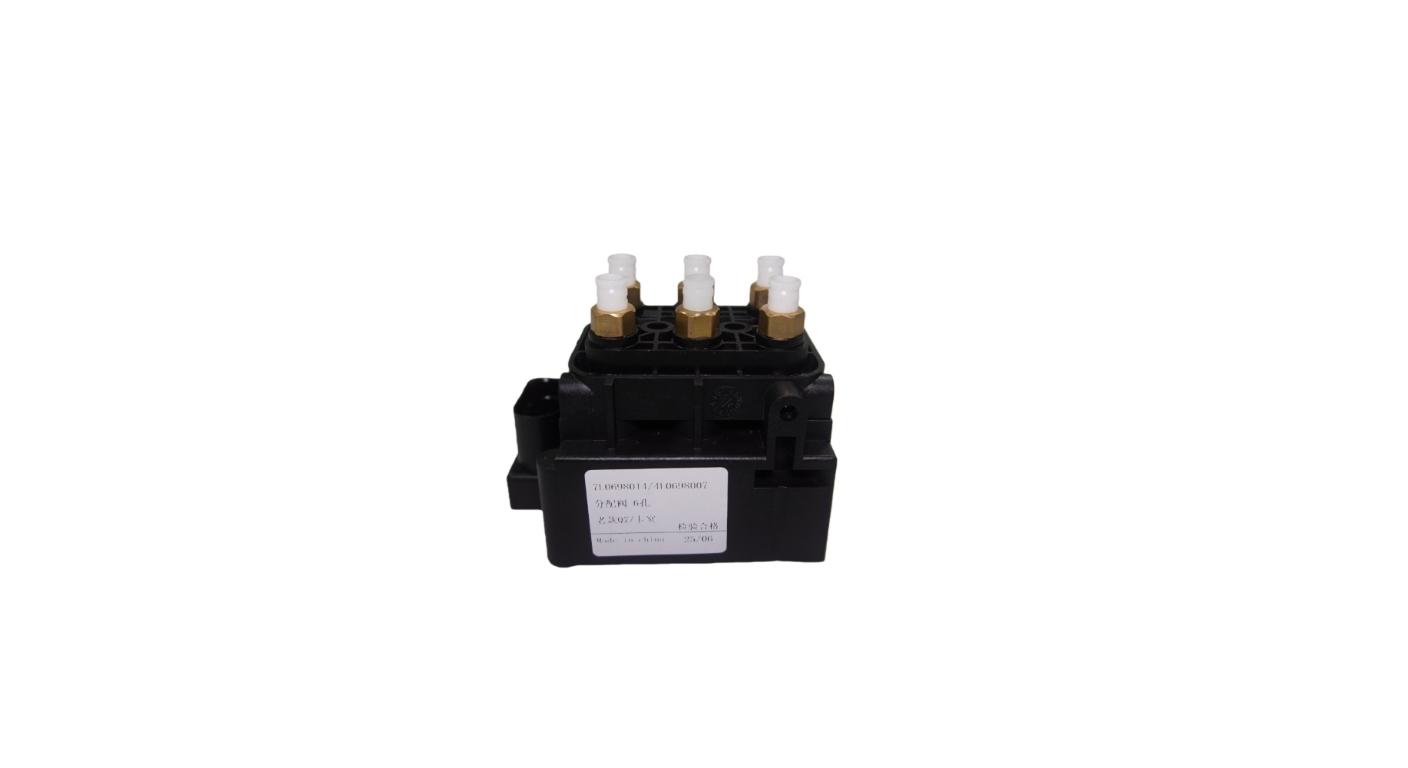
An air suspension compressor creates pressurized air; the valve block routes and controls where that air goes. Low ride height, a compressor that runs constantly, or one sagging corner does not prove which part has failed, because leaks, airlines and electrical faults can produce the same signs. Diagnose before replacing either.
Key takeaways
- The air suspension compressor produces air pressure; the valve block distributes that pressure to the correct air springs, struts or reservoir.
- A compressor fault and a valve block fault can produce the same visible symptoms, including a vehicle that sits low or will not rise.
- Leaks, airlines, fittings and electrical faults can mimic either part and should be ruled out first.
- Work from the cheapest checks upward: record which corners are affected, listen for leaks, watch how the compressor behaves, then scan for vehicle-specific fault codes.
What the Compressor and Valve Block Each Do
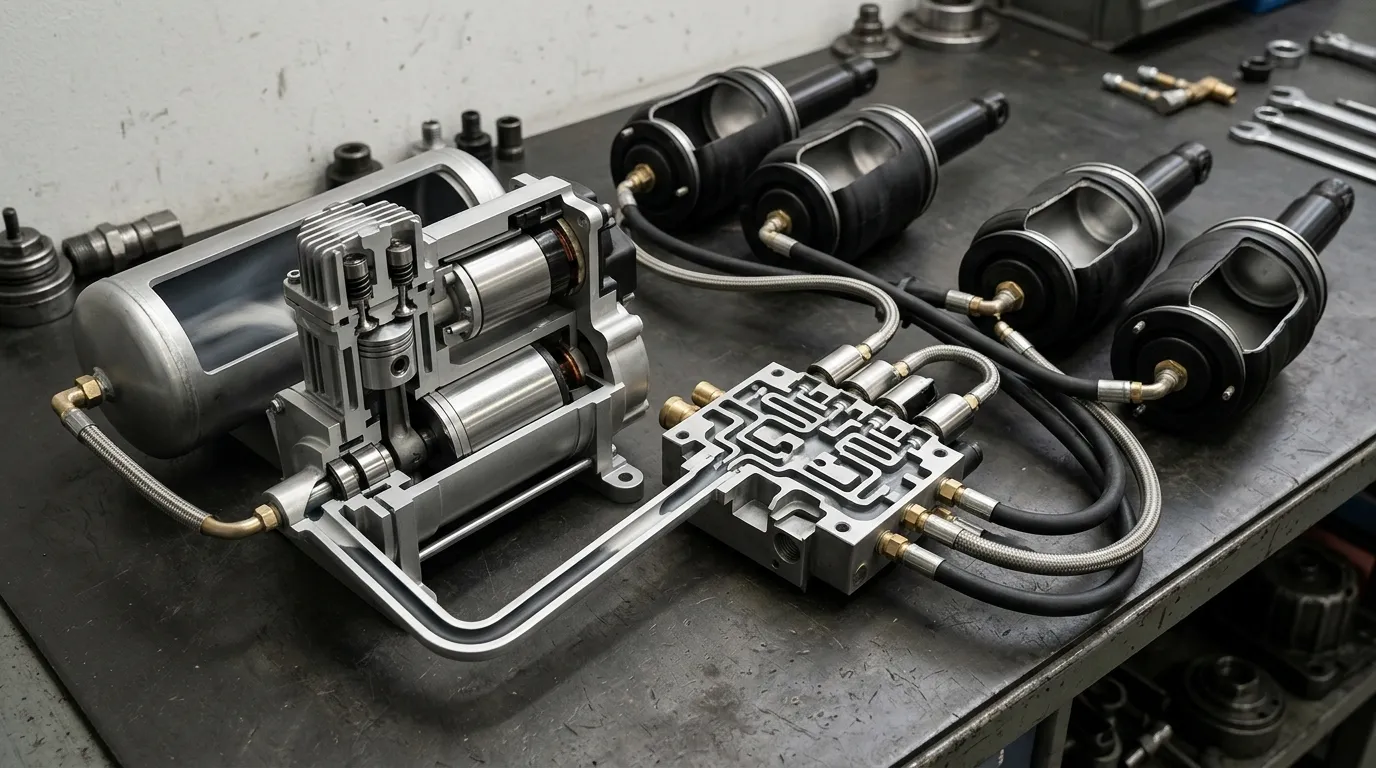
An air suspension compressor is the part that produces pressurized air. The valve block is the part that routes and controls where that pressurized air goes. Both sit in the same air path, and a fault in either one can leave the vehicle sitting low, so it helps to know each part's job before comparing symptoms.
According to AirSuspension.com, a valve block routes air to the appropriate parts of the system, with connections described for the suspension corners, the compressor and the reservoir. That is a general layout description rather than a universal specification — the number of outlets and the exact plumbing differ between vehicle models and systems.
| Part | Job | Position in the air path | Common failure points |
|---|---|---|---|
| Air suspension compressor | Produces pressurized air for the system | Feeds the reservoir and valve block | Wear, overheating, electrical feed |
| Valve block | Routes and controls air to the correct corners | Between compressor or reservoir and the air springs or struts | Electrical control, worn seals or gaskets, solenoid failure, overheating |
The valve-block failure points in that table come from AirSuspension.com's description of the component.
[DIAGRAM: Simplified airflow path — compressor → reservoir → valve block → air springs or struts, with the two compared parts labelled.]
For a closer look at either component, HUIJIE's pages on the passenger vehicle air suspension compressor and the automotive air suspension valve block describe how each part fits into a complete system.
Compressor vs Valve Block: Which Symptoms Point Where?
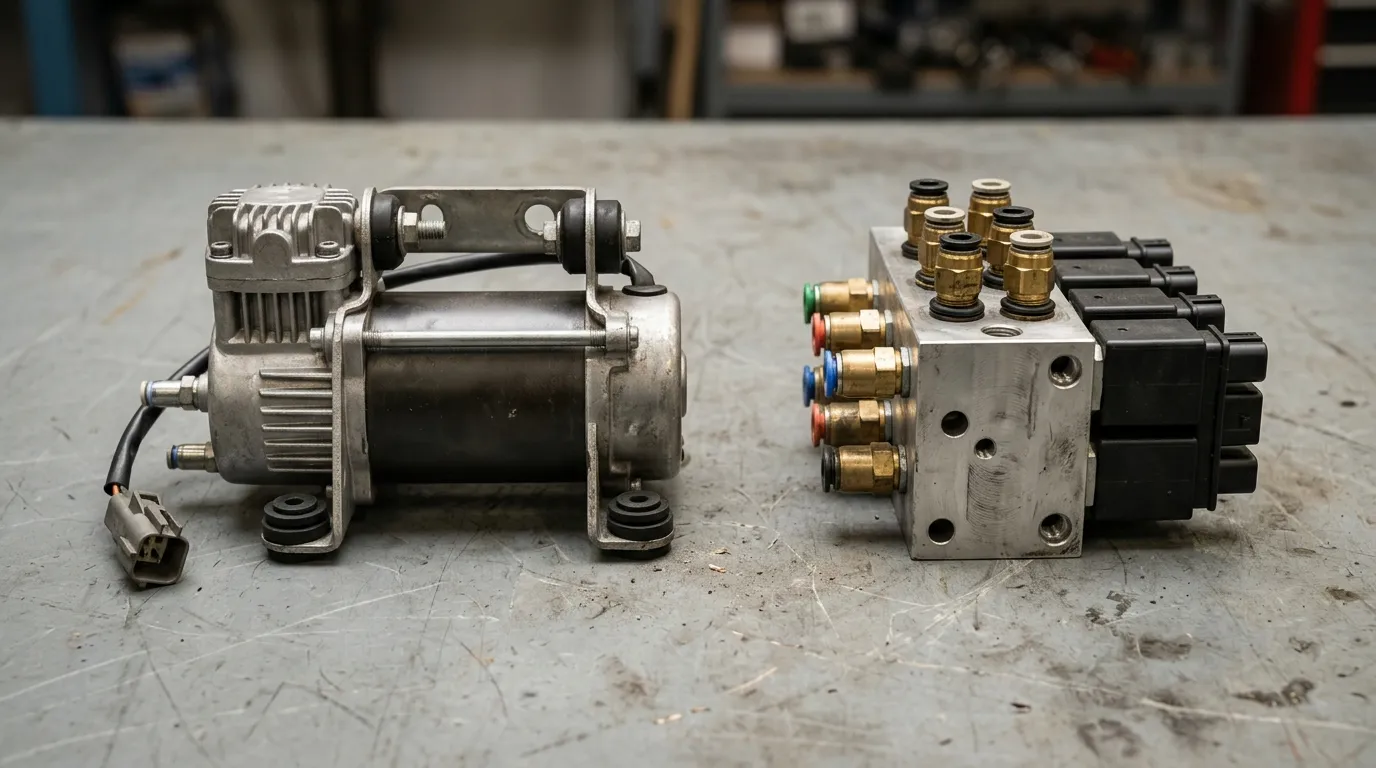
Compressor faults more often show up as air that builds slowly, or a compressor that runs noisily or continuously. Valve block faults more often show up as uneven, delayed or one-sided corner control. Neither pattern is conclusive on its own, because other parts of the system can produce the same behaviour.
| Symptom | More often the compressor | More often the valve block | Also check |
|---|---|---|---|
| Vehicle will not rise | Compressor does not run or is weak | Air is not routed to that corner | Leaks, airlines, control module, ride-height sensors |
| Compressor runs long or often | Pressure not building | Air leaking back through the block | Leaks — Monroe associates air leaks with hissing and reduced ride height |
| One corner sagging | Less typical | Possible routing problem | Air spring or strut leak, airline, ride-height sensor |
| Audible hissing | Rare | Possible at valve-block ports | Air spring, airline, air-tank fittings |
| Warning light on | Possible | Possible | Scan for vehicle-specific fault codes before deciding |
[DIAGRAM: Two-column symptom comparison — compressor-leaning clues on one side, valve-block-leaning clues on the other, with a shared "also check" band beneath.]
Clues that lean toward the compressor
If the compressor does not run, cuts out early, or never brings the vehicle to its target height even when no single corner is sagging, weigh the compressor more heavily. That is a direction of suspicion, not a diagnosis: a leak or a weak electrical feed can produce the same result, so confirm it with the sequence below.
Clues that lean toward the valve block
If the vehicle reaches its correct height and then drops unusually fast, or if only specific corners behave incorrectly while others level normally, weigh valve-block routing more heavily. According to AirSuspension.com, electrical-control issues, worn seals or gaskets, solenoid failure and overheating are possible valve-block failure causes. A model-specific test still confirms it — HUIJIE's suspension control valve block page shows how the part is built.
Why Symptoms Overlap — Leaks, Lines and Electrical Faults
Low ride height, a struggling compressor and a single sagging corner can each be caused by the compressor, the valve block, a leak, an airline or an electrical fault. That overlap is why one symptom cannot decide which part has failed, and why replacing a part on symptoms alone often leads to a second failure.
HUIJIE's air suspension compressor replacement guide advises checking the air springs, airlines, valve-block assemblies, solenoid valves, air-tank connections and electrical connectors before replacing a compressor. The same guide states that replacing a compressor without repairing leaks may lead to recurring failures and unnecessary cost. Monroe's technical tips on common air suspension problems associate air leaks with hissing and a decrease in ride height.
Items that can look like either fault:
- Air spring or strut leak
- Airline or fitting leak, including at the air tank
- Valve-block solenoid or electrical connector
- Control module or ride-height sensor
- Air-line seating at the fittings
A Safe Check Sequence Before Replacing Either Part
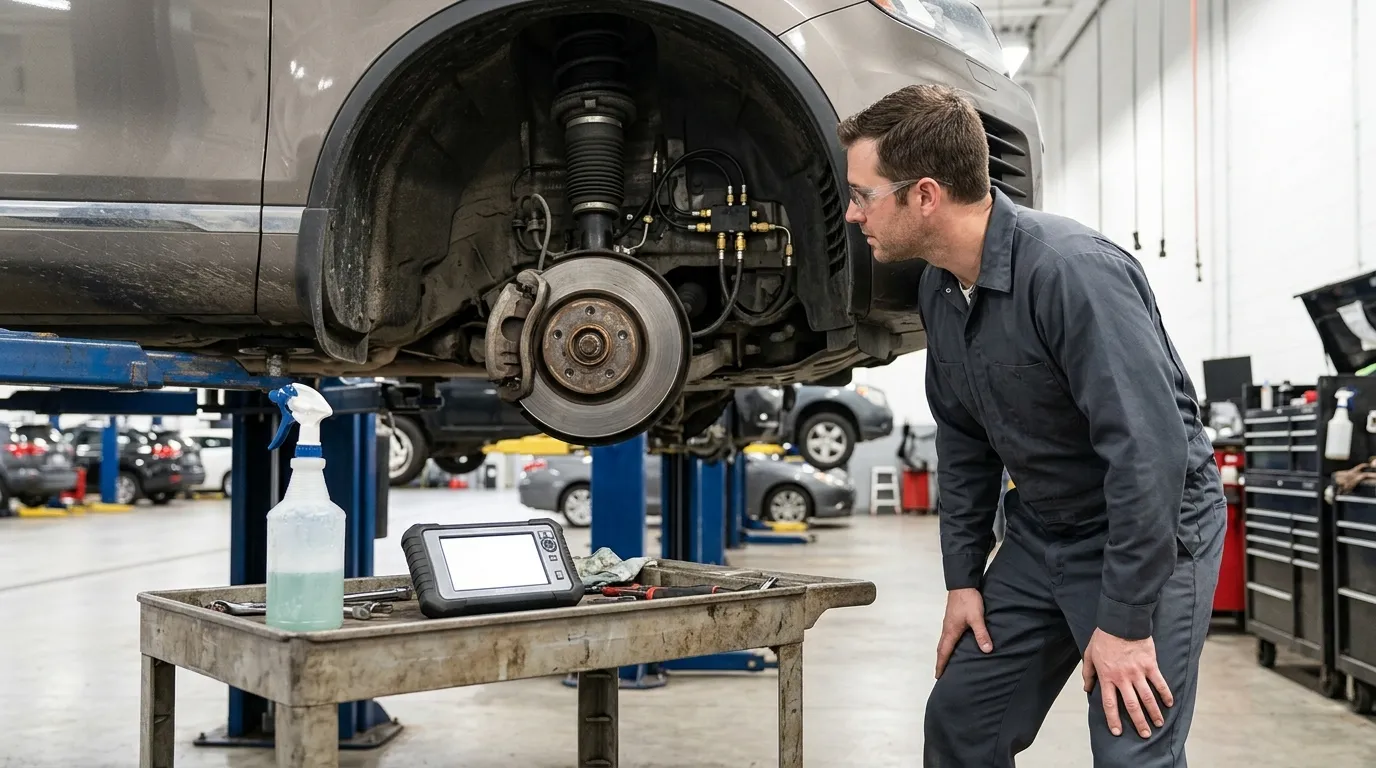
Work from the simplest, cheapest checks upward. Note which corners are affected and when, listen for leaks, watch how the compressor behaves, then use vehicle-specific fault codes and service values to narrow the fault down before ordering any part.
[DIAGRAM: Decision flowchart — entry symptoms (low ride, will not rise, one corner sagging) → leak and listen check → compressor behaviour check → fault-code scan → part replacement decision.]
- Record the pattern. Note which corners sit low, whether the drop happens overnight or while running, and whether the compressor runs at all.
- Listen for leaks. Monroe's technical tips associate air leaks with hissing and reduced ride height, so check around the air springs, airlines and fittings.
- Confirm compressor behaviour. A silent or weak compressor shifts suspicion toward the compressor, but does not by itself prove it has failed.
- Inspect fittings and air-line seating. The Tesla Model S service procedure for the air line between the compressor and valve block uses a push-pull test to verify the line is seated.
- Scan for fault codes. Use vehicle-specific diagnostic data, and apply only the pressure or electrical values that the vehicle's own service information provides.
- Compare the evidence. Replace only the part the results point to. HUIJIE's guide lists air springs, airlines, valve-block assemblies, solenoid valves, air-tank connections and electrical connectors as the items to rule out first, and its air suspension compressor replacement article covers the compressor side in more detail.
What if only one corner is sagging?
One sagging corner does not prove the valve block has failed. A single low corner can come from a leaking air spring or strut, an airline, a fitting or a ride-height sensor, and only corner-specific diagnostic data confirms which one. Treat uneven ride height as a reason to test, not as an answer.
Should you replace both parts together?
No default rule says to replace the compressor and the valve block together. Replace only what testing identifies. HUIJIE's compressor guide warns that replacing a compressor without repairing leaks can lead to recurring failures and unnecessary cost, and adding a part that tested normally increases cost without adding certainty.
Model-Specific Limits — Why Test Values Are Not Universal
System layouts, connector types and pressure or electrical values differ between vehicles and model years, so generic pass-or-fail numbers should not be used to condemn either the compressor or the valve block. The Tesla Model S service procedure, for example, specifies 3.5 Nm for one valve-block fitting and 2 Nm for another in that specific operation — torque values for a documented repair step, not diagnostic thresholds. Always work from the service information for the vehicle in front of you.
FAQ
Can a bad valve block cause the compressor to fail?
A valve block that routes air incorrectly can make the compressor work harder and run longer, which may speed up wear or overheating. It is one reason HUIJIE's compressor replacement guide advises checking the valve-block assembly, solenoid valves, airlines and air-tank connections before replacing a compressor.
Should I replace the compressor and valve block together?
Not by default. Replace only the part your checks and the vehicle's fault codes point to. Replacing both without fixing an underlying leak risks a recurring failure, and it adds cost without confirming which part actually caused the symptom you noticed.
Why does my car drop overnight but level out after starting?
An overnight drop usually points to a slow leak that loses air while the vehicle is parked. If the vehicle then levels normally once it starts, the compressor and valve block are still able to build and route pressure, so the air springs, airlines and fittings should be tested before either part is replaced.
If your testing does confirm the part, HUIJIE identifies its compressor and valve-block range by OE number across more than 2,000 listed products and backs it with a 1-year warranty, so you can match the replacement to the vehicle before ordering.
Share on Social:


