


OEM vs Aftermarket Air Spring: Fit, Life and Cost
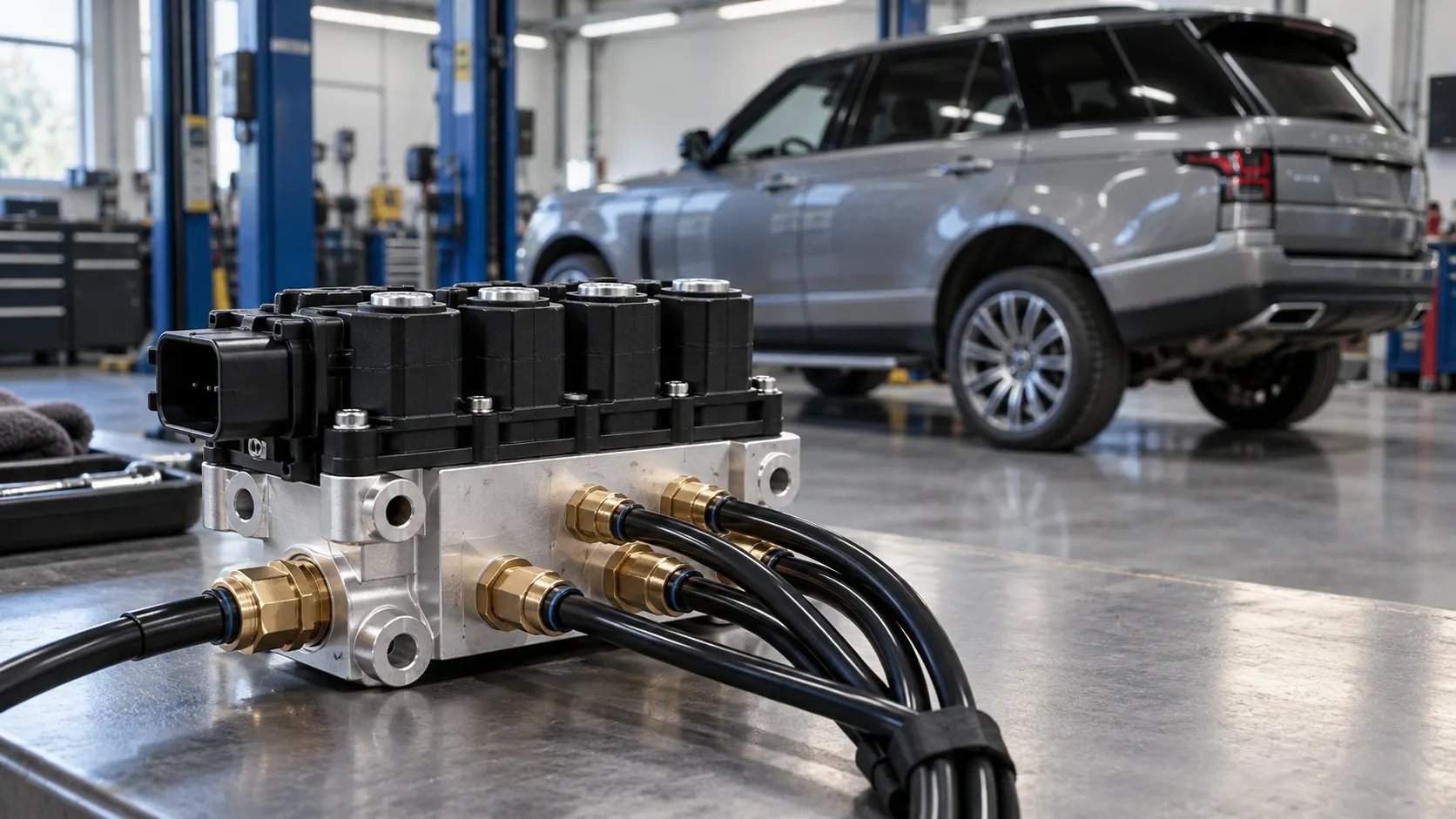
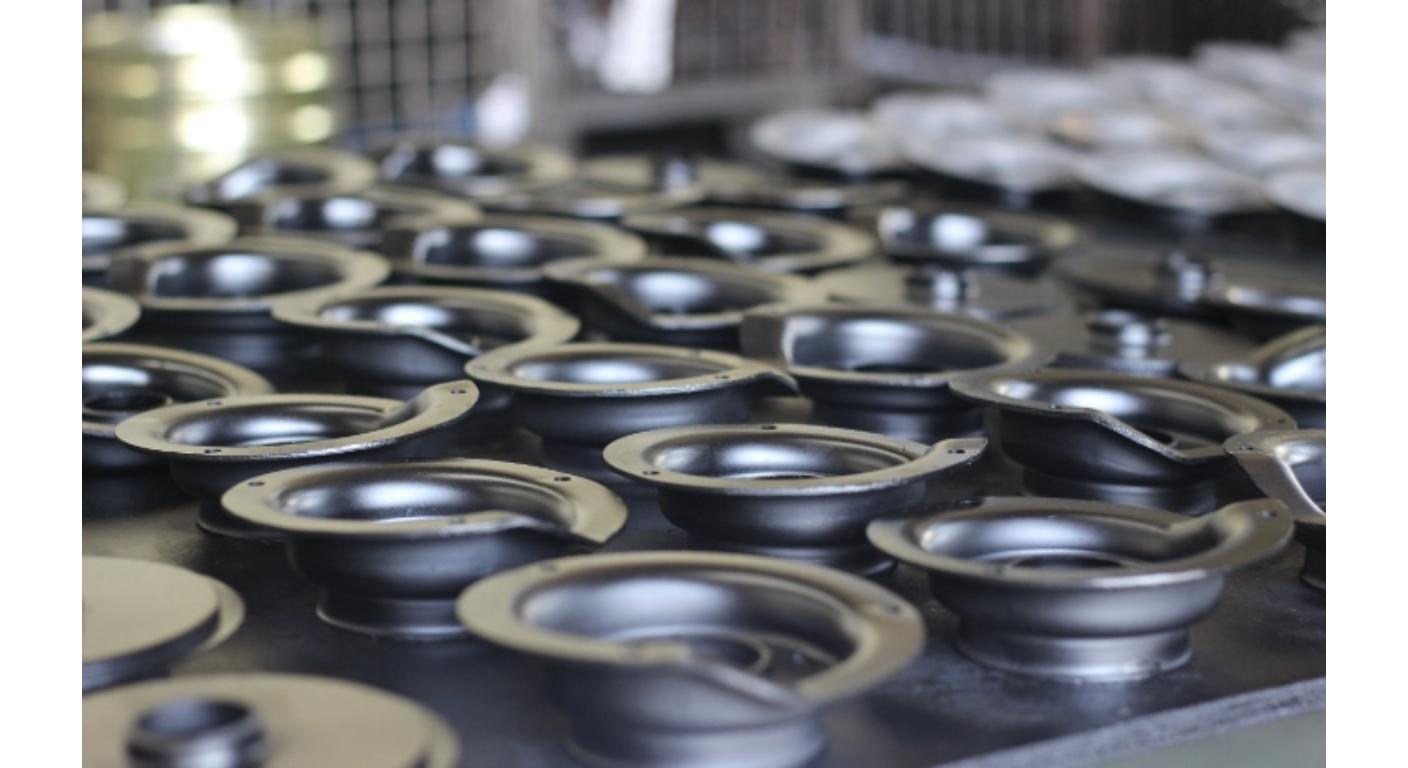
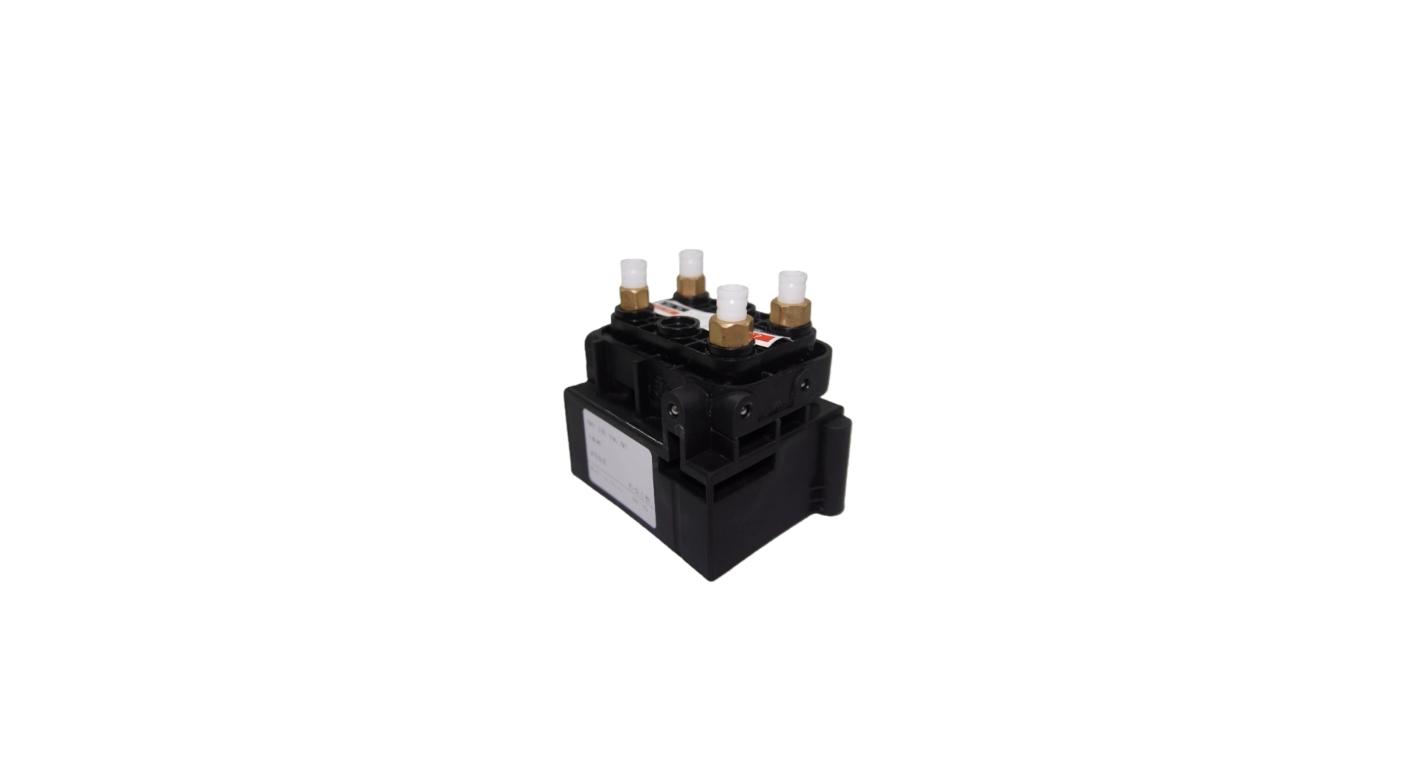
For an air spring, OEM means a part built to the vehicle maker's original specification by a supplier that maker approved, while aftermarket means a replacement built by an independent manufacturer. Aftermarket quality varies by product, so the label alone does not tell you how a given part will fit, last or cost — you have to verify the individual part against your vehicle, its suspension variant, the OE number and the supplier's documented evidence.
Key takeaways
- "OEM" and "aftermarket" describe who made a part to what specification; they are not quality grades, and aftermarket products vary between manufacturers (Airspring).
- An OE-number match confirms a catalogued interchange, not physical fitment or performance.
- Both types are built as a reinforced flexible rubber bellows, but the compound, reinforcement and construction vary by product, not by category (HUIJIE).
- No comparable, product-level lifespan data for OEM versus aftermarket air springs was found; owner forum reports are individual experiences.
- Judge fit, materials, testing, life and cost separately, for the exact part number you intend to buy.
What "OEM" and "Aftermarket" Mean for an Air Spring
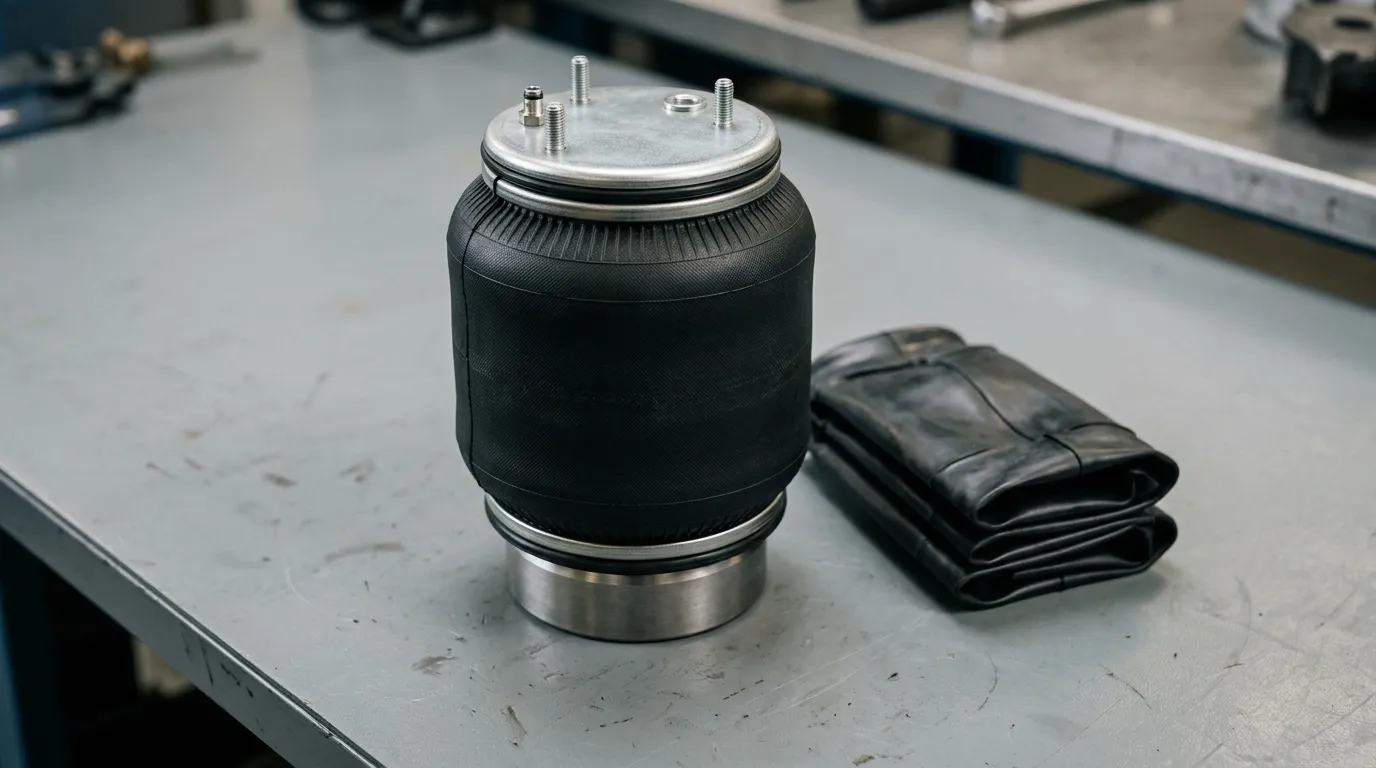
For an air spring, OEM describes a part produced to the vehicle or suspension manufacturer's original specification by an approved supplier, while aftermarket describes a replacement produced by an independent manufacturer. Airspring's comparison of OEM and aftermarket air springs defines the two that way and notes that aftermarket quality varies — which is why the category label alone does not predict how a specific part will fit or last.
An air spring is a reinforced flexible rubber bellows that supports the vehicle body, and it works as one component inside a wider air suspension system. HUIJIE's guide to air suspension airbags notes that fitment depends on the vehicle application, the suspension model and the original part number rather than on the bellows shape alone. HUIJIE, a manufacturer based in Sichuan, China, produces replacement air springs and other air suspension parts and identifies them by OE number.
| Comparison factor | Vehicle-brand / OEM-spec replacement | Aftermarket replacement | What to verify |
|---|---|---|---|
| Who makes it | Produced by a supplier approved by the vehicle or suspension maker, to the original specification (Airspring) | Produced by an independent manufacturer; quality varies by product (Airspring) | Which specification the supplier says the part follows |
| Part identity | Carries the vehicle maker's OE number | Usually cross-referenced to one or more OE numbers | The OE number is confirmed for your vehicle, axle and suspension variant |
| Fitment evidence | Original-specification fitment | Depends on the individual product | Vehicle application, suspension model, design height, mounting pattern, clearance and air inlet (HUIJIE) |
| Materials and construction | No category-level material claim found | No category-level material claim found | Construction evidence for the exact part number — verify with the supplier |
| Documented testing | Company-level testing statements only | Company-level testing statements only; Arnott describes its components as durability-tested on its own website (Arnott) | A product-level test statement, not a brand-level claim |
| Service-life evidence | No comparable product-level lifespan data found | No comparable product-level lifespan data found | Warranty terms and the operating conditions of your application |
| Cost | Airspring states OEM replacements typically cost 30–70% more than aftermarket equivalents (Airspring) | The same page also states a 30–50% saving (Airspring) | Current price and warranty conditions for the exact part |
| Warranty | Set by the vehicle maker or its supplier | Set by the aftermarket manufacturer | The terms attached to the part you buy; HUIJIE provides a 1-year warranty |
The sections below take each of those factors in turn.
Fit: Will an Aftermarket Air Spring Fit the Same Vehicle?
An aftermarket air spring can fit the same vehicle as the OEM part, but only when the specific product has been verified against the vehicle, the suspension variant and the OE number. A cross-reference match confirms that two parts are catalogued as interchangeable; it does not by itself confirm mounting geometry, design height or air-line connection.
What a Verified OE-Number Cross-Reference Proves — and What It Does Not
A verified OE-number cross-reference shows that a replacement is listed as interchangeable with the part originally fitted to your vehicle. It does not prove that the physical dimensions, mounting pattern, air inlet or bellows construction match, and Airspring's comparison notes that aftermarket quality varies between manufacturers and products — so treat the cross-reference as the start of verification rather than the end of it.
Fitment Checklist: What to Verify Before Ordering
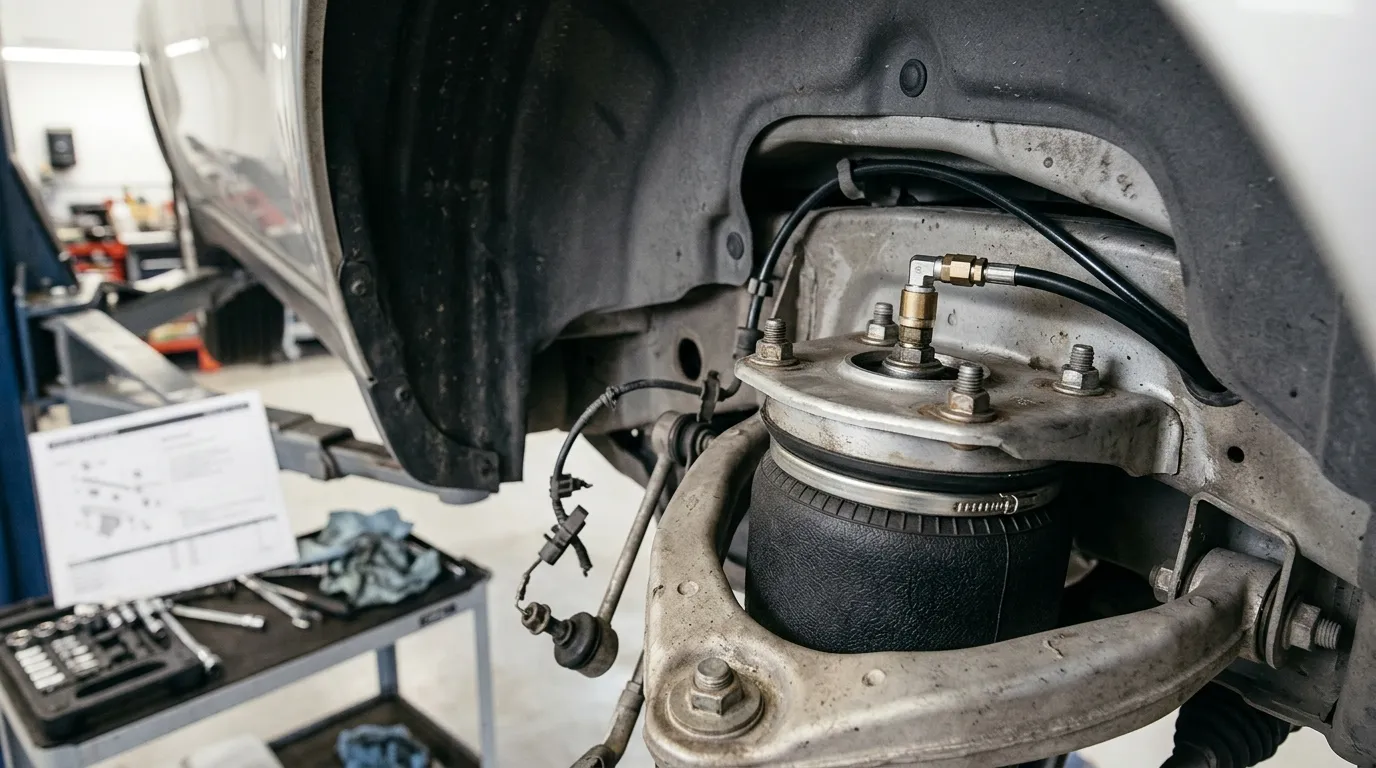
HUIJIE's air suspension airbag guide lists the checks that decide whether a spring will seat and seal correctly. Confirm each item for the exact part number you intend to buy, and ask the seller to put anything unclear in writing.
- Vehicle make, model, year and axle.
- Suspension type and variant — an air spring and a complete air strut are not the same part.
- Original part number, read from the old part or the vehicle maker's catalogue.
- Design height and mounting pattern.
- Clearance around the mounting area and exposure to heat.
- Air inlet position and line connection.
- Condition of the rest of the air system, including the compressor and valve block.
If you are weighing a replacement air suspension spring against an OE part, run the same seven checks on both so the comparison rests on fitment rather than on the label.
Materials and Construction: Do OEM and Aftermarket Air Springs Use the Same Materials?
Neither category guarantees a specific material. OEM and aftermarket air springs are both typically built as a reinforced flexible rubber bellows, and the rubber compound, reinforcement and crimping vary by product, so the useful question is what the exact part number is made of — not which category it belongs to.
American Air Suspension advises buyers to check materials, engineering and testing for the intended model, manufacturing quality and warranty rather than relying on the category name. When a supplier publishes construction details for a part, ask what that documentation covers. Distributors and repair shops sourcing aftermarket parts often shortlist an aftermarket air suspension spring supplier on exactly that basis: whether construction evidence exists for the part number they need.
How to Compare Testing and Quality Evidence
Compare testing and quality at product level rather than at category level, because the published claims available are company statements rather than independent category proof. Arnott Industries states on its own website that its products cover 93% of vehicles worldwide and that its components are tested for durability — those are Arnott's own marketing claims, not an independent result, and they say nothing about a different manufacturer's part.
American Air Suspension lists engineering and testing for the intended model, manufacturing quality and warranty among its purchase checks, which is the same order of evidence to ask for from any supplier. HUIJIE lists ISO 9001:2015, CE and IATF certification; these are company-level certifications covering the stated scope, and they do not automatically establish the performance or certification status of every individual product. Before ordering, ask for documentation at the part-number level and confirm it in writing. Anyone comparing supplier credentials across several sources will need the same discipline, whether they are reading a component guide or qualifying a new air suspension spring supplier.
Life: Do OEM Air Springs Last Longer Than Aftermarket Ones?
The sources reviewed do not show that OEM air springs universally outlast aftermarket ones. Lifespan depends on the specific product, the application, the operating conditions and the installation, so a single lifespan figure from any source should be treated with caution.
Owner accounts illustrate the problem. In an IH8MUD discussion about a Lexus GX470, one participant reports aftermarket springs working on their vehicle, while another describes dissatisfaction with a replacement shock's ride — individual experiences, about different components, with no controlled conditions behind them. Airspring's comparison briefly claims a longer service life for OEM springs, but it does not publish comparable test data, warranty return rates or a sample. What a buyer can check instead is the warranty attached to the part: HUIJIE provides a 1-year warranty on its products, while terms from other brands will differ.
Before concluding that a spring has failed, check the rest of the system. HUIJIE's guide recommends testing for leaks around fittings and components with a soap solution, because a leaking air line, valve block or compressor can produce the same symptoms as a worn bellows.
Cost: What Drives the OEM vs Aftermarket Price Gap
The real cost decision is part price plus availability, warranty terms and the risk of a wrong fit — not a single headline discount. The only price claim found in the sources is also internally inconsistent, which is a useful warning in itself.
Airspring states that OEM replacements typically cost 30–70% more than aftermarket equivalents, and on the same page gives a separate 30–50% saving figure. Both are that source's claims, recorded here without independent corroboration, and neither should be treated as a market-wide range or used to negotiate a specific purchase. No prices, lead times or minimum order quantities are published in the sources reviewed.
The cost that buyers underestimate is a wrong fit: a part that cross-references correctly but does not seat, seal or clear the mounting area becomes a return, a second order and extra labour. That is why the fitment checklist above matters as much to cost as the purchase price does.
When Each Option Makes More Sense
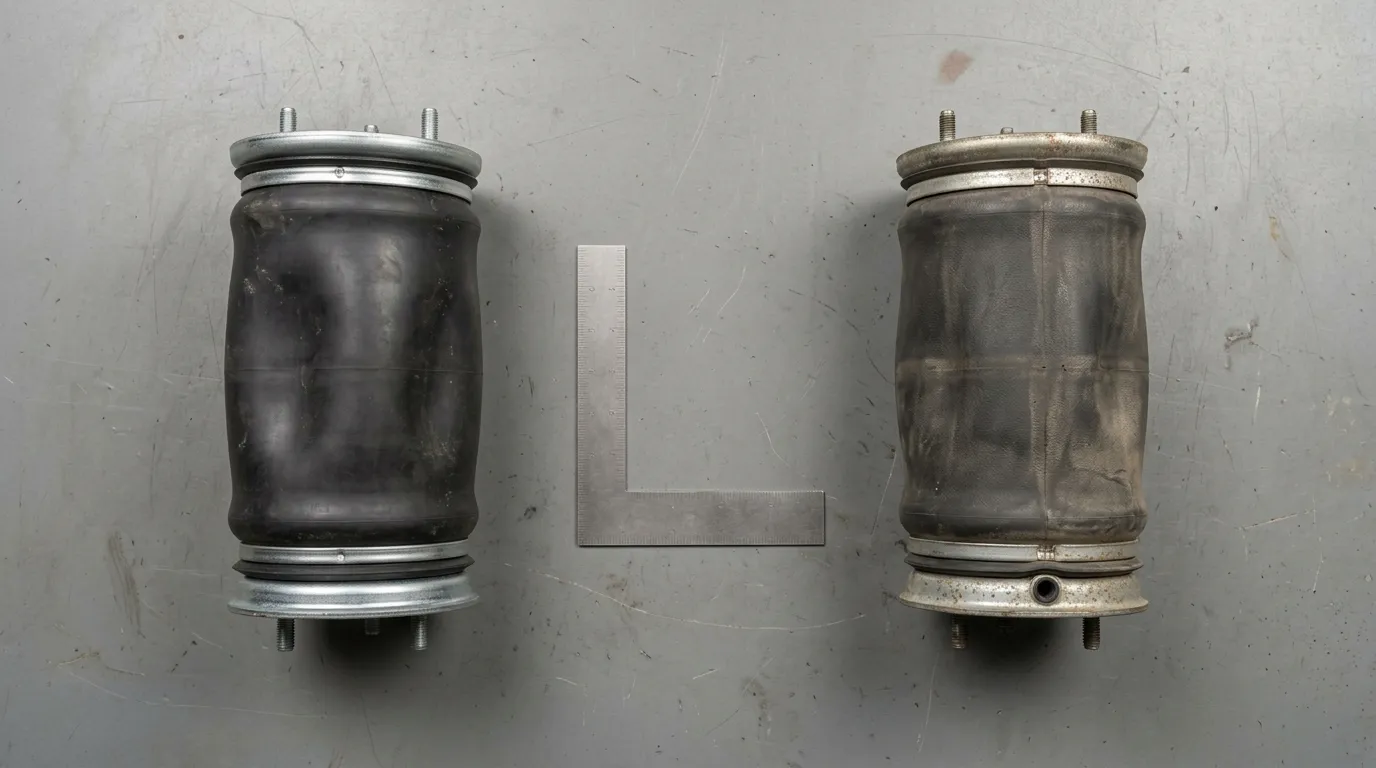
Choose the option that matches your evidence, not the category. OEM tends to be the lower-risk route when the vehicle maker's specification or an unusual suspension variant makes fitment uncertainty expensive; a verified aftermarket replacement makes sense when the part is confirmed to your vehicle, axle and OE number and the supplier documents construction, testing and warranty terms.
- OEM-leaning situations: an original-specification requirement, an unusual or undocumented suspension variant, unresolved fitment questions, or a repair where the vehicle owner expects the original part to be used.
- Aftermarket-leaning situations: the part is verified to your vehicle, axle and OE number, the supplier provides construction and warranty documentation for that part number, and the repair context accepts a replacement part.
- Either way: confirm the fitment checklist above for the exact part number, and treat any lifespan or price comparison that names neither the part nor its conditions as unverified.
HUIJIE lists more than 2,000 air suspension products and supplies OEM and aftermarket buyers worldwide, including distributors, wholesalers and repair shops. If you are deciding between an OEM part and a comparable replacement for a specific vehicle, sending your vehicle details and OE number is a practical first step — HUIJIE provides a 1-year warranty and identifies parts by OE number, so the answer you get back can be checked against the checklist above.
Frequently Asked Questions
Is an OEM air spring always better than an aftermarket one?
There is no universal answer, because aftermarket quality varies by product. An OEM air spring follows the original specification, which reduces fitment uncertainty, but a verified aftermarket air spring can be appropriate when its construction, testing documentation and warranty terms are clear for the exact part number you are buying.
Are aftermarket struts as good as OEM struts?
That is a different comparison: this page covers air springs, not complete air struts. The same principle applies to both — judge the individual part number rather than the category, checking confirmed vehicle fitment, OE-number cross-reference, documented construction and testing, and the warranty terms attached to that specific product.
What is the best air suspension brand for trucks?
Brand rankings depend on the application and on claims that are difficult to verify. Arnott Industries publishes its own coverage and durability claims on its website, and HUIJIE lists more than 2,000 air suspension products, but neither claim settles fitment for your truck. Confirm vehicle and axle fitment, the OE number and warranty terms instead.
Share on Social:


Contact Us
In This Article
- 1 What "OEM" and "Aftermarket" Mean for an Air Spring
- 2 Fit: Will an Aftermarket Air Spring Fit the Same Vehicle?
- 3 Materials and Construction: Do OEM and Aftermarket Air Springs Use the Same Materials?
- 4 How to Compare Testing and Quality Evidence
- 5 Life: Do OEM Air Springs Last Longer Than Aftermarket Ones?
- 6 Cost: What Drives the OEM vs Aftermarket Price Gap
- 7 When Each Option Makes More Sense
- 8 Frequently Asked Questions
