


Air Suspension Airbags: Selection, Fitment, and Maintenance Guide
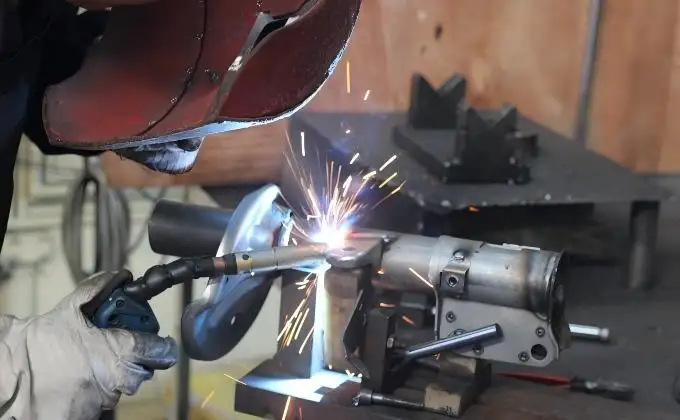

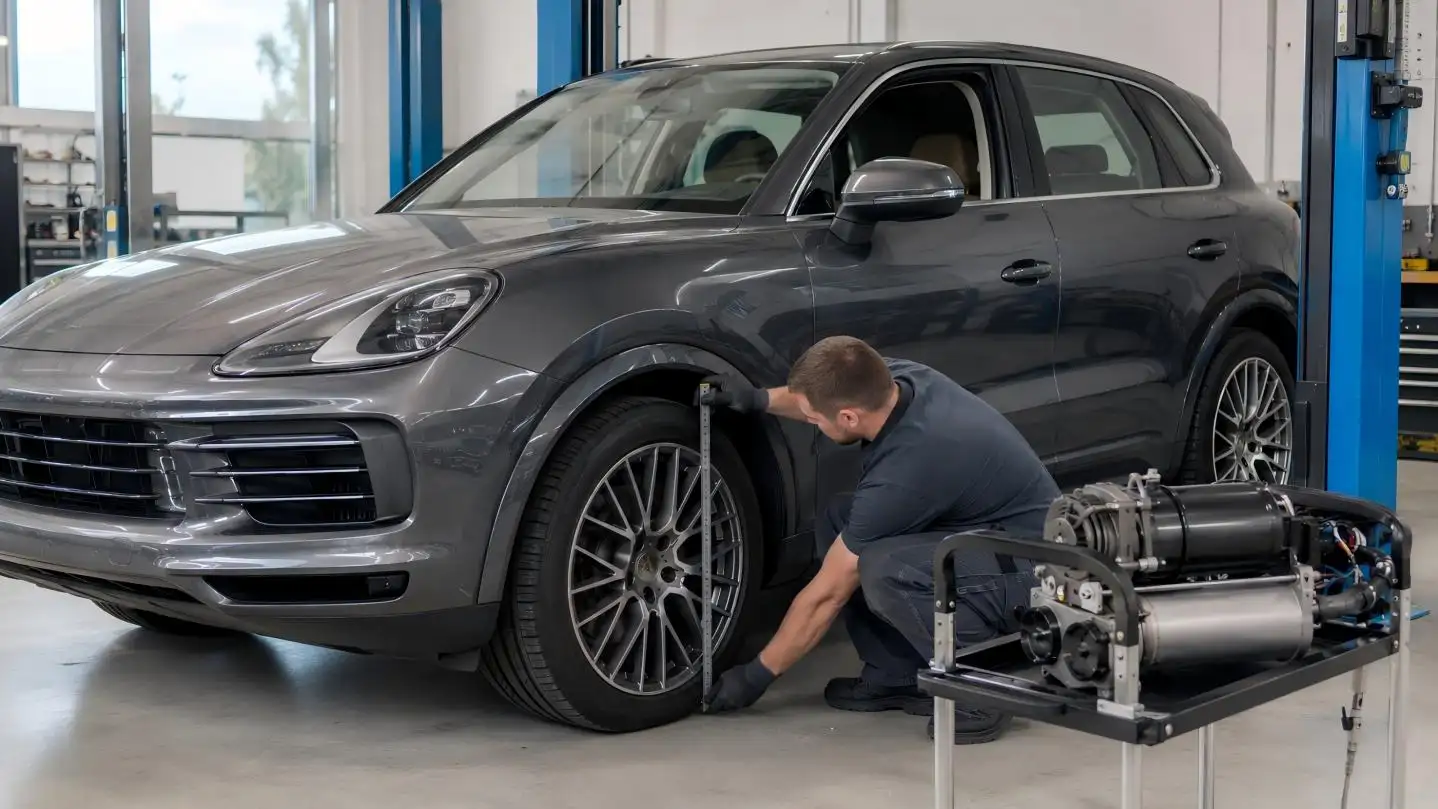
If there are changes, generally they are detected by air suspension airbags. Side of truck begins drooping down, compressor runs more often, ride is extremely rough or the suspension takes a long time to return to its normal height.
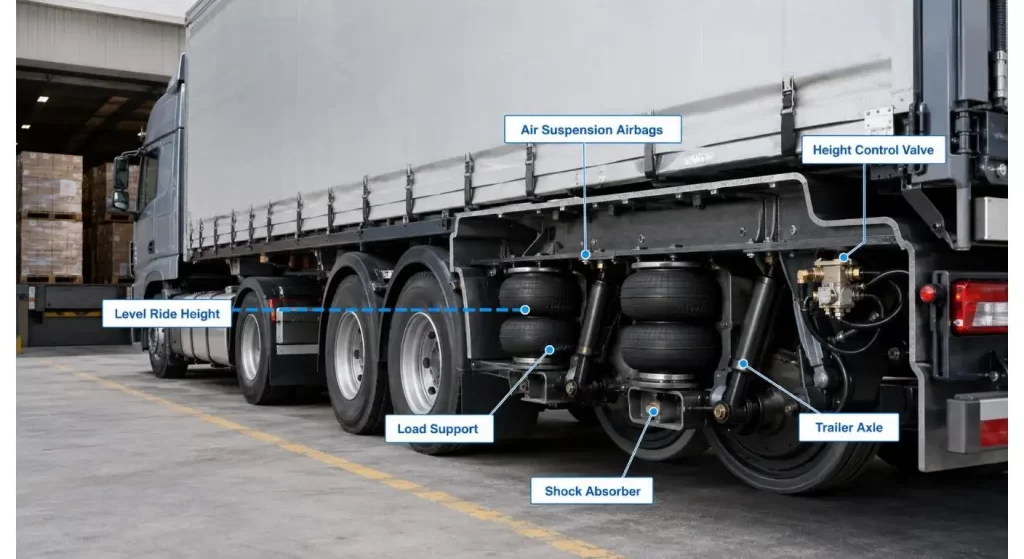
It is better for fleet operators, repair shops and replacement parts vendors to look at the airbag as part of an entire pneumatic suspension system.
There are a number of advantages to air suspension airbags
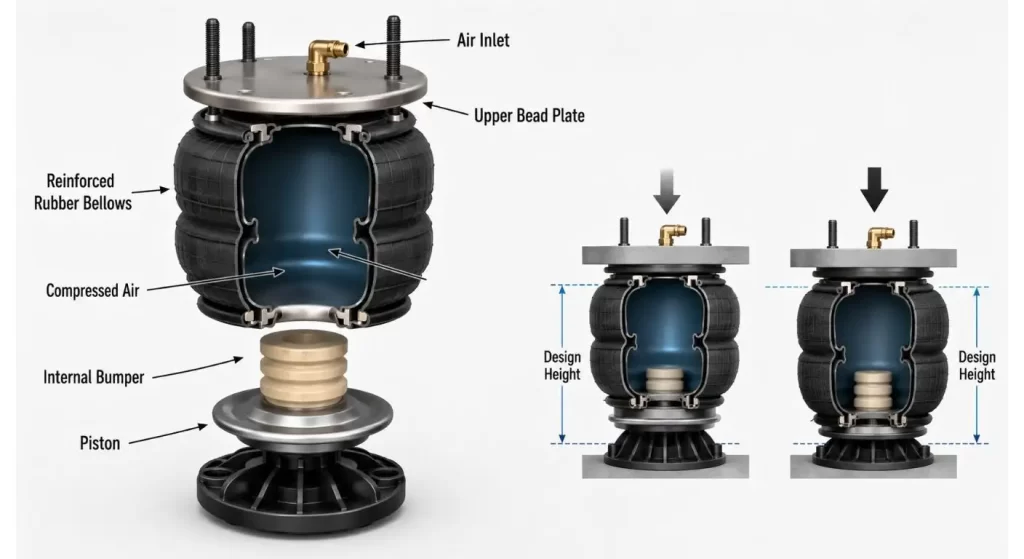
Air suspension is an air-filled airbag using a reinforced flexible rubber bellows which supports the vehicle body, which is known as air suspension airbags.
The suspension can offer a higher dynamic stability of the chassis in varying loads on trucks, buses and trailers. According to Continental, the level control for air-suspended commercial vehicles ensures a better ride comfort and cargo protection, even with different payloads, due to better road clearance.
The air spring is not the only one that's used for action. It is dependent upon the piston, upper plate, mounting brackets, shock absorbers, height-control valve, air reservoir, compressor, airlines and suspension geometry.
Failure could occur earlier than expected from an airbag that is installed in an old and/or improperly adjusted airbag system.
Never put the vehicle through greater than rated airbag usage
The most common error is for a higher air suspension airbag to lead to a higher legal load carrying capacity of the truck.
Air springs can also help level the load, reduce sag in the suspension and add stability in the vehicle's operating range, which may help compensate for an out-of-balance load. They will not be used to increase the gross vehicle weight rating or axle rating of the manufacturer. The helper air springs, says Firestone, should NOT be used to go over the vehicle manufacturer's GVWR.
When a vehicle is overloaded, the tires, brakes, axles, frame, bearings and other parts of the suspension system may be working outside the design parameters of the system even if the body of the vehicle is level.
Load leveling, and load-rating approval, are not the same things.
Match the Air Spring with the Perfect Suspension
Outside diameter or appearance should never be the only considerations for the selection of air suspension airbags.
| Inspection Area | Why It Matters | What to Confirm |
| Vehicle application | Prevents incorrect replacement selection | Make, model and axle |
| Suspension model | Determines airbag geometry | Suspension identification |
| Original part number | Supports accurate cross-reference | OE and replacement numbers |
| Design height | Keeps the bellows within its working range | Approved ride height |
| Mounting pattern | Ensures correct mechanical installation | Studs, holes and air inlet |
| Clearance | Prevents rubbing and puncture | Full suspension movement |
| Heat exposure | Protects the rubber compound | Shield and exhaust distance |
| Wear pattern | Helps identify the original failure | Abrasion, cracks or contamination |
| Air system | Confirms the bag is the real leak source | Lines, fittings and valves |
It's also important to remember that the amount of weight that an air spring carries at a specific pressure level will vary based on the internal bumpers or flexmember construction, Hendrickon says. It proposes using the air springs to be used for the air suspension.
The most important information is the car make, model, axle configuration, suspension model, ride height, original part number and mounting.
It is good to have cross reference numbers but it is important to always check the physical and operating characteristics of the product prior to installation.
It's not what it looks like, it's More Important Than it Looks!
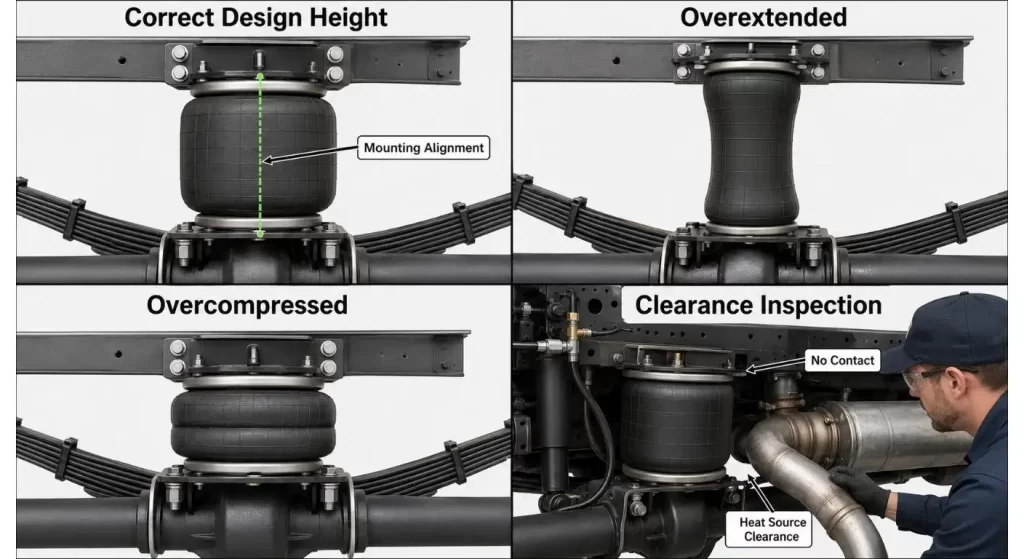
The height and range of stroke of an airbag are very important.
Suspension that is too high will cause the rubber bellows to stretch, and can cause the shock absorbers to overstretch. It can be run too low so as to bottom out several times or rub against other parts of the air spring.
The Ride height is set to equalise the load, and to ensure the suspension is working properly, otherwise it may damage the suspension, axle or the trailer.
Then the height of the ride should be taken by the suspension manufacturer's method. Don't assume that by measuring the distance between the tyres and the fenders it can be done.
After replacing an air spring, the height control-valve and linkage must be replaced, and the previous setting will not be accurate.
Abrasion failures are avoided if the abrasion is without health consequences
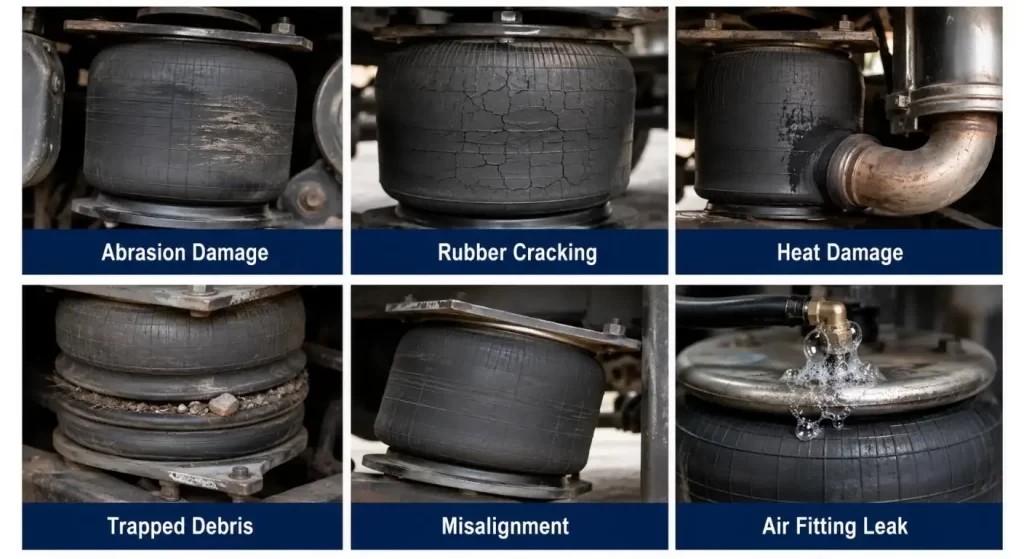
Numerous torn airbags don't burst due to the fact that the rubber was weak. They stopped working due to repeated contact with the bracket, the cable, the edge of the frame, parts of the exhaust or build up of exhaust parts or debris.
Firestone advises inspecting the entire clearance space between the inflated air spring and the other vehicle parts, and making sure that the bellows and hardware don't rub on other parts of the vehicle. It also suggests to remove the dirt around the bellows, bead plates and pistons including the gravel and sand.
Examine suspension in normal state and in its normal motion. The axle articulation point or the compression of the suspension can leave an adequate space when the vehicle is parked, but not when on the road.
Electrical cables, Aircraft cables and Brake hoses must also be kept away from moving surfaces.
Over the years the heat can damage the rubber
All kinds of heat sources like exhaust systems, engine, brakes, etc. can accelerate the deterioration of rubber.
Heat damage may be present in a variety of ways such as hardening, cracking, glazing of the surface, discoloration or local deformation. The damage does not have to be done during the first use, but can occur over the course of time from repeated use at high temperatures that cause the gradual weakening of the airbag.
Firestone suggests checking the gap between the air spring and heat sources and using a heat shield (if so specified in the application instructions).
A replacement bag does not need to be installed until it is determined that a missing, damaged or recessed heat shield has been resolved.
Don't replace parts, diagnose a leak and fix it before replacing
One of the potential causes of loss of height in a vehicle is for it to have a leak in the airbag.
Firestone recommends taking a soap solution test around fittings for air, air spring and compressor parts. Depending on the leak, it could be a requirement to remove the line and then replace the line, instead of replacing the whole airbag.
Where a bag leaks only when hanging a certain way, look for folds and inspect the bag for any hidden points of abrasion or areas where the piston is likely to be touching the bag.
Interpret wear pattern
The location of the damage frequently will indicate the cause of the damage.
A crack at the fold can be due to ageing, over-extending, contamination and/or incorrect operating height. The other side is likely to have been in contact with some other part if there is a polished or worn patch on one side. The cause of damage may be misalignment, mounting problems, corrosion and/or incorrect mounting.
Other chemicals such as oil, fuel, solvents, road chemicals and highly aggressive cleaning solutions can also have an impact on rubber compounds. The only ways to clean a contaminated air spring are those approved for use with the material used in the air spring.
If the failure is caused by a wear pattern, replacement of the bag without knowledge of the wear pattern, will most likely cause another failure.
Do not disassemble without taking precautions for correct installation
The air spring should be correctly aligned at both the end of its working stroke.
Firestone suggests the air spring and (if possible) the upper and lower brackets should be set up visually so the bag hangs from the air spring and moves up and down and at the correct design height.
Before tightening an assembly when there is no more clearance:
- Review the components that have been added and/or deleted from the system.
- Remove dirt from mounting surfaces with water.
- Make sure that brackets are not bent or corroded.
- Look at thread and studs
- Always find out the direction of an airplane's flight.
- Don't twist the bellows while in the grip,
- Apply the correct fastener torque – per value
- Do not use the wrong way or full load on the deflated replacement as the manufacturer has recommended.
Replace axle pairs' airbags in some instances
If the two air springs are the same distance of use, and operating conditions are the same, one spring on the same axle may show a leak but could be the same condition as the other spring that has not leaked.
If one is replaced, and it will affect the rubber stiffness, wear or characteristics of operation on one side of the machine.
In some cases it is not required, but if the bags are worn, the vehicle has a lot of kilometers, or if the bags and the vehicle are cracking and have some wear, then the replacement of pairs can be considered.
The decision to make should be based on the directions of the suspension manufacturer, and what remains.
Incorporate Airbag routine maintenance
Waiting until suspension collapse before performing maintenance is a high cost maintenance option.
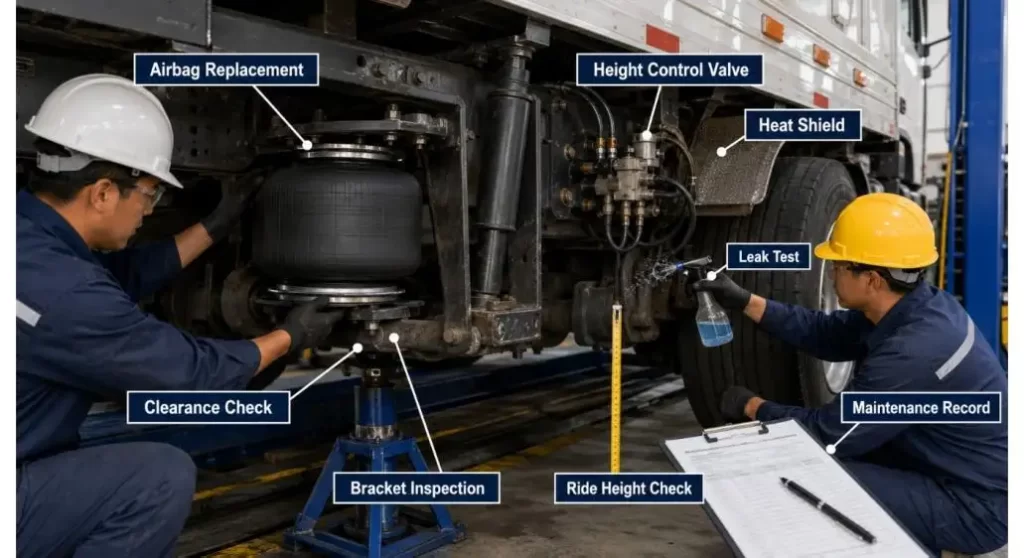
The following should be regularly checked for:
- Ride height
- Air pressure and leakiness
- Cracks/abrasions in the bellows.
- The particles left in the piston are termed as debris.
- To attach with brackets, fasteners etc.
Conclusion
Air suspension airbags can improve the performance of a suspension system, the leveling performance of the load and the height control of the vehicle but they must be installed correctly and with a healthy suspension system.
The most desirable alternative is not only the close-matching bag, but also the most superior alternative. It is the air spring that is the same as the original, has the correct ride height, clearance and is kept clear of heat and contaminants and is installed once the cause of the original failure is identified.
During the installation process, there are a couple of additional checks that could be performed that will prevent another situation to blow out once in the road.
FAQs
Q1. What's the difference between Air Suspension Airbags and Air Springs?
Yes. The flexible pneumatic spring that supports the chassis is sometimes referred to as either an airbag or a spring called an air spring in vehicle-suspension applications.
Q2. How much could Air Suspension Airbags add to Payload capacity?
No. They can level and stabilize an approved load but they will not add to the vehicle manufacturer's GVWR or axle rating.
Q3. Why Is an Airbag Draining?
It could be caused by a leak in the fitting, a leak in the bellows, a badly cut airline, a bad valve, a leak in the compressor connection or another leak in the pneumatic system.
Q4. When replacing the airbags should Both Airbags of an Axle be changed?
It might make sense when they are both similar ages, are of similar mileage and are both showing signs of wear and tear. Should be based on inspection findings and manufacturer's guidance.
Q5. What could be causing an early airbag failure?
Common reasons include improper ride height, wear and tear, hot conditions, alignment, dirt and grime, chemical damage, overextension and improper installation.


Contact Us
In This Article
- 1 There are a number of advantages to air suspension airbags
- 2 Never put the vehicle through greater than rated airbag usage
- 3 Match the Air Spring with the Perfect Suspension
- 4 It's not what it looks like, it's More Important Than it Looks!
- 5 Abrasion failures are avoided if the abrasion is without health consequences
- 6 Over the years the heat can damage the rubber
- 7 Don't replace parts, diagnose a leak and fix it before replacing
- 8 Interpret wear pattern
- 9 Do not disassemble without taking precautions for correct installation
- 10 Replace axle pairs' airbags in some instances
- 11 Incorporate Airbag routine maintenance
- 12 Conclusion
- 13 FAQs
