


Air Suspension vs Hydraulic Suspension: Pros and Cons
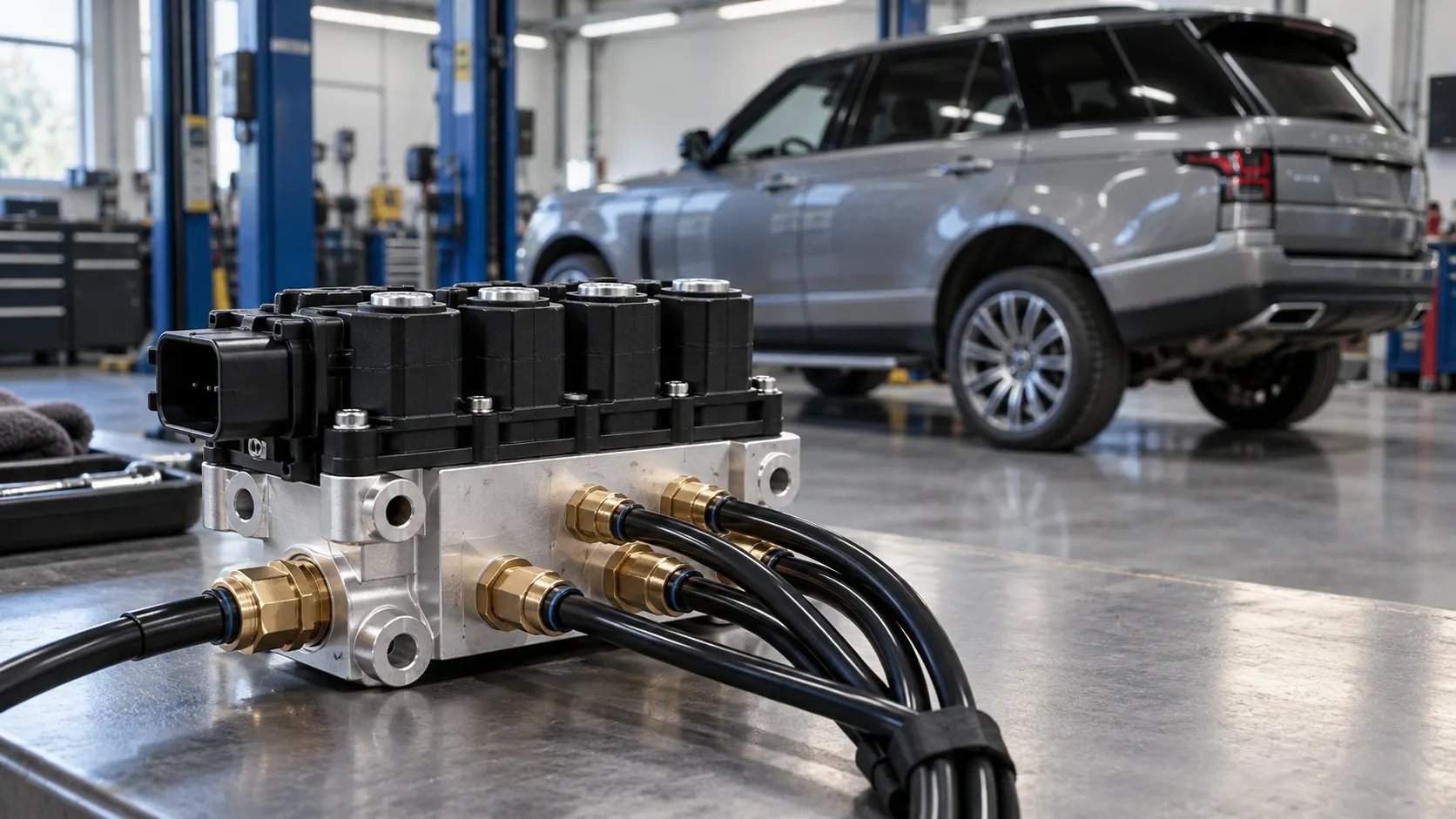
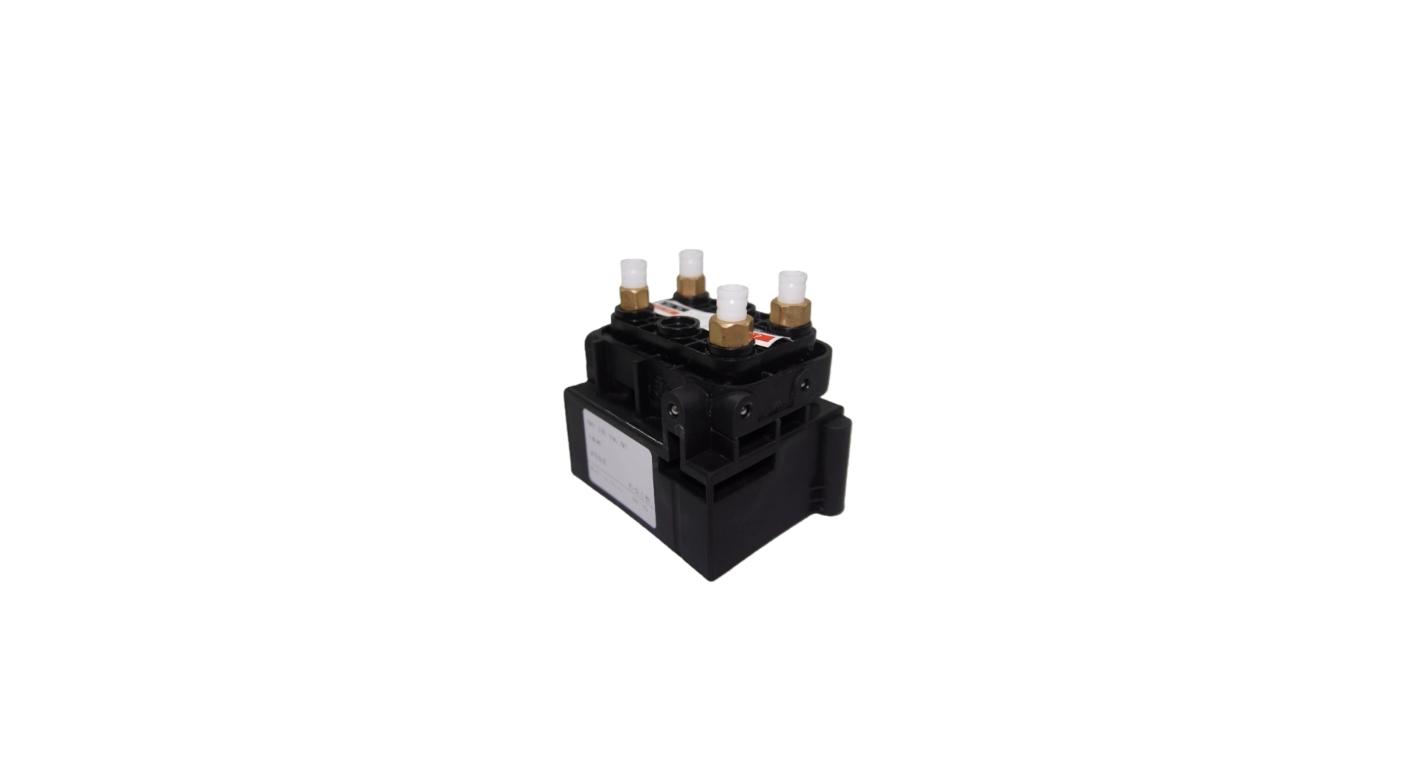
Hydraulic suspension systems and air suspension systems both change how a vehicle sits and rides, but they use different working media: hydraulic systems move fluid through a pump, lines and cylinders, while air systems move compressed air through a compressor, tank, lines and air springs. Neither is universally better — the right choice depends on the vehicle, how it is used, and how much maintenance the owner will tolerate.
Key takeaways
- The core difference is the working medium: pressurised fluid in hydraulic suspension systems, compressed air in air suspension systems.
- Hydraulic faults usually show as fluid leaks and mess; air faults usually show as hissing, a sagging corner or reduced ride height (DrivingLine; Monroe).
- Repair cost depends on which component failed and whether it is sold separately — not on the system label alone.
- Wikipedia's article on air suspension places the technology in buses, trucks, semi-trailers, passenger trains and some passenger cars.
- Application lists describe common use, not fitment — always verify against the specific vehicle's documentation and OE numbers.
Hydraulic vs Air Suspension: What's the Real Difference?
Hydraulic suspension systems and air suspension systems are both adjustable suspension designs, but the medium that carries the load differs: hydraulic systems pressurise fluid, while air systems pressurise gas.
What "hydraulic suspension" can mean
Before comparing the two, check which hydraulic design a source means: a pump-and-cylinder lift system of the kind DrivingLine describes for lowrider vehicles, or a hydropneumatic design that combines hydraulic fluid with a gas spring. They share a fluid circuit but not the same construction or purpose, so a response or cost claim taken from one does not transfer to the other.
What air suspension means
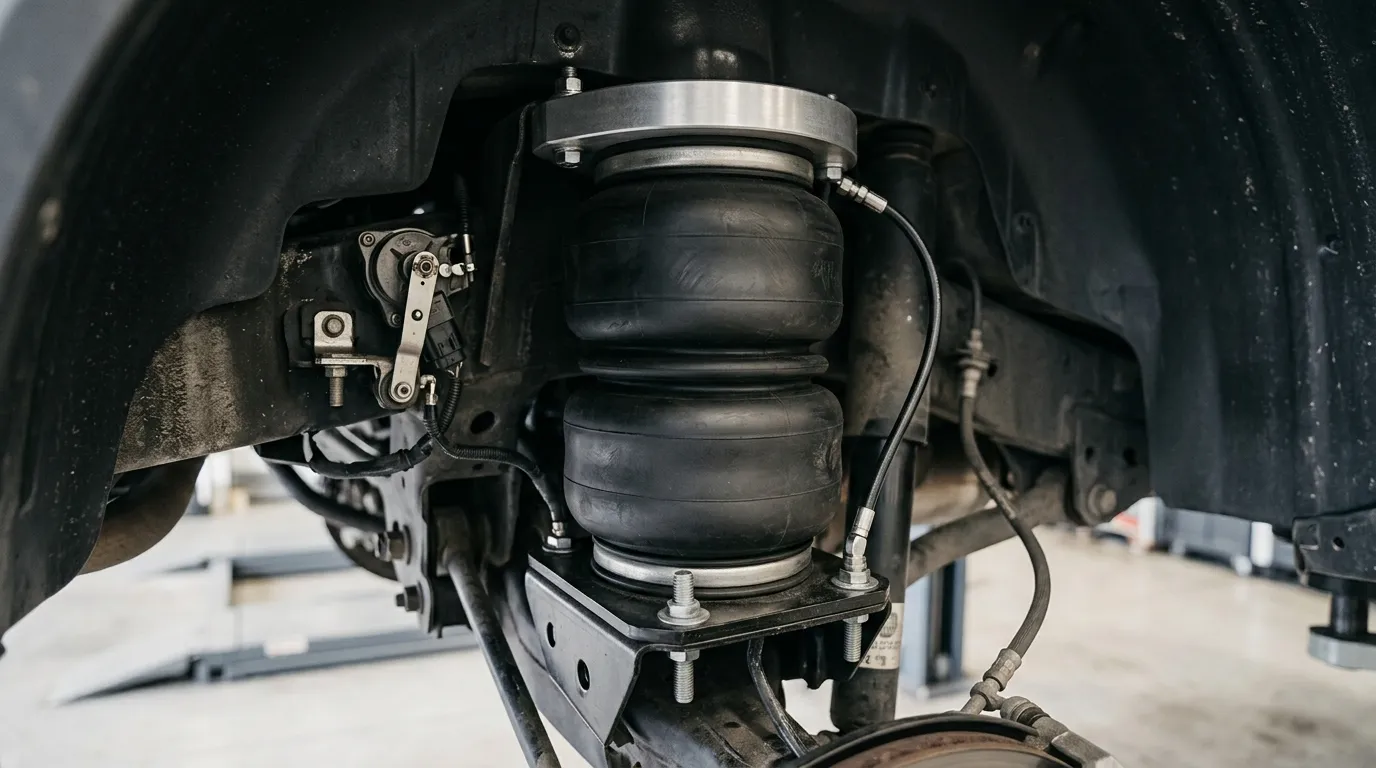
An air suspension system is a design that uses pressurised air held in a flexible bellows or air spring instead of pressurised liquid, according to Wikipedia's article on air suspension. In the layout Strutmasters describes, the system includes an air tank, air struts, air lines, a compressor and a manifold, and the air springs raise or lower the vehicle as they inflate or deflate. That component list is also where diagnosis starts when an air system misbehaves, and suspension system parts covers the categories buyers normally search for.
A short historical note
DrivingLine reports that Citroën used hydraulic suspension in cars in the 1950s, and describes hydraulic components later being adopted by the lowrider community for height changes. Air suspension has a separate development path; first use of air suspension covers that timeline in more detail.
[DIAGRAM: Side-by-side circuit diagram — air path (compressor → tank → valve block → air springs) against hydraulic path (pump → reservoir → lines → cylinders), with the working medium labelled on each side]
Table 1 — Core system comparison
| Criterion | Hydraulic suspension systems | Air suspension systems |
|---|---|---|
| Working medium | Pressurised hydraulic fluid moved by a pump | Pressurised air held in a flexible bellows or air spring (Wikipedia, "Air suspension") |
| Main components | Pump, fluid lines, cylinders and seals, as described in DrivingLine's account of lowrider hydraulic setups | Air tank, air struts, air lines, compressor and manifold (Strutmasters) |
| How height changes | Fluid is pumped into cylinders to change position | Air springs inflate or deflate to raise or lower the vehicle (Strutmasters) |
| Typical leak risk | Fluid escapes and creates a mess (DrivingLine) | Air escapes; damaged air springs and air lines are common leak sources (Monroe) |
| Typical applications | 1950s Citroën cars and lowrider vehicles (DrivingLine) | Buses, trucks, semi-trailers, passenger trains and some passenger cars (Wikipedia) |
How Each System Raises, Lowers and Supports a Vehicle
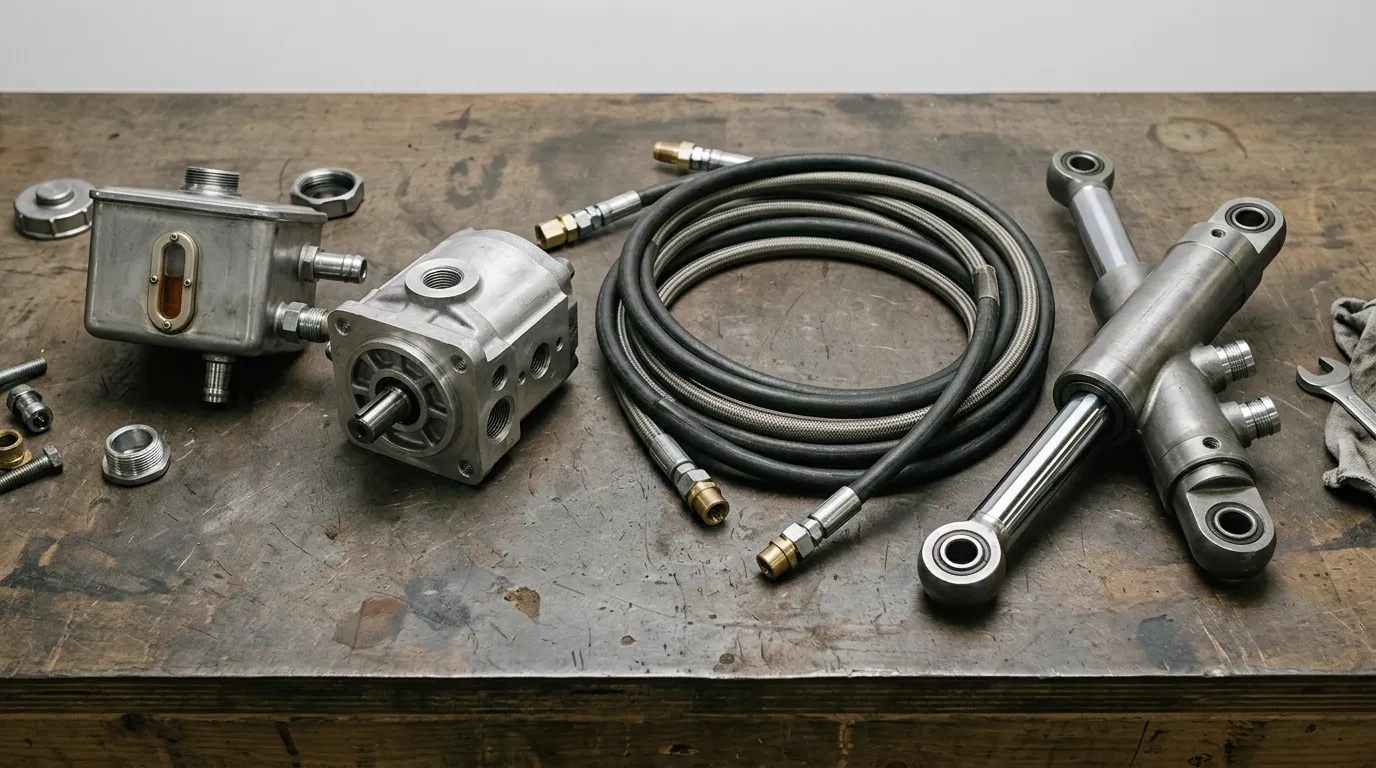
In an air suspension system, a compressor and valves inflate or deflate the air springs to change ride height; in a hydraulic suspension system, a pump moves fluid into cylinders. How quickly either system responds depends on the pump or compressor, the valve and line sizing, and the control electronics — not on the system name alone.
Wikipedia describes the air spring as a flexible bellows containing pressurised air, and Strutmasters notes that air springs raise or lower a vehicle as they inflate or deflate. For a component-level walkthrough of that process, see how air suspension works.
ArabWheels' comparison table characterises hydraulic adjustment as faster and air adjustment as slower but smoother. That is the publisher's general comparison rather than a measured specification, and it should not be read as a response time for any particular vehicle. Response and ride quality are set by hardware and tuning: a larger compressor, wider lines or a different valve block change how fast air moves, just as pump output and cylinder sizing change how fast fluid moves.
This page does not quote response times in seconds or milliseconds. A figure published without naming the system, the vehicle and the test conditions describes one build, not the category.
Leak Behaviour: Hydraulic Fluid vs Air
A hydraulic leak releases fluid, while an air leak releases gas — and that single difference changes what the owner sees, hears and has to clean up.
DrivingLine notes that hydraulic-fluid leaks can create a mess, and Strutmasters identifies fluid leaks as a possible source of expensive hydraulic-system repairs. On the air side, Strutmasters points to air-line holes or compressor failure as possible causes of malfunction, while Monroe identifies damaged air springs and air lines as common leak sources and lists hissing and reduced ride height among the possible signs.
One caveat applies to both: DrivingLine also notes that air springs can be vulnerable to heat and punctures. Neither system is described as leak-proof, and a leak is a component fault rather than a property of the category.
[DIAGRAM: Leak-path illustration — where air escapes (air spring, air line, compressor) versus where fluid escapes (line, seal, cylinder), matched to the warning signs below]
Table 2 — Leak behaviour and warning signs
| Leak type | Where it typically starts | What the driver notices | Why it matters |
|---|---|---|---|
| Hydraulic fluid leak | Fluid lines, seals and cylinders (DrivingLine describes seal replacement in its lowrider hydraulic setup) | Fluid loss and a mess (DrivingLine) | Strutmasters links fluid leaks to potentially expensive hydraulic repairs |
| Air leak | Damaged air springs and air lines (Monroe); air-line holes or compressor failure (Strutmasters) | Hissing and reduced ride height (Monroe) | A sagging corner or a system that will not hold height points to a specific component to diagnose |
What Actually Drives Repair Cost
Repair cost is decided by which component failed, whether that component is sold separately or only as part of a larger assembly, parts availability and OE-number matching, and the labour or fabrication the vehicle's layout requires — not by the word "hydraulic" or "air".
Strutmasters links fluid leaks to potentially expensive hydraulic repairs and identifies air-line holes and compressor failure as air-system fault points. Beyond that, the sources reviewed here do not give comparable repair figures, so this page does not quote one. A hydraulic repair on a custom lowrider build and one on a factory hydropneumatic car can differ substantially in labour alone, because access, tooling and parts sourcing are different.
Cost-driver checklist:
- Identify the failed component before pricing anything.
- Check whether it is sold separately or only as a complete assembly.
- Confirm OE-number availability for the exact vehicle.
- Estimate diagnosis and labour time for the vehicle's layout.
- Treat any single quoted price as specific to one vehicle, not to the system type.
Which Vehicles Use Air Suspension and Which Use Hydraulic?
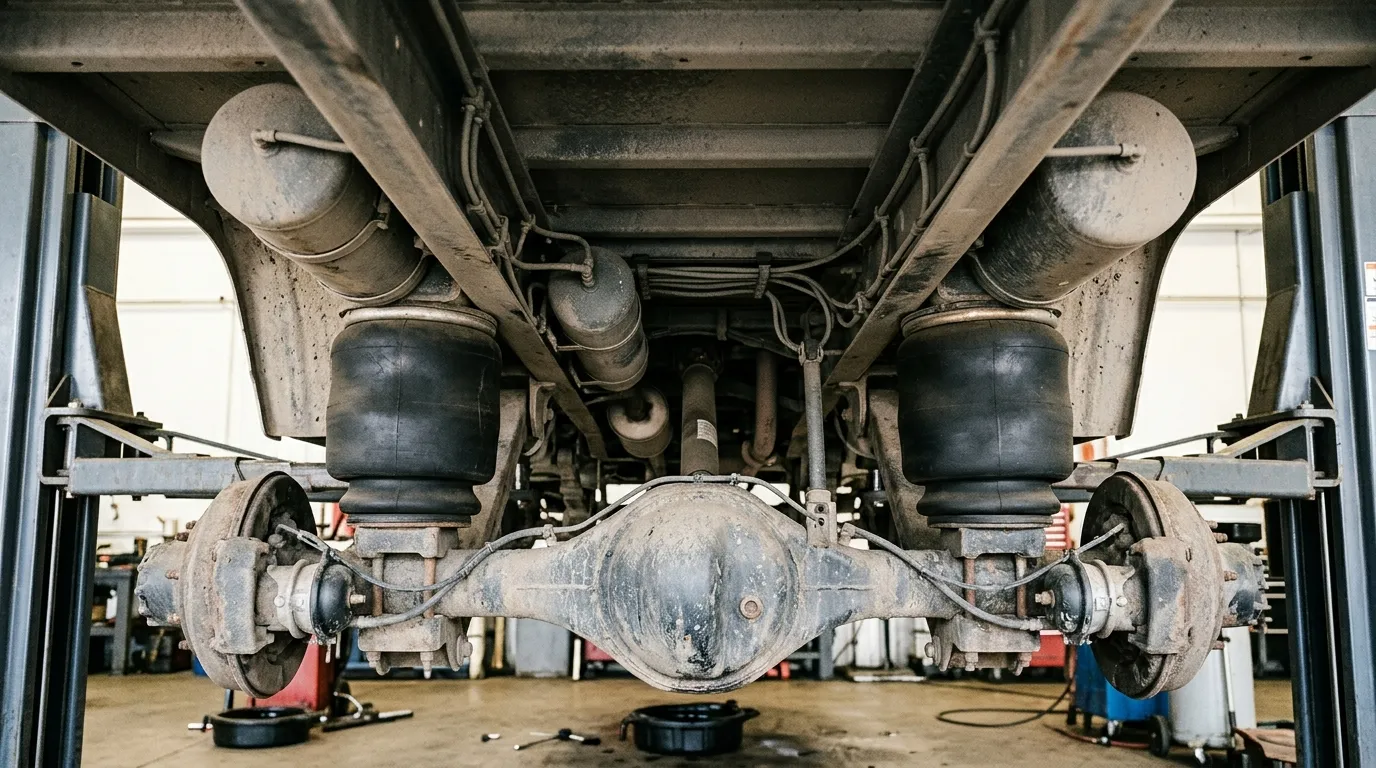
Wikipedia's article on air suspension places the technology in buses, trucks, semi-trailers, passenger trains and some passenger cars. DrivingLine places hydraulic suspension in 1950s Citroën cars and in the lowrider community, where height change is central to the build.
Those lists describe common use, not fitment. A vehicle can appear on an application list and still use a different design in a given model year or trim, so confirm what the specific vehicle was built with before ordering anything.
Table 3 — Typical applications
| Application | System most often associated in sources | Source |
|---|---|---|
| Heavy and commercial vehicles, transit | Air suspension | Wikipedia, "Air suspension" |
| Some passenger cars | Air suspension | Wikipedia, "Air suspension" |
| Classic hydropneumatic passenger cars | Hydraulic suspension | DrivingLine |
| Custom lowrider vehicles | Hydraulic suspension | DrivingLine |
Air Suspension vs Hydraulic Suspension: Pros and Cons
Air systems suit load levelling and variable ride height with smoother, slower adjustment, while hydraulic systems suit fast height changes and custom show use; each brings its own maintenance and fault profile.
Air suspension — pros
- Raises or lowers the vehicle as the air springs inflate or deflate (Strutmasters).
- Widely associated with heavy vehicles where load levelling matters (Wikipedia).
- Air leaks are usually traced through visible symptoms such as hissing and reduced ride height (Monroe).
Air suspension — cons
- Compressor noise and condensation concerns are reported in custom air builds; DrivingLine describes water traps and draining as mitigations.
- Air springs can be vulnerable to heat and punctures (DrivingLine).
- Air-line holes and compressor failure are recognised fault points (Strutmasters).
Hydraulic suspension — pros
- ArabWheels' comparison table characterises hydraulic adjustment as faster than air.
- DrivingLine describes hydraulic systems as the traditional choice in the lowrider community, where height change is the point of the build.
Hydraulic suspension — cons
- Fluid leaks create a mess (DrivingLine) and are linked to potentially expensive repairs (Strutmasters).
- Periodic fluid and seal servicing is part of hydraulic ownership; reported intervals vary by build, and the FAQ below gives one published example.
For the criterion-by-criterion view, Table 1 above compares the two systems side by side rather than repeating it here.
How to Choose: A 5-Step Checklist
Work through vehicle compatibility, intended use, how the vehicle is driven, maintenance tolerance and parts availability, in that order, before committing to either system.
- Confirm what the vehicle actually has and what fits it. Check the build documentation and the OE numbers rather than assuming from the badge.
- Define the job: daily driving, load levelling, or show and custom height changes.
- Decide whether adjustment speed or ride smoothness matters more to you — ArabWheels' table treats hydraulic as faster and air as smoother.
- Decide how much ongoing maintenance you will tolerate, including fluid and seal servicing on hydraulic systems and compressor and air-line attention on air systems.
- Check parts availability and OE-number matching for your vehicle before buying.
There is no blanket "best" answer here: the checklist output is the answer, and two readers with the same car but different uses can reasonably land on different systems.
HUIJIE manufactures air suspension parts — air springs, air suspension struts, air suspension compressors, valve blocks, air shock absorbers and air spring repair kits — and identifies parts by OE number, which is the matching step in the checklist above. With more than 2,000 products listed, the range covers European and luxury vehicles including Audi, BMW, Mercedes-Benz, Land Rover, Porsche, Jaguar, Volvo, Volkswagen, Bentley and Rolls-Royce.
[DIAGRAM: Decision-flow graphic — the five checklist steps branching to "air", "hydraulic" or "check fitment first"]
Frequently asked questions
How can I tell whether a vehicle has air or hydraulic suspension?
Look at the hardware rather than the ride feel. Air springs, a compressor, air lines and a tank point to an air system; a fluid reservoir, pump, lines and cylinders point to a hydraulic one. Confirm the answer against the vehicle's documentation or parts catalogue before ordering anything.
Do both systems change ride height?
Yes. Strutmasters describes air springs raising or lowering a vehicle as they inflate or deflate, and DrivingLine places hydraulic systems in lowrider vehicles built for exactly that height change. What differs between the two is the medium that carries the load and how the adjustment is produced.
What maintenance does each system typically need?
Requirements vary by design. DrivingLine reports that the hydraulic setup it describes needs fluid changes roughly every six months and seal replacement every few years, and notes that air systems may need water traps drained. Those are claims about particular builds, not universal service intervals.
Share on Social:


Contact Us
In This Article
- 1 Key takeaways
- 2 Hydraulic vs Air Suspension: What's the Real Difference?
- 3 How Each System Raises, Lowers and Supports a Vehicle
- 4 Leak Behaviour: Hydraulic Fluid vs Air
- 5 What Actually Drives Repair Cost
- 6 Which Vehicles Use Air Suspension and Which Use Hydraulic?
- 7 Air Suspension vs Hydraulic Suspension: Pros and Cons
- 8 How to Choose: A 5-Step Checklist
- 9 Frequently asked questions
