


Air Suspension vs Active Suspension: How They Differ
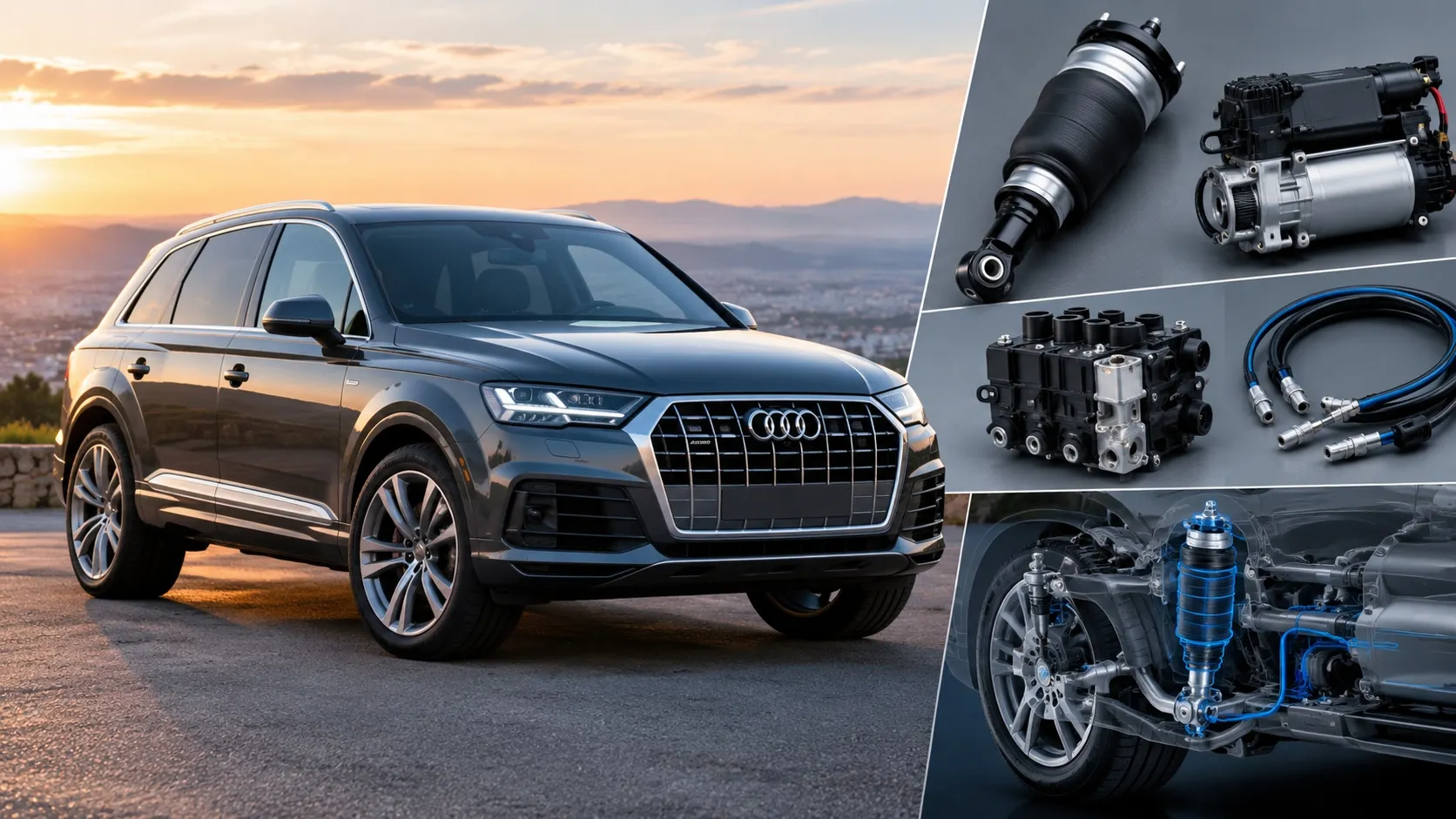
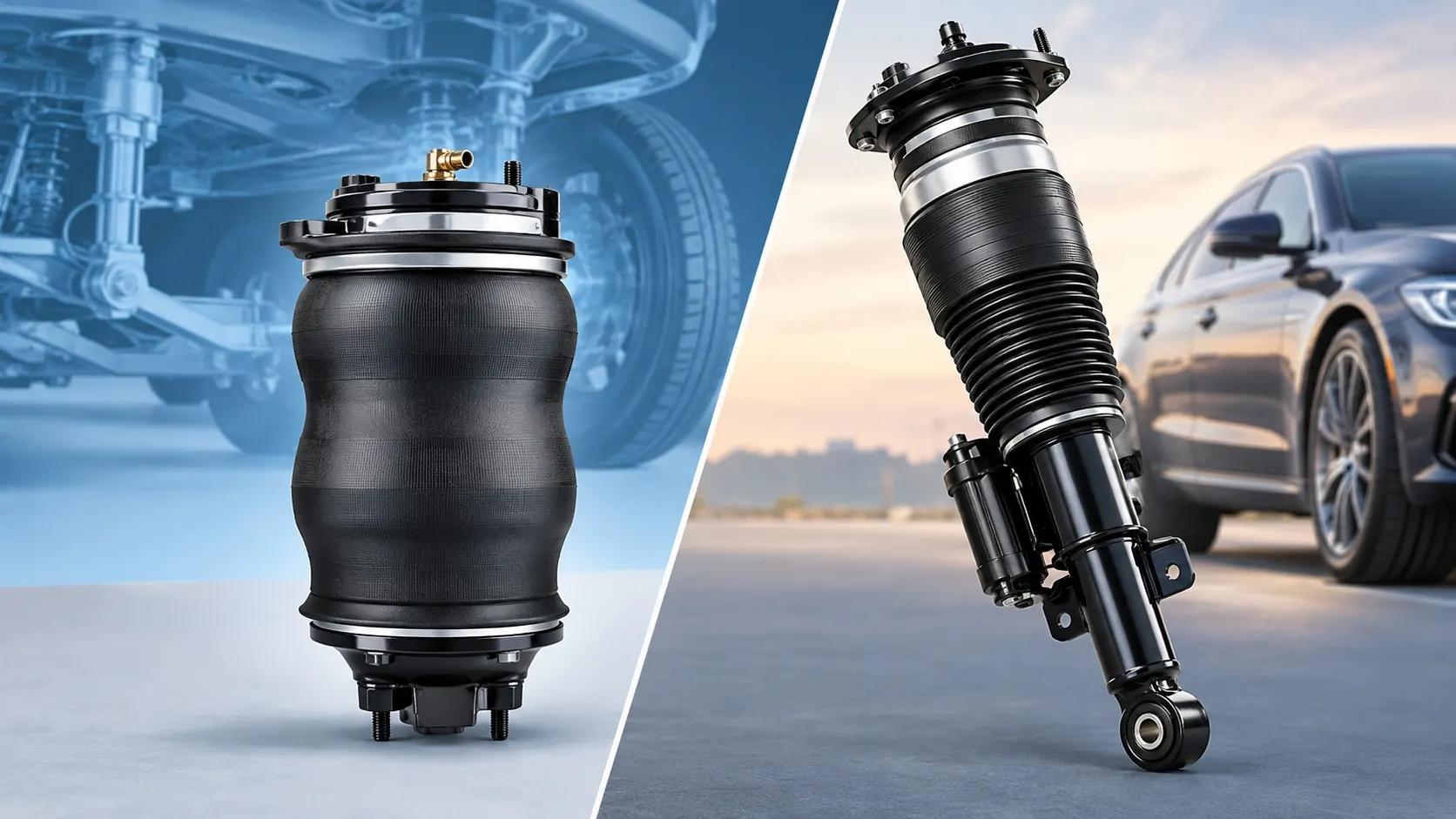
Air suspension and true active suspension systems are not the same thing. Air suspension uses air springs to support the vehicle and adjust ride height; true active suspension uses actuators to apply controlled force between body and wheels, actively controlling body motion. Many luxury cars combine air springs with adaptive or predictive body-control systems, which is why the terms often get confused.
[DIAGRAM: Side-by-side comparison of an air spring supporting load and changing height versus an active actuator applying controlled force between the vehicle body and wheel.]
Key takeaways
- Air suspension uses pressurized air springs to support vehicle weight and adjust height; on its own, that does not give a car true active suspension, according to MotorTrend.
- True active suspension is defined by its ability to apply controlled force between the body and the wheels, not merely to change spring support or damper firmness, as described in a 2024 paper indexed on ScienceDirect.
- Adaptive or semi-active damping is a separate technology: according to Wikipedia's active suspension reference, it varies damper firmness, while active systems use an actuator.
- A luxury vehicle can use air springs and active or predictive body-control hardware at the same time, and MotorTrend lists production systems such as Airmatic, Adaptive Air Suspension and Porsche Active Suspension Management with air suspension.
- To identify what a car actually has, check for actuators and active body-control features, not just an "air suspension" label.
What Is Air Suspension?
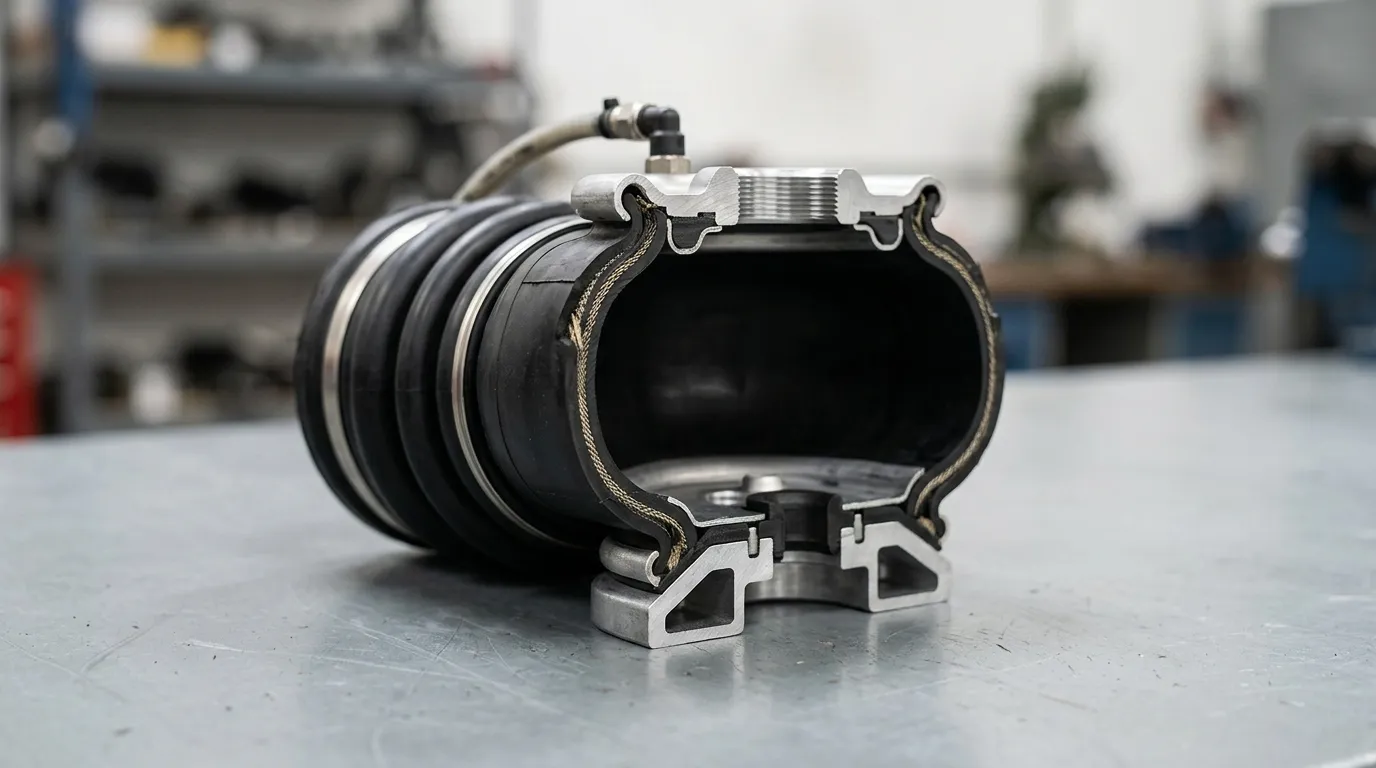
Air suspension is a spring system that uses pressurized air, usually inside rubber bellows, instead of steel springs to support the vehicle's weight. According to MotorTrend, air springs are pressurized flexible rubber bellows that replace coil or leaf springs, and pressure and ride height can be adjusted using an onboard compressor, an air dryer and a reservoir.
The hardware that makes this work goes beyond the springs themselves. Strutmasters' air suspension guide lists air springs, ride-height sensors, a suspension control module, a compressor, a manifold, delivery lines, a reservoir, and seals and gaskets among the components of a typical system. That list is useful because it shows how much of the system exists to manage air pressure and height rather than to control body movement.
The practical result is load support and height adjustment: the vehicle can stay at a consistent ride height as load changes, and many systems can raise or lower the body on demand. For a deeper component-level walkthrough, see how air suspension works.
[PHOTO: Cutaway of an air spring bellows with the air line, compressor, dryer and reservoir shown as a simple flow.]
What Is True Active Suspension
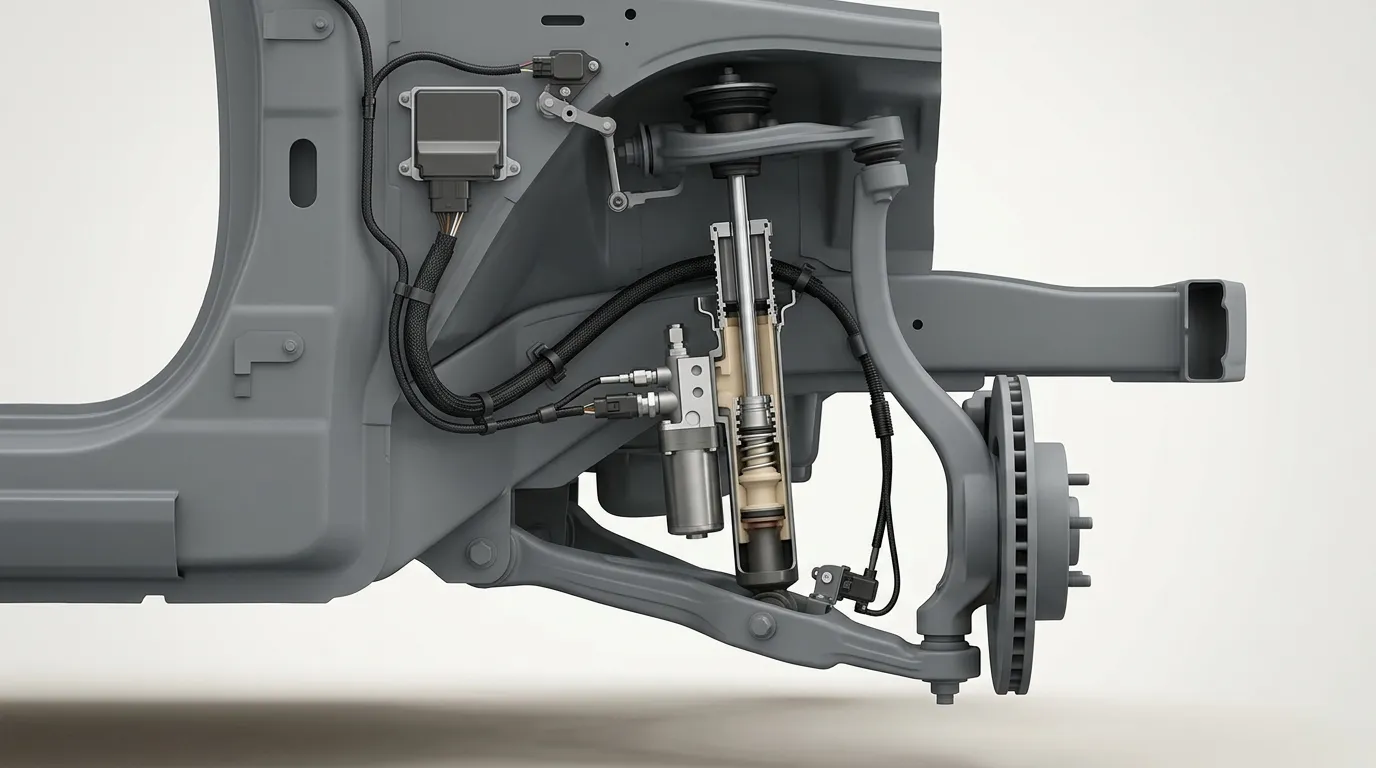
True active suspension is a system that can generate controlled force between the sprung body and the unsprung wheel assemblies, so it can push or pull the body rather than only support weight or vary damper firmness. A 2024 paper indexed on ScienceDirect describes active suspension as introducing an independent force or torque between the sprung and unsprung masses, which is the clearest single distinction from air suspension.
That definition matters because "active" is often used loosely. According to Wikipedia's active suspension reference, true active systems use an actuator, while adaptive or semi-active systems vary damper firmness. Building a true active system also carries trade-offs: the same reference notes drawbacks including added cost, complexity and mass, which vary by implementation.
How True Active Suspension Differs from Adaptive or Semi-Active Damping
Adaptive or semi-active damping changes how firmly a damper resists movement; it does not add a separate force to the body. Wikipedia's active suspension reference separates the two this way, describing semi-active and adaptive systems as varying damper firmness and true active systems as using an actuator. In practice, a car with electronically controlled dampers can feel noticeably different in comfort and sport modes without having any active force generation at all.
Air Suspension vs Active Suspension: Key Differences
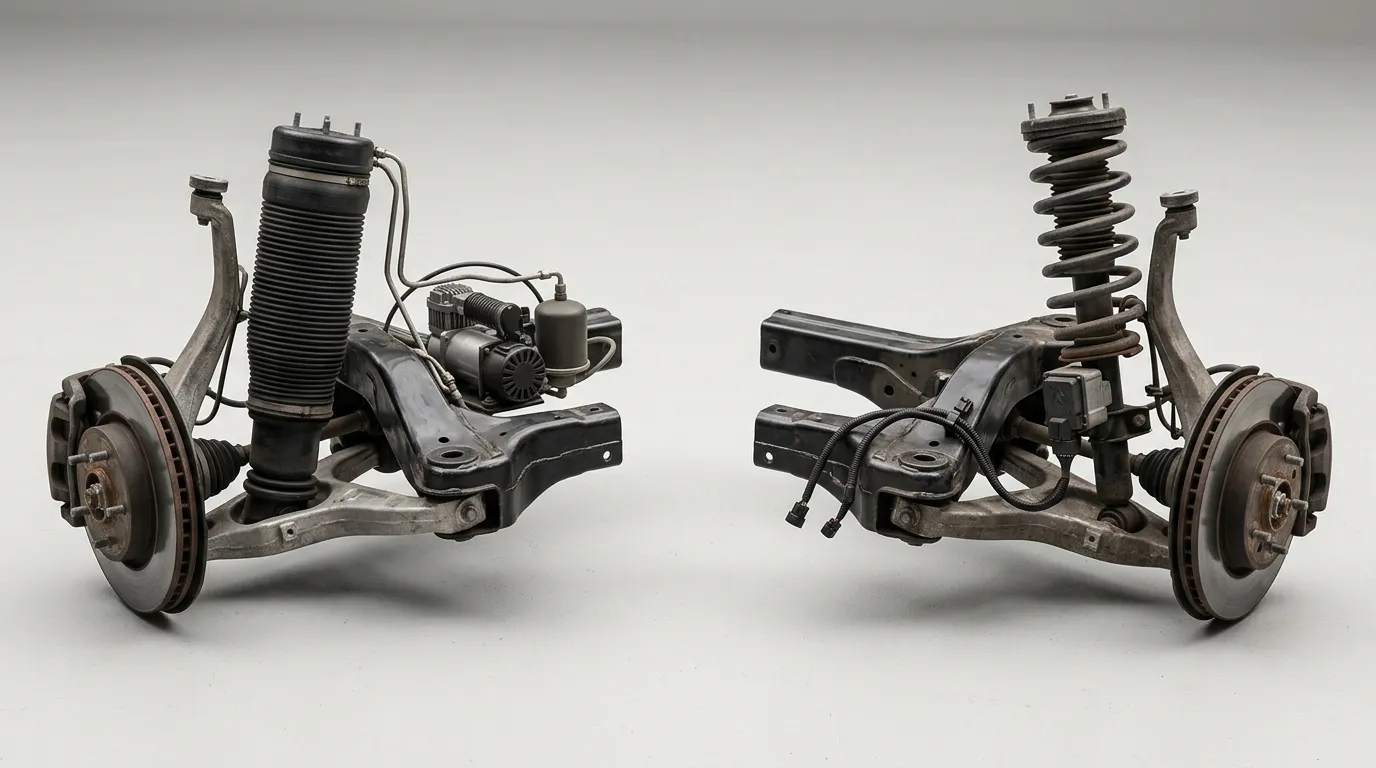
The main difference is role: air suspension primarily supports load and adjusts height, while true active suspension actively controls body motion by applying force. Adaptive damping sits between them, changing damper firmness rather than supporting the vehicle or pushing the body.
| Aspect | Air suspension | True active suspension | Adaptive or semi-active context |
|---|---|---|---|
| Primary job | Support load and adjust ride height | Apply controlled force to control body motion | Vary damper firmness |
| How force is applied | Pressurized air inside springs or bellows | Actuator force between body and wheel | Damper valving changes |
| Ride-height adjustment | Yes, commonly | Not its defining feature | Not its defining feature |
| Load levelling | Yes | Possible, but not the defining feature | No |
| Body roll and pitch control | Limited unless combined with other systems | Yes, actively | Damping influence only |
| Key hardware | Air springs, compressor, dryer, reservoir, valve block, sensors | Actuators, sensors, control software | Adaptive dampers, sensors, controller |
| Typical role | Comfort, height, load support | Active body control | Variable comfort and handling tuning |
| Complexity and cost factors | Compressor, air lines, valves, seals | Actuators, software, energy demand | Dampers and electronics |
One historical example shows how long air suspension has served a load-support role. According to MotorTrend, air suspension was used on U.S. military heavy trucks during World War II to maintain ride height independently of vehicle load. That is a height and load problem, not a body-motion-control problem.
Is Air Suspension the Same as Active Suspension?
No. Air suspension describes the spring medium and how the vehicle is supported, while active suspension describes whether the system can apply controlled force. The two terms describe different properties of a suspension, which is why the same vehicle can have one, both, or neither.
Terminology gets blurred in consumer and marketing material. Wikipedia's active suspension reference keeps true active systems separate from adaptive or semi-active systems, and MotorTrend's air suspension guide lists production names including Airmatic, Adaptive Air Suspension and Porsche Active Suspension Management with air suspension — labels that mix height control with electronic control in ways that do not always indicate true active force generation.
The practical rule: if a vehicle specification only mentions air springs and height adjustment, do not assume true active force capability. Look for actuator hardware or a named active body-control function instead.
Can a Car Have Both Air Suspension and Active Suspension?
Yes. A vehicle can use air springs for load support and height adjustment while also using adaptive dampers, predictive road-reading or active body-control hardware to control body motion. These are separate layers of hardware that can coexist on the same car.
The overlap is exactly where most confusion starts. MotorTrend's air suspension guide lists production systems such as Airmatic, Adaptive Air Suspension and Porsche Active Suspension Management with air suspension, while Wikipedia's active suspension reference describes true active systems as using actuators. Air springs and actuators are different components doing different jobs, so a car with an air-suspension label may or may not also have active body control.
HUIJIE's evidenced role sits on the air-suspension side of that split. HUIJIE is a Sichuan, China-based air suspension parts manufacturer producing replacement air springs and air suspension struts, air suspension compressors, valve blocks, air shock absorbers and air spring repair kits, with more than 2,000 products listed. Most of its range fits European and luxury vehicles, identified by OE number, and the company's luxury car air suspension parts range covers replacement air suspension parts rather than complete active suspension systems.
How to Tell Which Suspension a Vehicle Has
To tell which suspension a vehicle has, check two things separately: air springs that support and raise or lower the vehicle, and actuators or active body-control features that apply force to control body motion. A vehicle can have the first without the second.
- Look for air springs or bellows and associated air hardware. MotorTrend describes air springs as pressurized flexible rubber bellows, and Strutmasters lists the compressor, manifold, delivery lines, reservoir and seals that support them.
- Confirm whether ride height changes with load or drive mode. MotorTrend notes air suspension was used on U.S. military heavy trucks in World War II to maintain ride height independently of load.
- Look for actuator hardware, active anti-roll components or a named active body-control function. Wikipedia's active suspension reference describes true active systems as using an actuator.
- Separate adaptive dampers from active actuators. Wikipedia's reference describes semi-active and adaptive systems as varying damper firmness, which is not the same as applying force.
- Confirm the actual components against OE parts diagrams or workshop data before assuming a vehicle has active force generation.
If the system only supports load and adjusts height, it is not true active suspension. If it actively counters roll and pitch, it is active or active-assisted.
Complexity, Energy, Maintenance and Cost Factors
True active suspension adds actuators, sensors, control software and energy demand, while air suspension adds a compressor, air lines, valves and seals. Both can cost more to own and maintain than a simple steel-spring setup, but the actual figures depend heavily on the specific vehicle and system.
The added complexity is well documented on the active side. Wikipedia's active suspension reference notes drawbacks including added cost, complexity and mass. On the air side, MotorTrend describes the compressor, air dryer and reservoir that pressurize the system, and Strutmasters lists the manifold, delivery lines and seals among the parts that can need attention — components that do not exist on a conventional steel-spring car.
Published price examples should be treated as examples only. MotorTrend's July 2020 article gives a specific example of Volvo charging $1,800 to upgrade an XC90 to air suspension; that is a dated, vehicle-specific figure from one article, not a current price or a general market rate. No verified energy-consumption figure was found, so energy demand is best treated as a qualitative design factor rather than a number.
For air suspension, the compressor, dryer, reservoir and automotive air suspension valve block are separate maintenance points from active actuators, which is one reason the two systems should not be judged on the same cost basis.


Contact Us
In This Article
- 1 Key takeaways
- 2 What Is Air Suspension?
- 3 What Is True Active Suspension
- 4 Air Suspension vs Active Suspension: Key Differences
- 5 Is Air Suspension the Same as Active Suspension?
- 6 Can a Car Have Both Air Suspension and Active Suspension?
- 7 How to Tell Which Suspension a Vehicle Has
- 8 Complexity, Energy, Maintenance and Cost Factors
