


Luxury Car Air Suspension Parts: A System-Based Replacement Guide
Luxury air suspension is engineered to provide more than just a soft ride. It has to regulate the height of the body, dampen the vibration of the road, cater for the various modes of driving and react appropriately to variations in the speed of the vehicle and its load.
It requires the cooperation of several pneumatics, mechanics and electronics components. Failing one part can mean that the most obvious component that is replaced, may not be the one that gets the ride quality back to the level it was prior to the failure. Prior to ordering, the type of system, the failure chain and the exact vehicle configuration should be identified by repairers and parts buyers.
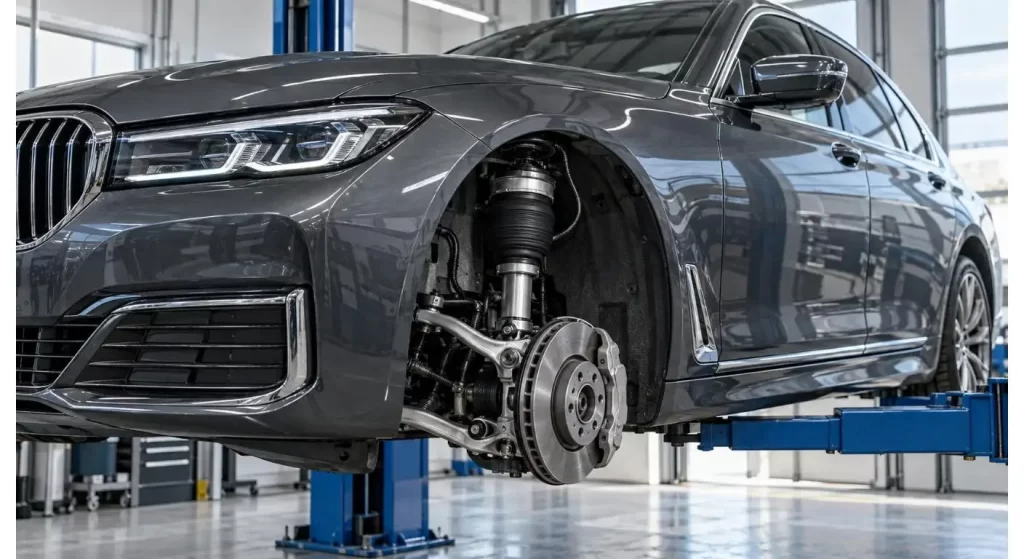
The main reason luxury vehicles use air suspension is to provide superior ride comfort to their occupants.
Normal steel springs have a constant mechanical rate. Balancing comfort, body control and load compensation, air suspension can vary the pressure and operating height.
For example, many luxury sedans dip down at highway speeds for increased stability and SUVs may have extra ground clearance for rough roads. It can also help to maintain the levelness of the body during changes in axle load due to passengers or load.
The accurate communication between air springs, height sensors, compressors, valves and the electronic control unit is required in these functions. The air suspension product range offers an overview of the dominant sets of replacement parts in air suspensions.
Always begin on the Vehicle Platform.
Vehicle badging by itself cannot be used to determine a compatible suspension part. Some variations may be present between models, depending on the chassis generation, engine, drivetrain, wheelbase or suspension package.
For instance, standard and long-wheelbase models might require components that are calibrated differently or require different loads. Different assemblies also may be required on vehicles equipped with sport suspension or adaptive damping or four corner leveling.
Document the VIN, production year, chassis code, OE number and OE location. These are subject to confirmation prior to price and availability comparison.
Be familiar with the Main Replacement Parts
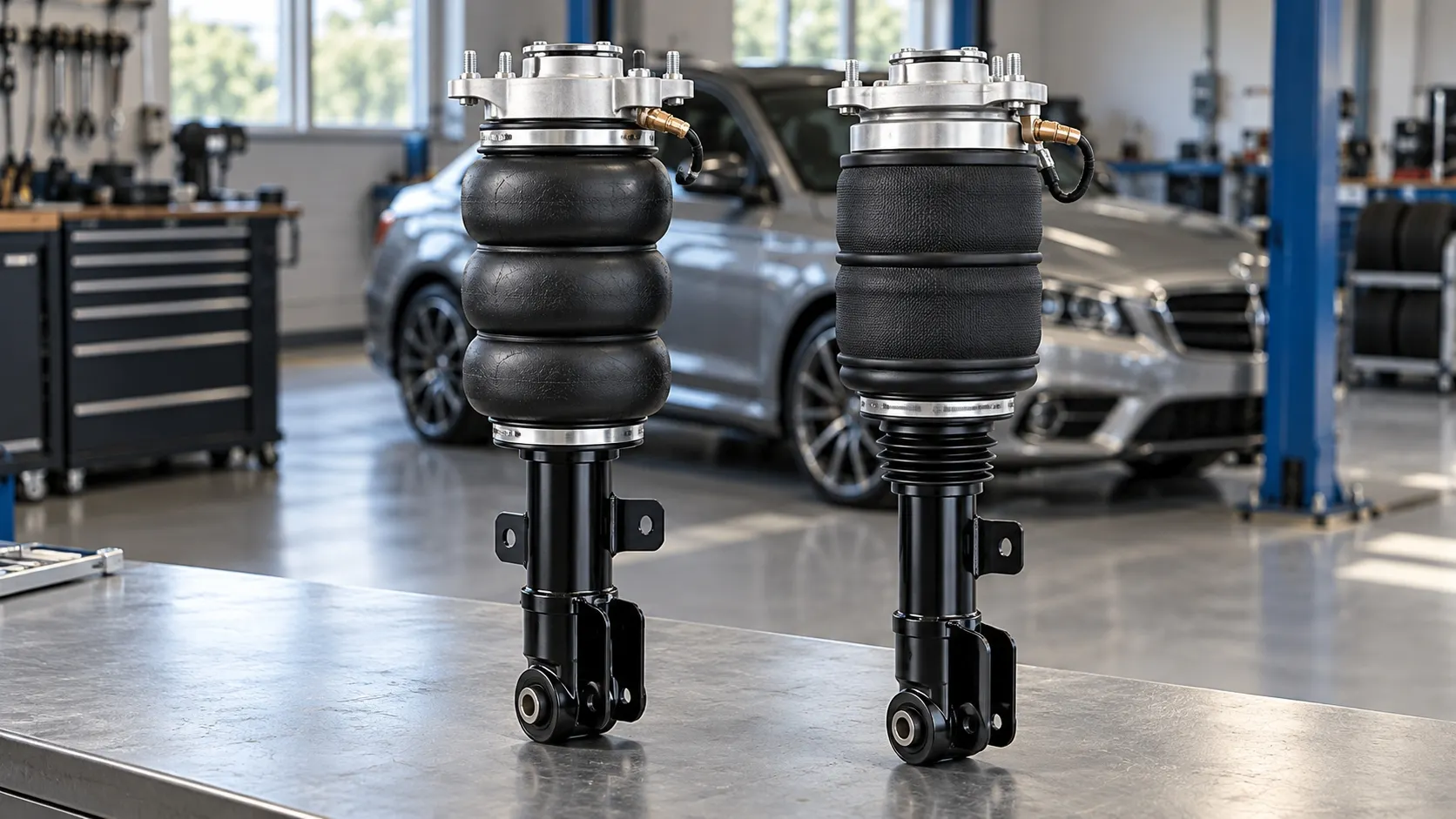
An air spring is a flexible pressurized bellows that carries the load of the vehicle. It can be installed separately on the rear axle, or part of a damper.
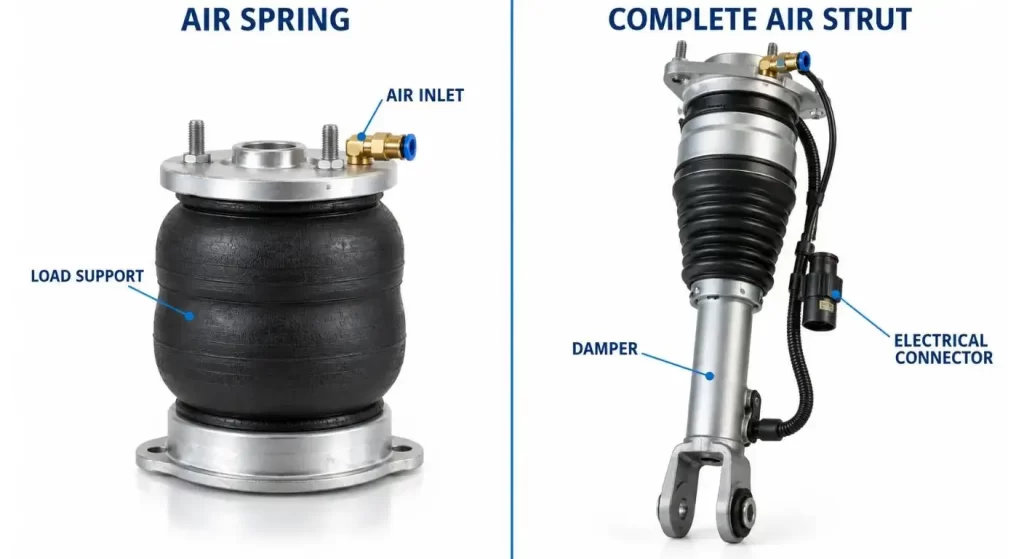
An air strut is a combination of the spring function and shock absorbency, and can also incorporate an electronically controlled dampener. Whether the repair will necessitate an individual air suspension spring, a repair kit or a complete air suspension assembly, the buyer should ascertain.
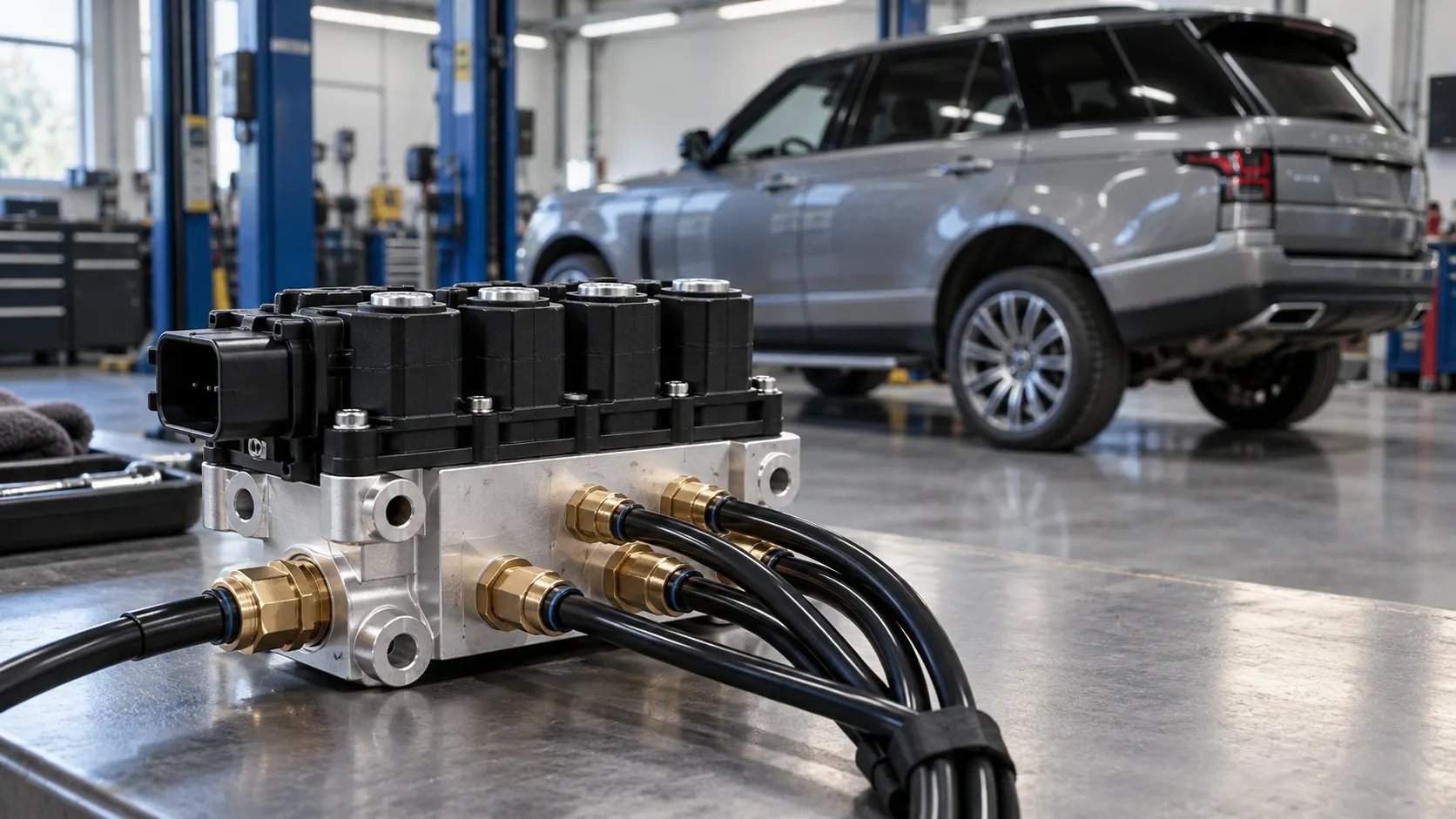
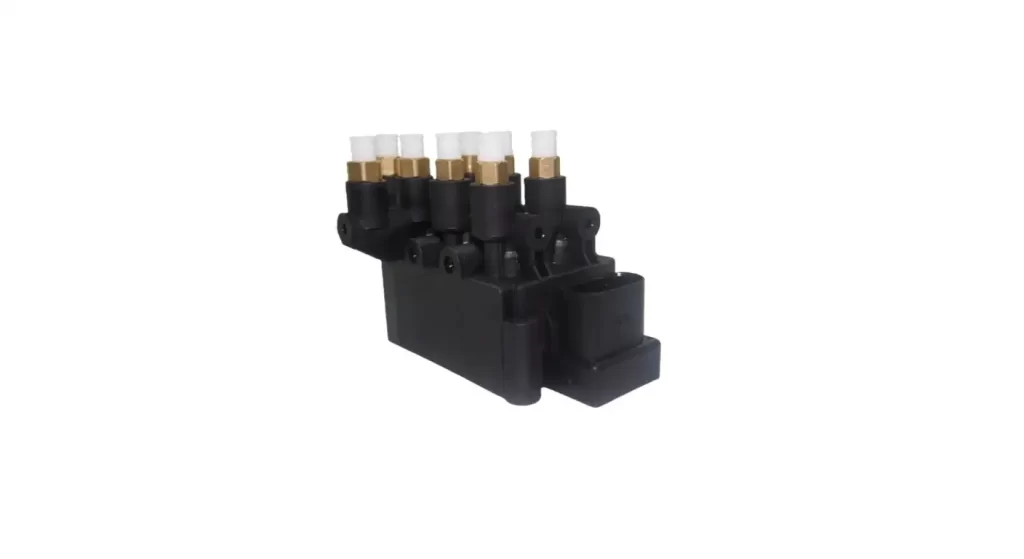
The pressurized air is supplied by the compressor and the valve block directs the air to each corner. The control module and height sensors regulate the operation of these components.
| Component | Primary Function | Important Matching Point |
| Air spring | Supports weight and controls height | Bellows design and mounting position |
| Air strut | Combines air support and damping | Damping type and electrical connector |
| Compressor | Produces compressed air | Voltage, pressure and dryer design |
| Valve block | Distributes air between circuits | Port layout and solenoid connector |
| Height sensor | Measures body position | Linkage direction and calibration |
| Control arm | Guides wheel movement | Chassis position and joint design |
Determine Failure as a Chain
Low corner is often an indication of an air spring leak, which may not be the only problem. This can cause the compressor to operate longer, resulting in more heat and wear inside.
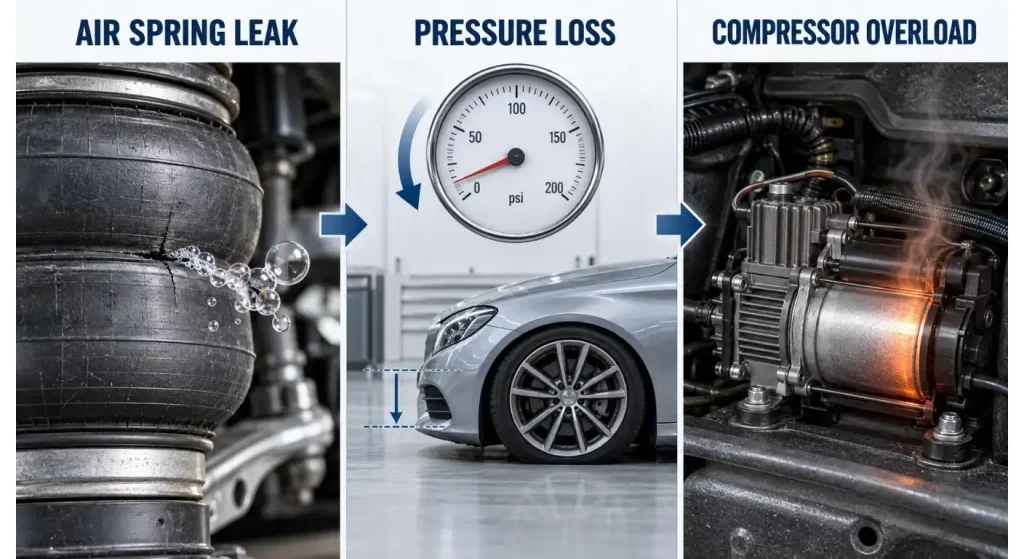
If any side is low after parking, check the local spring, fitting and air line. If more than one corner is low, inspect shared lines, reservoir pressure and the valve block. Slow lifting may be caused by leakage, wear in the compressor or restriction in the dryer.
Check for stored suspension codes in the vehicle, and check live height-sensor readings. Mechanical and electronic diagnosis is to complement each other.
To protect Ride Quality in Parts Selection.
A replacement part may be able to hold pressure, but may not provide satisfactory performance. If the characteristics of the springs are not properly set or if the springs are poorly damped, too much firmness, too much floating motion, noise or bad body control can result.
Check the size of the new part and see how it matches up to the original in terms of mounting and its damping system and electrical connector. If the vehicle has an electronically controlled damping system, ensure that the replacement is compatible with the control system.
The goal isn't to just lift the car! It's to balance out the isolation, steering response and controlled body movement you'd expect from a luxurious suspension system.
Inspect Compressor and Valve Block
The compressor can be expected to pressurize in a reasonable amount of time with no excessive noise or overheating. If it has to be replaced, fix any air leak which caused it to run for an extended period of time.
Check the voltage, connectors, mounting brackets, pressure capacity and position of dryer when judging an air suspension compressor. Using the same dried or dirty dryer can shorten the lifespan of the dryer to be replaced.
If the air suspension valve block sticks or develops an internal leak, it may result in unequal height and/or pressure transfer from corner to corner. The electrical connectivity and port layout should be the same as the original system.
| Inspection Result | Recommended Repair Scope | Reason |
| One recently fitted spring is damaged | Replace individual component | Failure is isolated |
| Both original springs show cracking | Replace the axle pair | Similar age and wear |
| Spring leak with weak compressor output | Repair leak and test compressor | Leakage may cause secondary wear |
| Multiple corners sink together | Test valve block and shared lines | Fault may affect several circuits |
| Strut holds air but vehicle bounces | Inspect or replace damper assembly | Height support is not the only function |
Determine whether to replace on an individual or system level
If the failure is isolated and the other components are testing, then individual replacement is appropriate. A relatively new air spring that's been damaged by road debris doesn't necessarily mean that the axle should be replaced.
A system-level repair might be more feasible when parts are original or have similar mileage, or if they experience similar deterioration. Two old air springs could fail at a very close time and a long time leakage could have already damaged the compressor.
The decision should take into account the age of the components, diagnostic results, labour cost and risk of re-disassembly. Extra parts for replacement will increase the costs, and failure to recognize the associated failures will lead to a premature return repair.
Check Left, Right, Front and Rear Positions
When it comes to luxury suspension parts, they can be position specific. Even if the overall cable-routing or sensor connection or even the overall shape of the bracket looks the same, they may be used on the left and right air struts.
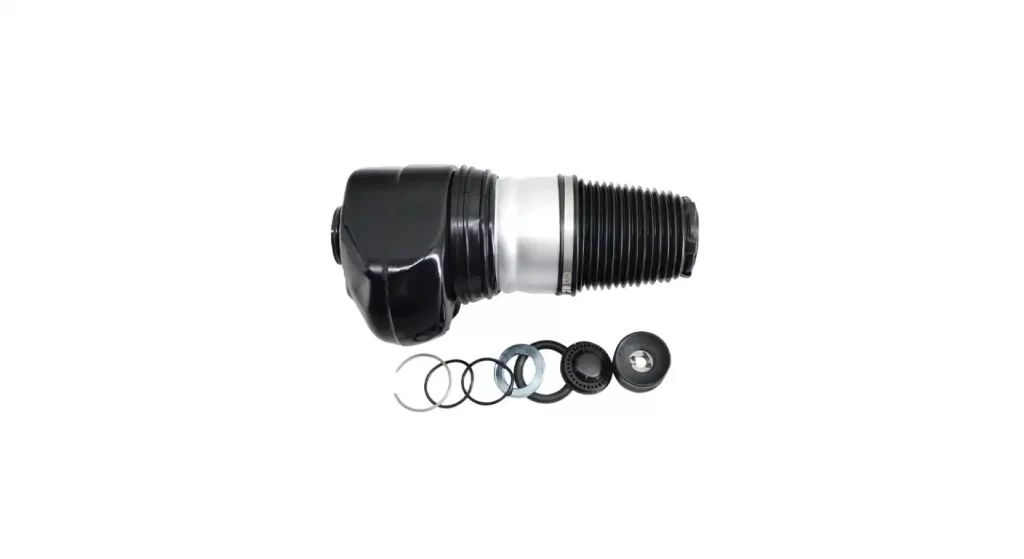
The load on the front and rear assemblies are different, as are the steering conditions. The OE number, mounting points, air port, connector and suspension option should all match the vehicle.
Do not fitment by product appearance. Photographs of the original label and connections can assist the supplier to see differences, which may be small but significant.
Inspect and complete installation and calibration
Check air lines and connectors prior to installing the new part. Immediate leakage can be caused by dirt, damaged seals, twisted bellows or improperly seated fittings.
The vehicle should be supported in the proper way as per workshop procedure. Never completely pressurize an air spring that is not upright and fully extended or folded properly.
Once installed, clear applicable fault codes as well as perform ride-height calibration as needed. Check all four corners for proper operation at normal operating height; check for leaks and make sure that all driving modes function as they should.
Assess a Luxury Air Suspension Service provider.
The supplier should give details of the OE references, vehicle applications, installation positions and product photos. If there are parts which have electrical functions, then there should be accurate connector and configuration information.
When wholesale purchasing, request testing information, packaging information, lead time and support for fitment confirmation. Testing samples should be tested on the chassis to be used prior to approving a larger order.
VIN, OE number, position, quantity and pictures of original parts can be sent via the HJ Auto Parts contact page.
Conclusion
The choice of luxury car air suspension parts calls for a system approach. Correct fitment means the chassis, installation position, pneumatics, damping system and electronic compatibility.
Diagnosing the entire system and confirming all replacements to the original component will help repairers return ride height, comfort and body control and minimize repeat failures.
FAQs
Q1. What are the key luxury car air suspension components?
These components consist of air springs/struts, compressors, valve blocks, height sensors, air lines and control modules. These will be arranged differently, depending on the vehicle platform.
Q2. What is the difference between an air spring and air strut?
No. An air spring is used to support the vehicle and an air strut is a combination spring and shock absorber.
Q3. Why is it that a luxury car subsides after parking?
The system could be losing air via an air spring, fitting, line or valve block. Before replacing the leak test is necessary.
Q4. Does the new air strut need to be calibrated?
There are a lot of ride-height calibrations and fault-code clears in many electronically controlled systems. Refer to the service procedure for a specific chassis.
Q5. What info is required for confirmation of fitment?
Include the VIN, chassis code, model year, OE number and OE position. Photographs of the original label and connectors are also helpful and should be clear.
Share on Social:


Contact Us
In This Article
- 1 The main reason luxury vehicles use air suspension is to provide superior ride comfort to their occupants.
- 2 Always begin on the Vehicle Platform.
- 3 Be familiar with the Main Replacement Parts
- 4 Determine Failure as a Chain
- 5 To protect Ride Quality in Parts Selection.
- 6 Inspect Compressor and Valve Block
- 7 Determine whether to replace on an individual or system level
- 8 Check Left, Right, Front and Rear Positions
- 9 Inspect and complete installation and calibration
- 10 Assess a Luxury Air Suspension Service provider.
- 11 Conclusion
