

OEM vs Aftermarket Air Suspension
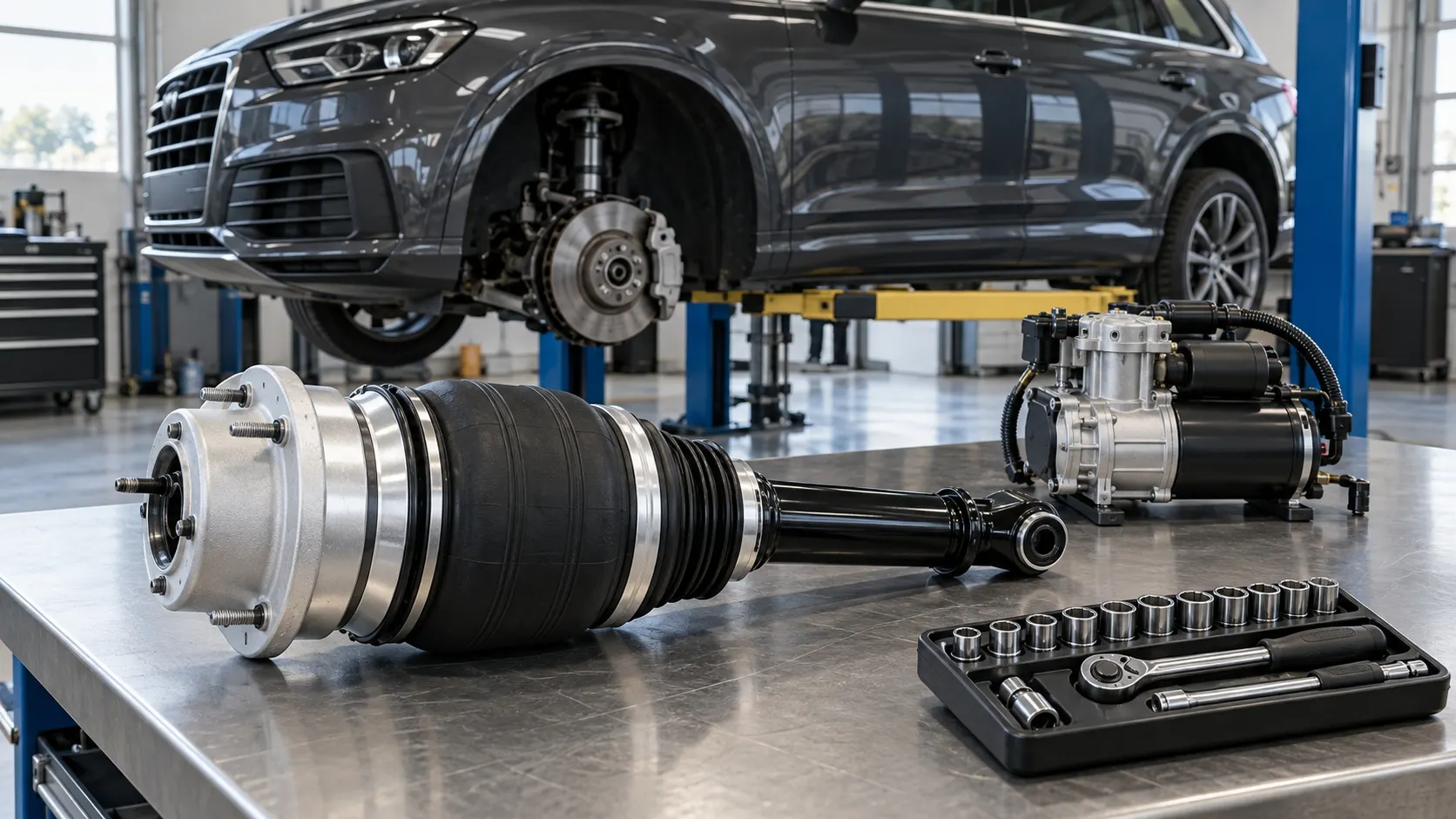
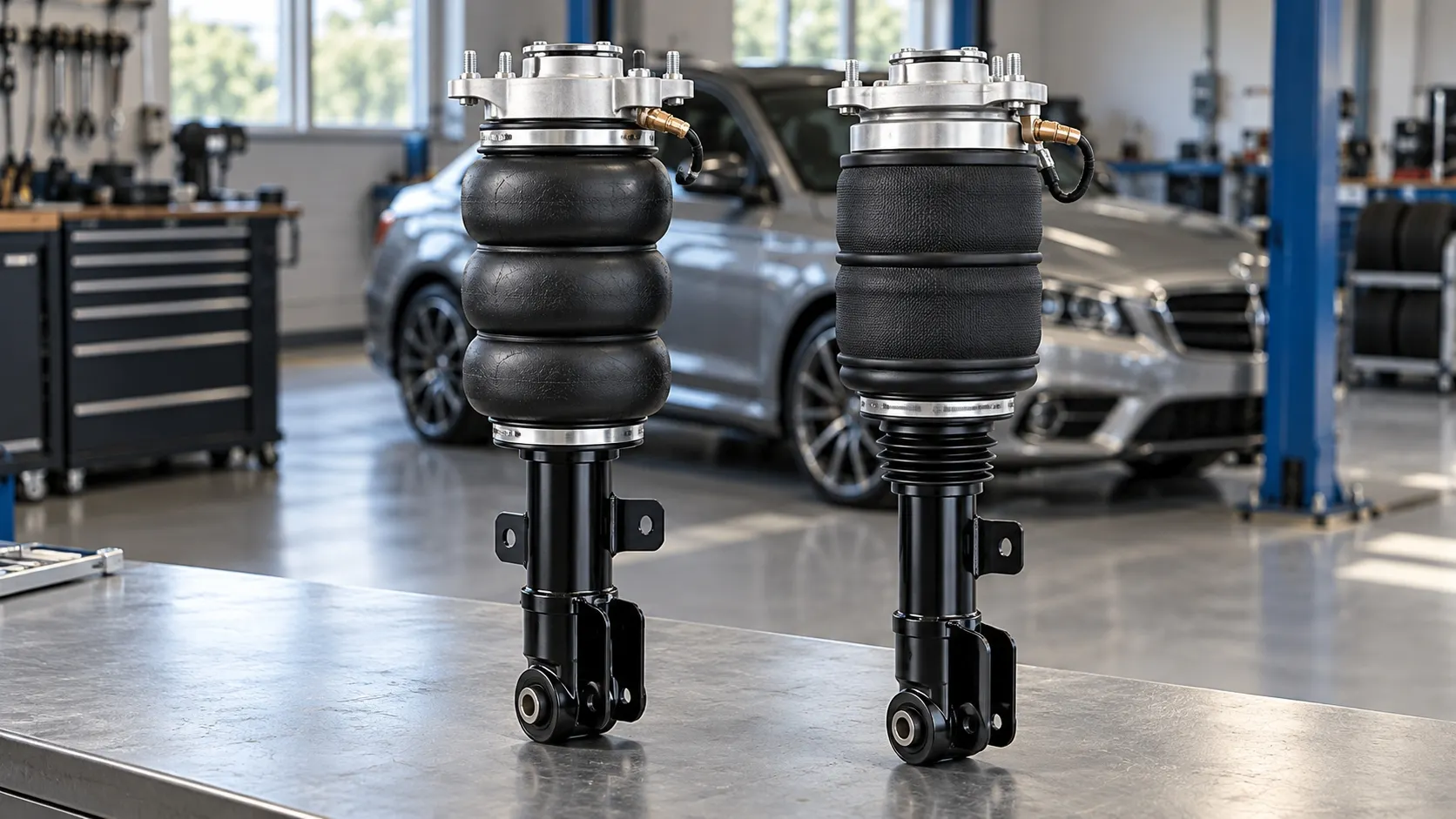
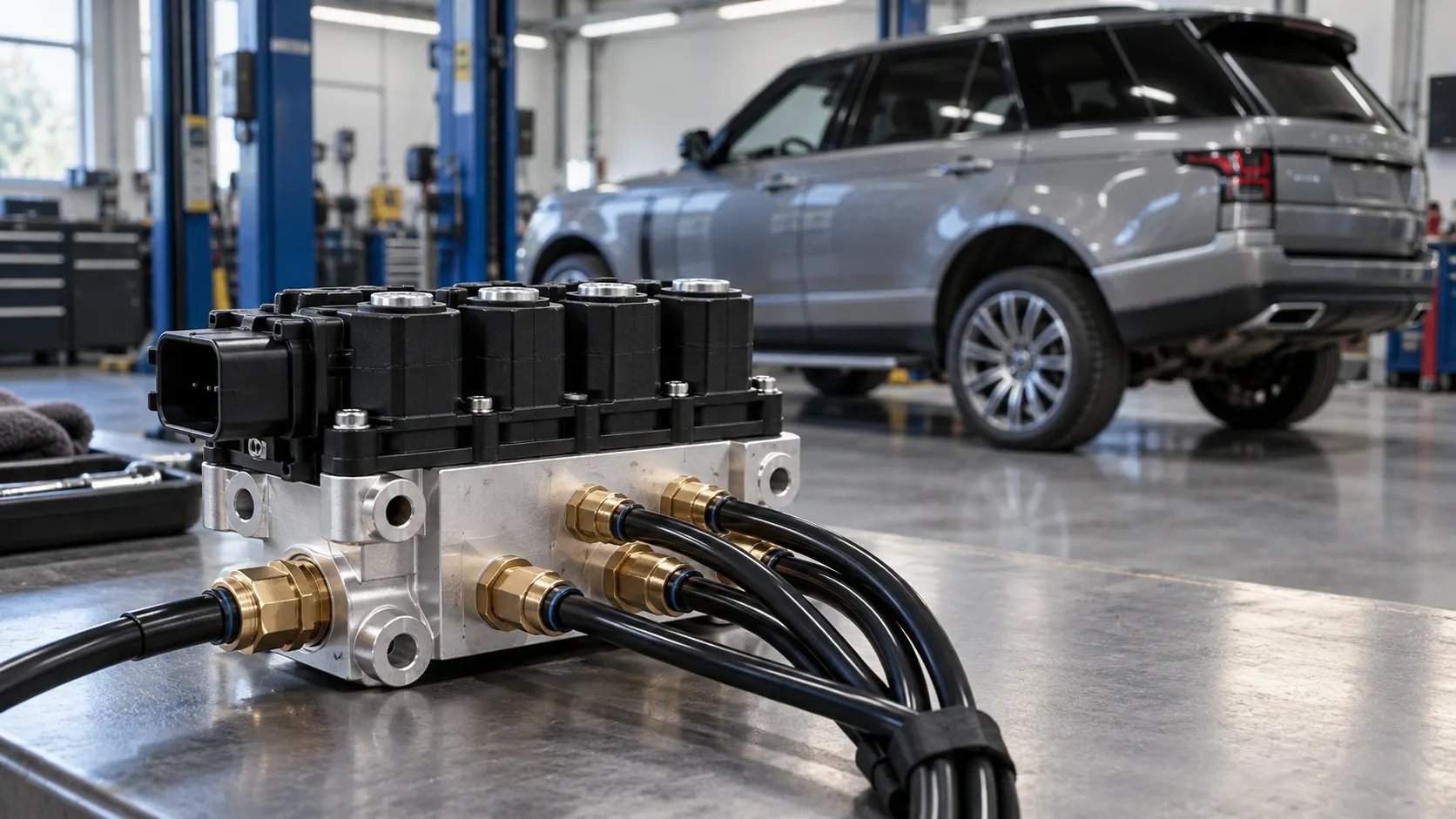
When deciding between air suspension OEM vs aftermarket air suspension, there are 4 questions to ask: Does the part fit correctly? Does it maintain the correct suspension functions? What are some of the evidence for its quality? And what will the total repair price be?
Authentic vehicle-brand parts provide a simple purchase program. More options in terms of pricing, design, and availability with aftermarket options. No single label provides all the information about any specific component.
When it comes to workshops, distributors or vehicle owners, the most accurate comparison begins with the application and not with the lowest bid or most eye-catching packaging.
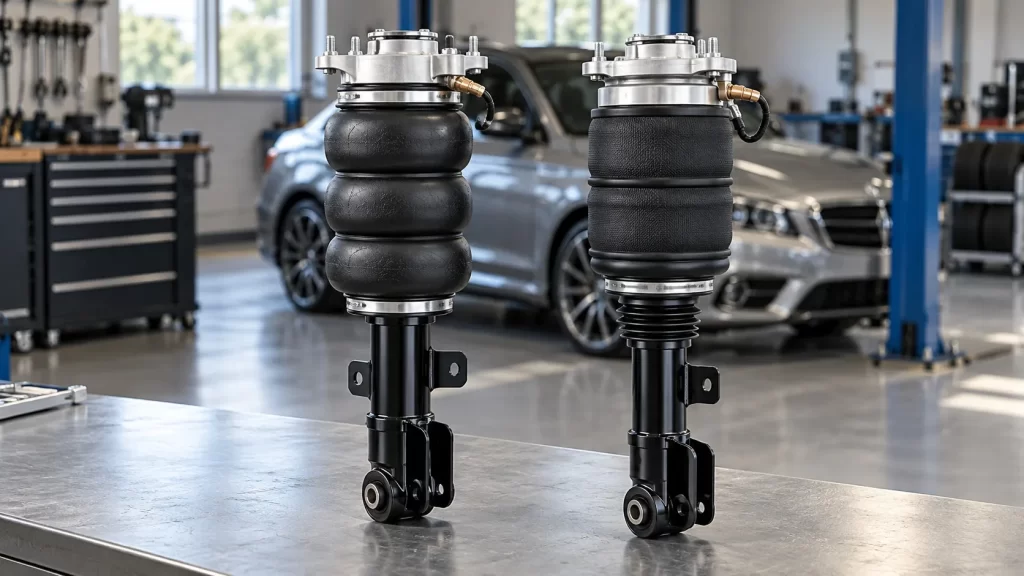
What Do OEM and Aftermarket Actually Mean?
These are typically used in broad terms when listing online. It is worthwhile to read carefully.
Genuine parts are sold as an authorized part of the vehicle manufacturer's brand. OEM - original equipment manufacturer, though sellers often use the term to describe any product that is meant to replace an original part.
An aftermarket part is a part that is purchased from other sources outside of the original manufacturer. It can be sourced from a well known suspension specialist or a source who is not a suspension expert who only has some technical documentation.
| Part description | What it generally means | What to confirm |
|---|---|---|
| Genuine vehicle-brand part | Supplied under the automaker’s brand | Correct application and current part number |
| OE supplier-branded part | Sold under a component supplier’s brand | Whether that specific product matches the required specification |
| Aftermarket replacement | Independently supplied replacement | Fitment, functionality, testing, and warranty |
| Remanufactured part | Previously used component rebuilt for reuse | Rebuilding scope and retained components |
An “OEM number” in a listing usually serves as a cross-reference. It does not establish that the product is genuine or made by the original supplier.
Fitment: More Than Matching the Model Name
Fits BMW X5" isn't sufficient data.
Multiple production dates, chassis generations, axle position, and suspension options may result in the need for the different part number. There are two components that could be similar in appearance, but have different connectors, mounting arrangement, and/or damping.
Since the suspension elements form a coordinated system, BILSTEIN's workshop tips focus on choosing replacement dampers based on vehicle requirements.
Before ordering, compare:
Documented supersessions and OE reference numbers.
Chassis codes and production dates.
Application at front or rear and left or right.
Standard, sport or suspension with electronic control.
Electrical connectors and pneumatic connections.
The same applies to choosing replacement air suspension springs. You cannot be sure that the suspension configuration is the same even if the vehicle badge matches.
Electronic Damping Is a Critical Difference
Fits BMW X5" isn't sufficient data.
Different production dates, chassis generations, axle position and suspension options can mean the use of the different part number. There are two components that could be similar in appearance, but have different connectors, mounting arrangement, and/or damping.
As part of a coordinated system, the selection of replacement dampers based on vehicle requirements is the focus point of BILSTEIN's workshop tips.
Before ordering, compare:
Documented supersessions and OE reference numbers.
Chassis codes and production date.
Applying on the front or back, left or right.
Standard, sport or suspension with e-control.
Electrical connectors and pneumatic connections.
This is the case with replacement air suspension springs. Even if the vehicle is the same make and model, it is not guaranteed that the suspension is as well.
Quality: Compare Evidence Behind the Claims
There are a wide variety of aftermarket air suspension products available. Assess product and supplier level quality.
The following are starting claims: “Premium,” “heavy-duty,” and “OE quality.” They require buyers to have supporting information like application records, inspection procedures, traceability, installation instructions, and clear warranty information.
In the case of air suspension compressors, inquire for performance data under specified test conditions. There is no way to obtain a free-flow figure without including a system pressure.
Ask questions for air struts such as leak tests and damping validations. Inquire about how valve blocks are sealed and how they are electrically operated.
| Component | Useful evidence to request | Why it matters |
|---|---|---|
| Air spring | Leak-test procedure and application data | Supports sealing and fitment assessment |
| Air strut | Damping specification and electronic compatibility | Clarifies retained ride functions |
| Compressor | Pressure-building test conditions and current measurements | Allows meaningful performance comparison |
| Valve block | Sealing checks, connector details, and port layout | Helps prevent functional mismatch |
A supplier’s willingness to explain these details can be more useful than a long list of marketing adjectives.
Purchase Price vs Total Repair Cost
Sometimes after-market parts offer more cost-effective alternatives, but be sure to get quotes for the same performance level.
Add labor, diagnostics, fittings, necessary initialisation, shipping and downtime. There are two different repair options: a cheaper passive strut or an electronically controlled strut.
If there is an original failure, check it out too. Leaking air springs and valve blocks, lines, and electric components are items on Arnott's compressor diagnosis checklist to investigate before installing a replacement compressor.
If a pumping job is done without fixing the leak, the replacement pump may be overworked.
| Buying situation | Practical priority |
|---|---|
| Customer wants original driving functions | Verify full functional compatibility |
| Older vehicle with a limited repair budget | Compare documented alternatives and explain compromises |
| Workshop needs dependable turnaround | Check availability, instructions, and technical support |
| Distributor orders repeat quantities | Prioritize traceability and consistent specifications |
| Previous replacement failed early | Diagnose the underlying system before reordering |
Which Option Should You Choose?
Select the appropriate component that will satisfy the vehicle's needs and the customer's standards as supported by adequate evidence.
Buyers who want an automaker-backed replacement road might want to consider the genuine parts. If buyers consider the mix of functionality, availability and cost, then a documented aftermarket product might fit the bill.
Consistent catalog data is important as well for trade buyers. Always specify the exact application, do not take on faith that it is stock.
Please contact HUIJIE with the OE reference, vehicle information, pictures and order quantity to talk about replacements.
Frequently Asked Questions
1. Is OEM air suspension always better?
The label alone is insufficient. Compare the exact product, required functions, documentation, and support.
2. Is aftermarket air suspension reliable?
It can be. Reliability depends on design, manufacturing quality, correct installation, and the condition of the surrounding system.
3. Does an OE reference prove original manufacture?
No. A cross-reference identifies an intended replacement application; it does not prove manufacturing origin.
4. Will aftermarket struts retain adaptive damping?
Some will. Others use passive damping, so verify the specific part’s functionality.
5. Does removing a warning light restore electronic damping?
No. Warning suppression and active damping control are separate functions.
6. Can genuine and aftermarket components be mixed?
Sometimes, provided compatibility is confirmed. Damper characteristics and manufacturer replacement guidance require particular attention.
7. Are remanufactured parts the same as new aftermarket parts?
No. Remanufactured products reuse components; new aftermarket products are supplied as new assemblies.
8. Does every replacement need calibration?
No. Follow the vehicle-specific repair procedure for initialization, calibration, and diagnostic checks.
9. Should I replace both air struts?
Assess both sides and follow applicable guidance. Condition and matching damping behavior influence the decision.
10. What should wholesale buyers request?
An application list, part references, inspection information, batch identification, installation guidance, and written warranty terms.
Share on Social:


Contact Us
In This Article
- 1 What Do OEM and Aftermarket Actually Mean?
- 2 Fitment: More Than Matching the Model Name
- 3 Electronic Damping Is a Critical Difference
- 4 Quality: Compare Evidence Behind the Claims
- 5 Purchase Price vs Total Repair Cost
- 6 Which Option Should You Choose?
-
7
Frequently Asked Questions
- 7.1 1. Is OEM air suspension always better?
- 7.2 2. Is aftermarket air suspension reliable?
- 7.3 3. Does an OE reference prove original manufacture?
- 7.4 4. Will aftermarket struts retain adaptive damping?
- 7.5 5. Does removing a warning light restore electronic damping?
- 7.6 6. Can genuine and aftermarket components be mixed?
- 7.7 7. Are remanufactured parts the same as new aftermarket parts?
- 7.8 8. Does every replacement need calibration?
- 7.9 9. Should I replace both air struts?
- 7.10 10. What should wholesale buyers request?
