


Selecting a Reliable Air Suspension Supplier for Your Aftermarket Business

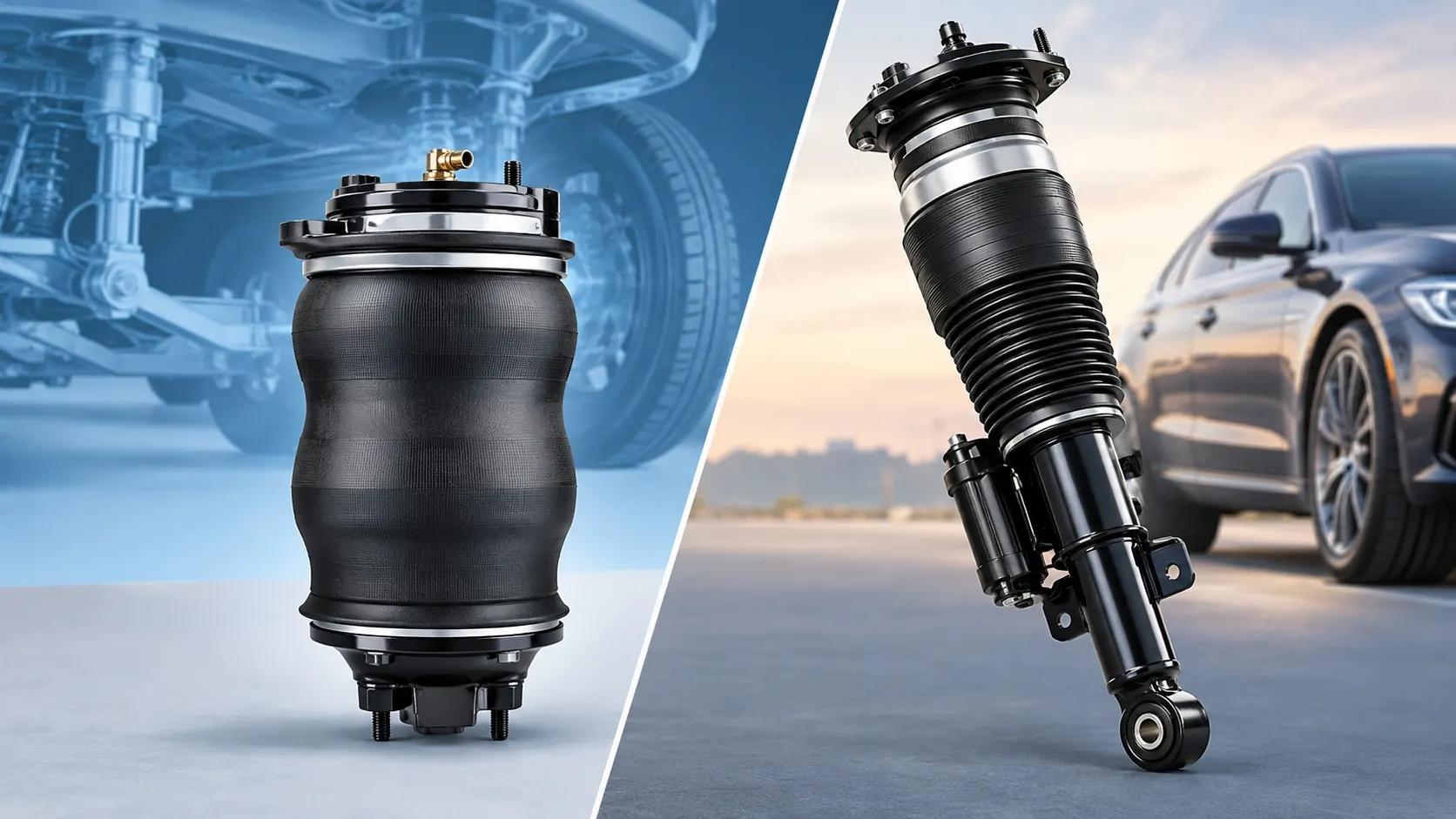
Air suspension sourcing requires inter-related parts, the particular configuration for each vehicle, and challenging installation situations. While a low quote may sound good, the fitment data can be wrong, the quality can be unreliable or the technical information may be incomplete, which leads to high returns and customer-service expenses.
The good supplier must be able to assist the entire purchasing process from confirmation of application, validation of samples to delivery of the batches and analysis of warranties. This is particularly crucial for distributors with a wide portfolio of models and OE references in Europe.
The first step is for buyers to check out the supplier's entire line of air suspension products and see if their product line aligns with the buyer's target market.
The Product Portfolio is the first step.
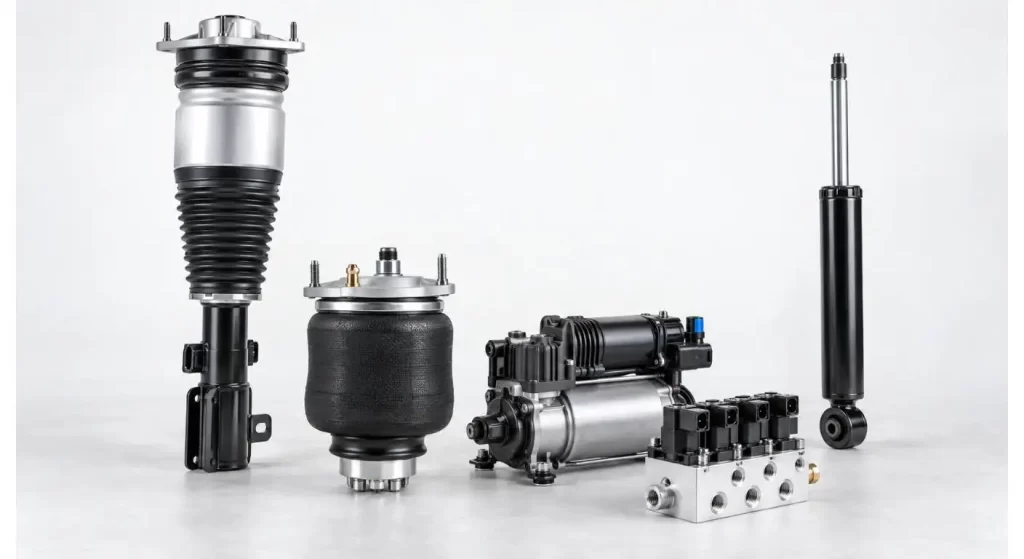
Whilst there is a wide range of catalogues that can make a procurement process easy, the number of products listed should not be the sole factor to take into account. The buyer should review if the supplier provides all customer groups of the component and all vehicle platforms which represent real demand in the market.
Practical portfolio may contain parts of air springs, struts, shock absorbers, compressors, valve blocks and other repair parts. For instance, distributors can find out if they have a compressor and valve-block coverage and compare with available air suspension springs before formatting a consolidated inquiry.
Product gaps should also be discovered in the portfolio evaluation. It might be better to work with a supplier who has a few products but who displays them well and has good references rather than a supplier that has a lot of products but their catalog is so scattered.
Verify Fitment Data (correctness)
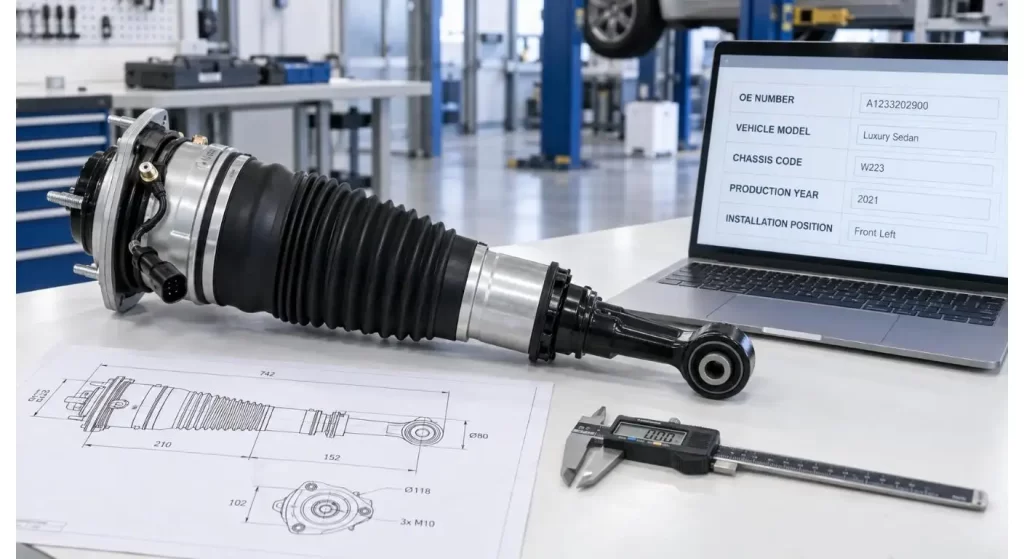
One of the crucial supplier capabilities is fitment accuracy. Car model names are often not enough as there may be different suspension variants due to chassis code, year, axle position, drivetrain or equipment package.
Each quotation, therefore, must be checked for correctness on the basis of the OE number, vehicle application, installation position, connector design, mounting dimensions and technical notes. Good product photos can be used for further verification, but shouldn't be a substitute for reference-number matching.
The structured fitment database enables distributors to list the correct part and minimises the risk of sending the wrong looking part to the wrong vehicle version.
Discuss various tests for assessing various components.
There should not be single generic inspection method for parts of air suspension systems. Checks that are to be done for an air spring are sealing, dimensions, rubber condition and pressure retention. The compressor should be evaluated with regard to electrical, output-pressure, temperature, noise and duty cycle.
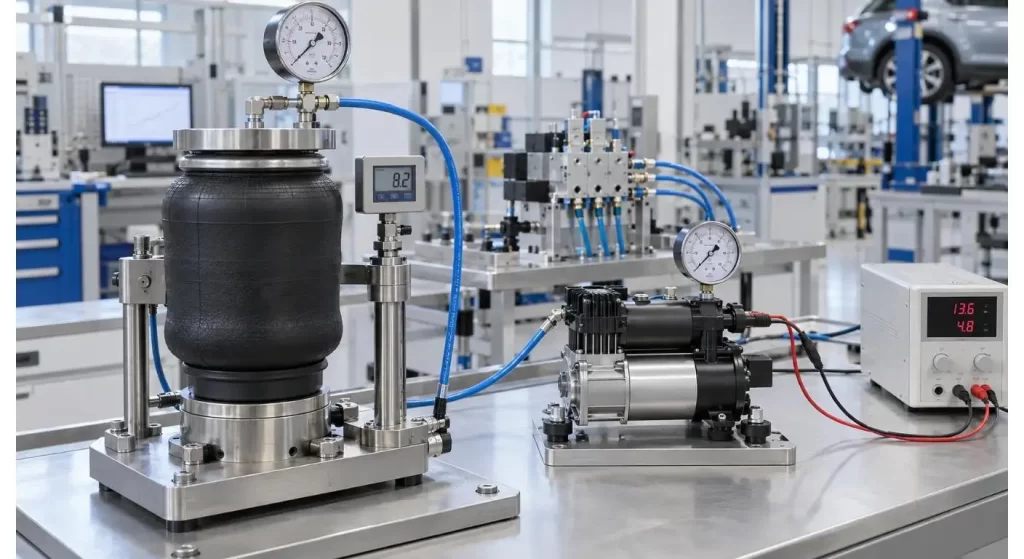
Internal leakage, port function, pressure holding and solenoid response checks to be done on valve blocks. For complete struts it is necessary to check the damping behavior, mounting geometry, and assembly condition as well.
Each category of components should be subjected to specific tests and the buyer should request the seller to have them specify which tests are concerned and how the limits of acceptability are controlled.
| Component | Priority Checks | Common Risk |
| Air spring | Dimensions, sealing, pressure retention | Air leakage |
| Compressor | Current, output pressure, temperature | Weak or intermittent inflation |
| Valve block | Port function, solenoid response, internal leakage | Incorrect air distribution |
| Air strut | Fitment, sealing, damping, mounting | Noise or unstable ride |
| Height sensor | Connector, signal response, mounting angle | Incorrect height reading |
Check the complete supply process with the help of samples.
Sample evaluation should include the ability to install the part, but not limited to that. The buyers should also think about labelling, packaging, information on the product's applications, accuracy of communication, and the supplier's reaction to a technical query.
Test several samples from production representative units, whenever possible. Document results of installation, rideheight, operating noise, warning messages, pressure retention and deviations from the reference component.
In the future the approval record should be the standard for future orders. This helps to avoid changes to the specification after a successful first sample.
Utilize practical indicators of measure supply reliability.
A good air suspension supplier will be able to give realistic lead times and give an advance warning of delays. Buyers should negotiate MOQs, production planning, mixed model orders, availability of replacement parts, packaging requirements, for recurring programs.
Quick supply time is only beneficial if the order is delivered on time and correct. Order accuracy, identification quality, protective packaging and document consistency should thus be considered in conjunction with production lead time.
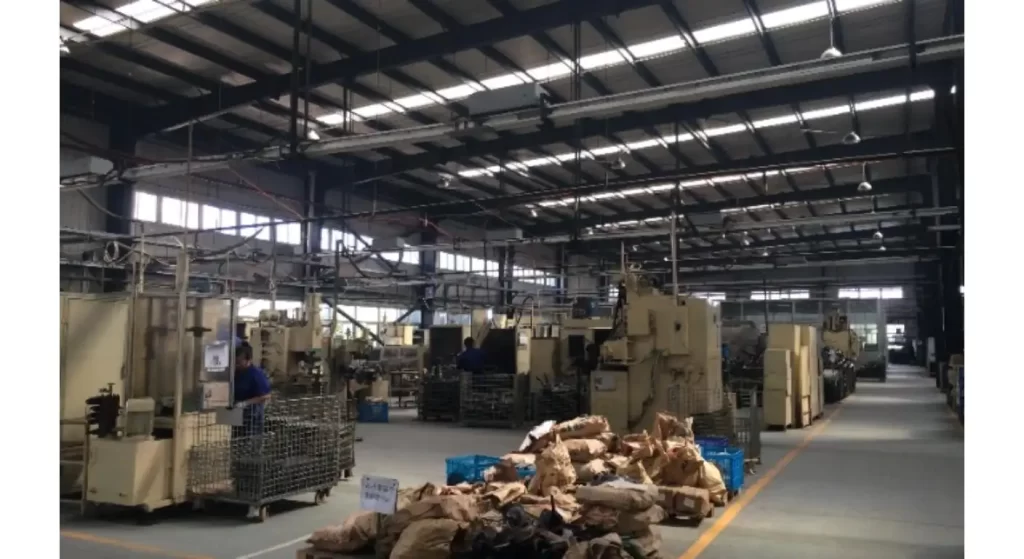
But buyers requiring to be aware of the supplier's production environment may see the supplier's factory and production shop before asking for the evidence of their projects.
Design an inventory plan in response to market demand.
Not all models require the same amount of air suspension. The high-speed applications might need local safety stocks and the low-volume references should be purchased on flexible mixed orders.
The distributor should pass on the sales forecast, seasonal demand, desired inventory levels and vehicle priority platforms to supplier. The supplier can then suggest which models should be re-stocked regularly, and which ones should be order-only.
| Evaluation Area | Suggested Evidence | Review Frequency |
| Fitment accuracy | Confirmed OE cross-reference | Every new item |
| Batch consistency | Inspection and traceability records | Every shipment |
| Delivery reliability | Promised vs. actual lead time | Quarterly |
| Order accuracy | Quantity and model discrepancy rate | Every shipment |
| Warranty support | Response and corrective-action record | Quarterly |
Create a "Clear Warranty Feedback Loop.
The warranty information should be used to enhance future orders and not be a standalone claim. The following information should be included in each return: Part number, Batch number, Vehicle information, Miles, Date installed, Symptoms, Diagnostic codes, Photos or videos.
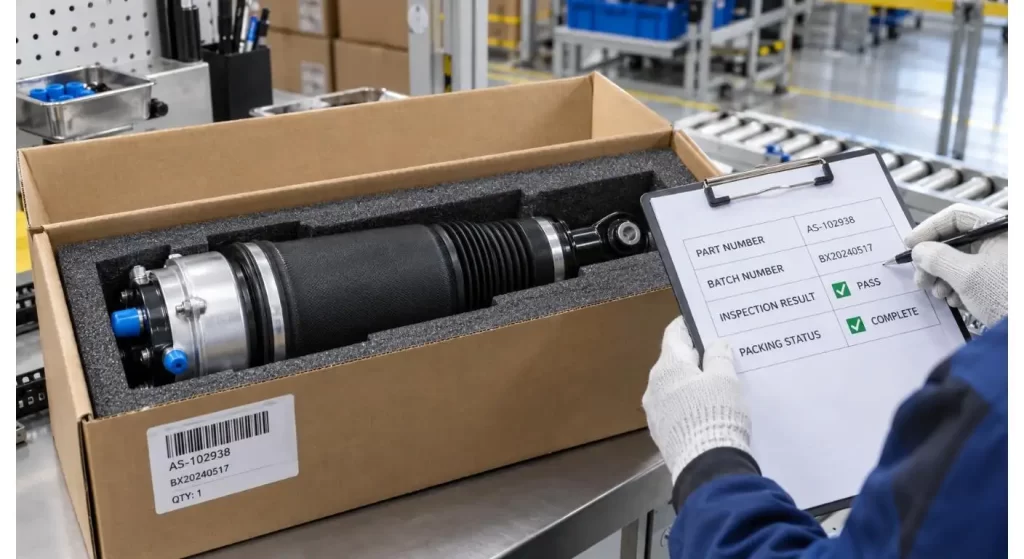
This information is useful in determining whether the manufacturing defect or the incorrect fitment, damaged air lines, electrical issues, installation issues or failure of another component in the system caused the situation. A supplier that looks at the trends and conveys corrective measures has the potential of adding more value than one that just changes single parts.
Other product categories can be checked out on the HJ Auto Parts catalog.
Selecting a supplier with whom to cooperate in the long term.
The cheapest price, or the biggest catalog doesn't make the best supplier. A better selection will offer fitting data, reliable product information, testing for specific components, consistent delivery and communication with the technical.
If you are considering a bigger order, start with a set of obvious references and standards for acceptance. Buyers will then be able to get in touch with HJ Auto Parts and give them the application, OE number, quantities and packaging they have in mind.
FAQ
Q1. What are the details I should provide an air suspension supplier?
Include OE #, vehicle models, chassis codes, production year(s), installation location, target quantities and destination market. However, pictures or samples are welcome.
Q2. When choosing a supplier, should I opt for one with the biggest product inventory?
Not automatically. More important than the number of parts listed, is that they are relevant to the market coverage needed and that they are fitment and quality consistent.
Q3. How to assess air suspension samples?
Inspect fitment, operation, operation characteristics, packaging and identification. Always use the proposed vehicle or a test system of equivalent type, if available.
Q4. A different quality test can be applied for different air suspension parts?
No. The failure risk of air springs, compressors, valve blocks and complete struts is different and an inspection of different parts is needed.
Q5. What are the steps distributors can take to minimize air suspension returns?
Verify Applications prior to Ordering, Approve Representative Samples, Retain Batch Records and Obtain Full Warranty Evidence. The steps help to more easily identify when the fitment is incorrect and when defects come up again.


Contact Us
In This Article
- 1 The Product Portfolio is the first step.
- 2 Verify Fitment Data (correctness)
- 3 Discuss various tests for assessing various components.
- 4 Check the complete supply process with the help of samples.
- 5 Utilize practical indicators of measure supply reliability.
- 6 Design an inventory plan in response to market demand.
- 7 Create a "Clear Warranty Feedback Loop.
- 8 Selecting a supplier with whom to cooperate in the long term.
