


Rolling Lobe vs Convoluted Air Spring: Design Differences
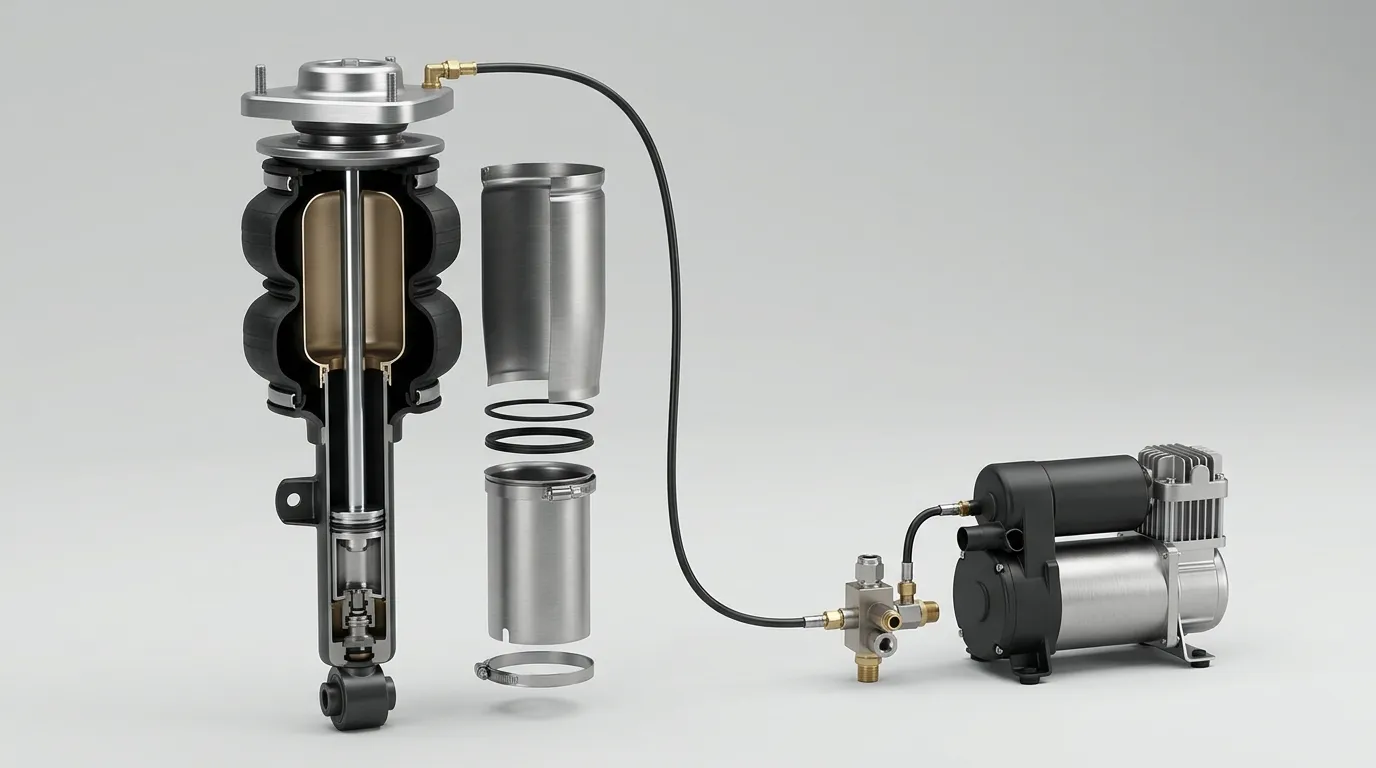
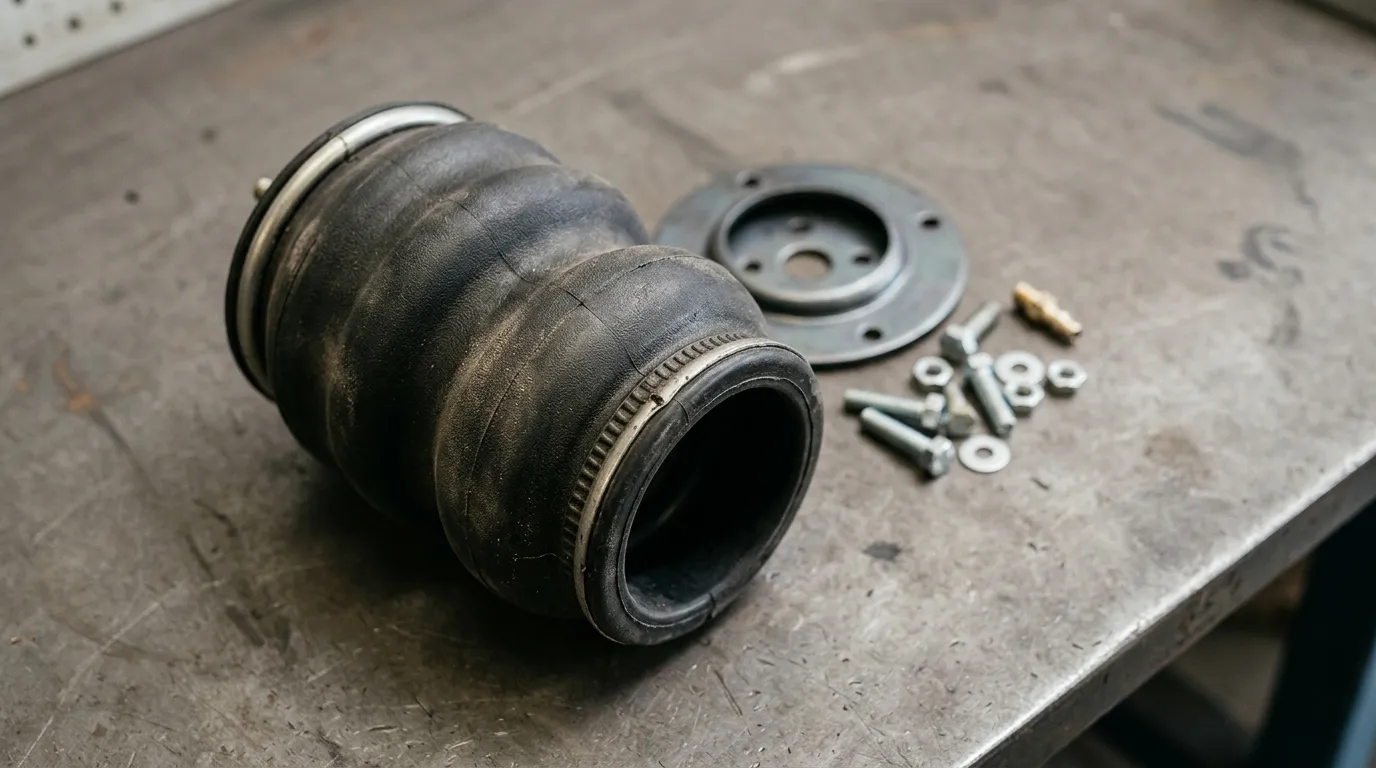
Rolling-lobe and convoluted air spring designs differ in how the flexible member moves: a rolling-lobe spring rolls its rubber sleeve along a piston surface, while a convoluted (bellows) spring extends and compresses one or more stacked rubber convolutions. That single difference drives the stroke, space and application trade-offs below.
What Is a Rolling-Lobe Air Spring?
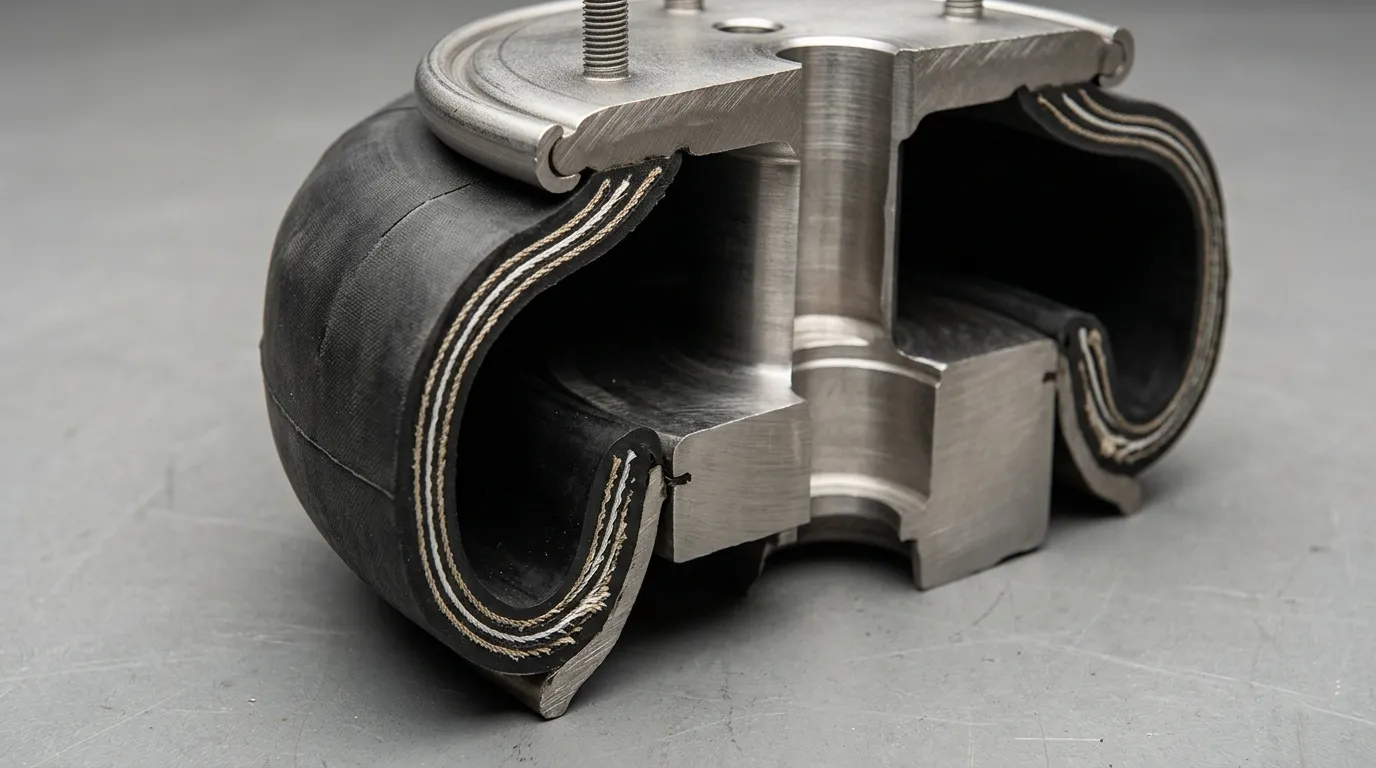
A rolling-lobe air spring is an air spring design in which the flexible rubber member rolls along a piston as the suspension moves, rather than folding into fixed convolutions. According to ORIA, a rolling-lobe spring uses a piston that allows the flexible member to roll along the piston surface. ORIA's broader definition describes an air spring as an air reservoir made from rubber and fabric, shaped as a bellows, used to support load, isolate vibration and shock, or act as a pneumatic cylinder.
Because the rolling action depends on the piston, the flexible member's behaviour is tied to the surface it travels over. Where the retrieved sources do not describe piston profiles or taper geometry, this comparison does not assert them either.
What Is a Convoluted (Bellows) Air Spring?
A convoluted air spring is a bellows-type design whose flexible member is formed into distinct convolutions that extend and compress as load changes. According to ORIA, crimped convoluted air springs are bellows-type designs built with one, two or three convolutions. That convolution count is the design's defining feature, and it is the lever that changes both travel and the space the spring needs.
[DIAGRAM: one-, two- and three-convolution bellows outlines shown at the same load, illustrating the increasing installed envelope]
How the Two Designs Are Built
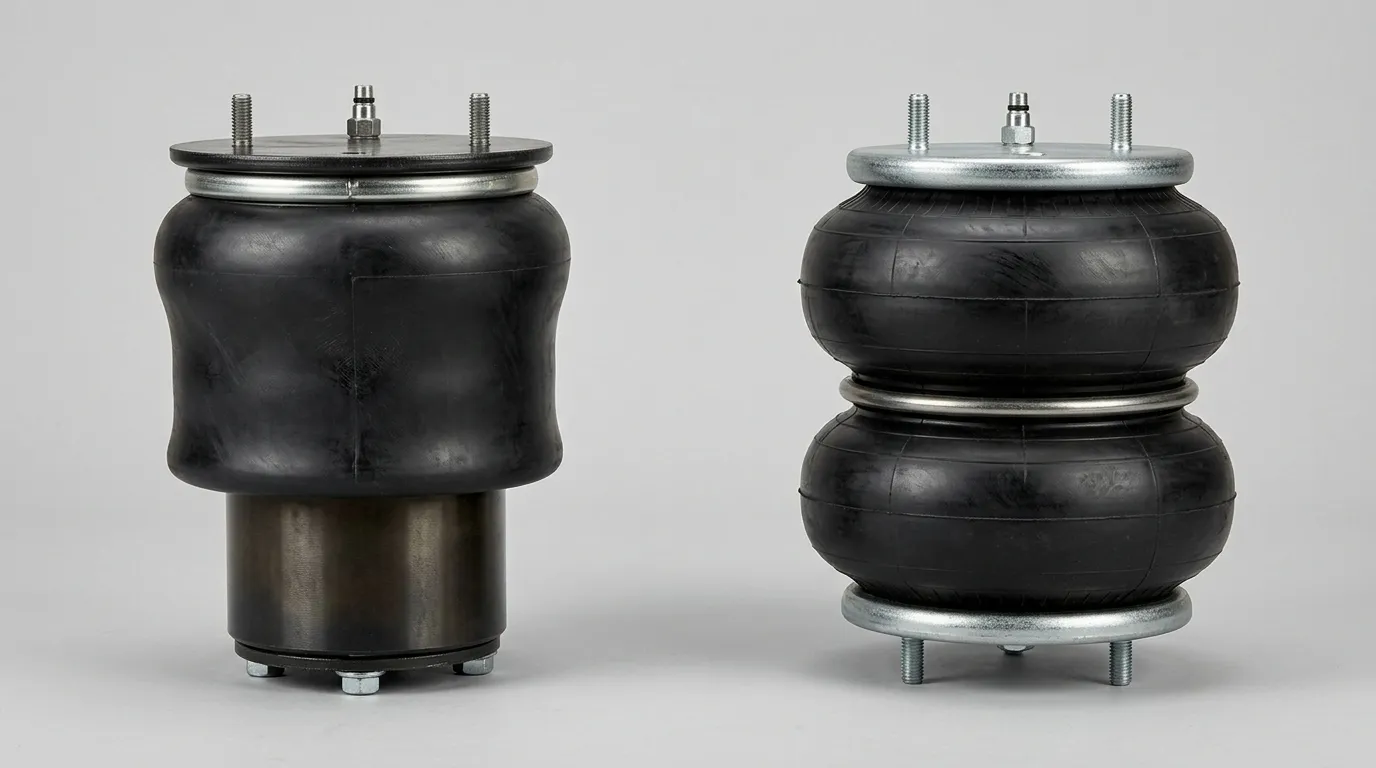
Both air spring designs use a rubber-and-fabric flexible member; the difference is whether that member rolls across a piston or folds into fixed convolutions between mounting plates. ORIA distinguishes three types overall — crimped convoluted, sleeve and rolling-lobe — and describes the flexible member as rubber and fabric, bellows-shaped.
If you need the wider category first, the guide to air suspension airbags covers how these parts sit within a complete suspension system.
| Design feature | Rolling-lobe | Convoluted (bellows) | Evidence note |
|---|---|---|---|
| Flexible-member motion | Rolls along a piston surface | Extends and compresses as stacked convolutions | ORIA |
| Piston and mounting arrangement | Uses a piston the member rolls over | Bellows formed into convolutions | ORIA |
| Typical convolution count | Not stated by retrieved sources | One, two or three convolutions | ORIA |
| Stroke and travel | Not stated by retrieved sources | More convolutions may provide greater stroke | ORIA |
| Installation space | Not stated by retrieved sources | Two- and three-convolution designs need more room | ORIA |
| Typical applications | Trailers, commercial trucks and buses | No single vehicle class attributed by retrieved sources | ORIA |
Rubber and Fabric Construction
Both designs rely on a flexible member made of rubber and fabric, which is why the material — not only the shape — affects how a spring behaves; rubber air spring construction is covered in more detail separately.
Terminology: Is a "Sleeve" Air Spring the Same as a Rolling Lobe?
Not exactly. ORIA presents sleeve, rolling-lobe and crimped convoluted springs as three distinct types, while some suppliers frame the choice more loosely as "bellows versus sleeve" — Air Lift's page carries that wording. The practical consequence is that a design label alone will not tell you whether a part rolls on a piston or folds into convolutions, so the part's own data should confirm it.
Stroke, Travel and Installation Space
Convolution count is the main lever on bellows travel and space: according to ORIA, more convolutions may provide greater stroke or travel, while two- and three-convolution designs require more room and application space should be checked. Treat that as a trade rather than a free gain — added travel has to be balanced against the installation envelope the vehicle actually provides.
[DIAGRAM: arrows showing a rolling-lobe member moving across its piston beside convolutions extending and compressing, with a side-clearance indicator on the multi-convolution version]
Load Support, Pressure and Ride Behaviour
Design geometry changes how an air spring carries load, but the retrieved sources do not provide comparable test conditions, so pressure-versus-load figures cannot be ranked across the two designs. Air Lift's page states that bellows air springs can often support the same load at lower air pressure than sleeve-style springs; that full page was not available for this comparison and the statement carries no published conditions, so read it as a source-specific tendency rather than a guaranteed pressure advantage.
As a working rule, never compare load or pressure without naming the load, the operating pressure and the design height together. If those conditions are missing, describe the trade-off qualitatively only.
Typical Applications for Each Design
According to ORIA, rolling-lobe air springs are mainly used in trailers, commercial trucks and buses. For convoluted springs, ORIA confirms the one-, two- and three-convolution forms but does not attribute a single vehicle class to them, so this comparison does not assign one; commercial applications of the rolling design are covered further in the commercial vehicle air spring guide.
Fitment and Clearance Checks Before You Choose
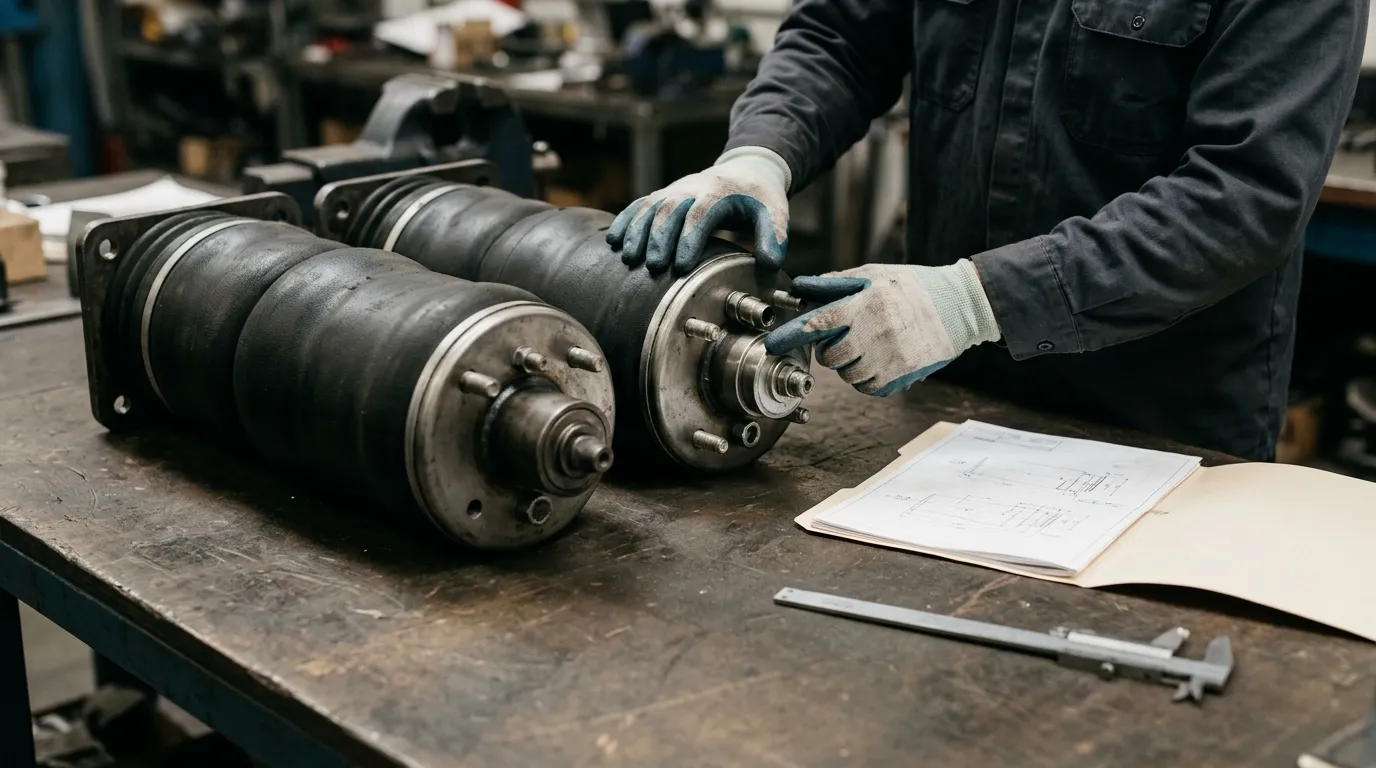
Because a design label does not confirm fit, verify a replacement part against the suspension it serves rather than against the appearance of the old spring. The sources used here provide no cross-design interchange rule, so one design should not be treated as a drop-in substitute for the other.
- Confirm the OE number and catalogue data for the assembly.
- Confirm which design the suspension was engineered to use.
- Confirm design height and installed length.
- Check clearance through the full range of travel, including side clearance for multi-convolution bellows.
- Confirm the mounting and piston or plate arrangement.
For step one, an automotive replacement air spring listing is only useful once the OE number is matched. HUIJIE lists more than 2,000 air suspension products, and identifies its parts by OE number across its range for European and luxury vehicles.
Frequently Asked Questions
Why can bellows air springs sometimes run at lower pressure than sleeve designs?
Air Lift's page states that bellows designs can often support the same load at lower air pressure than sleeve-style springs. No test conditions are published alongside that statement, so treat it as a source-specific tendency shaped by geometry rather than a guaranteed pressure advantage in your application. Load, pressure and design height should always be compared together.
Does more convolutions always mean more stroke?
No. According to ORIA, more convolutions may provide greater stroke or travel, but two- and three-convolution designs also require more room, and application space should be checked. The trade is therefore between added travel and the installed envelope available on the vehicle.
Can a rolling-lobe spring be swapped for a convoluted one?
Only if the suspension was engineered for that design. The sources used here give no cross-design interchange rule, so substitution should be confirmed by OE number, design height, mounting arrangement and clearance through full travel — verified part by part, never from the general design label.
Share on Social:


Contact Us
In This Article
- 1 What Is a Rolling-Lobe Air Spring?
- 2 What Is a Convoluted (Bellows) Air Spring?
- 3 How the Two Designs Are Built
- 4 Terminology: Is a "Sleeve" Air Spring the Same as a Rolling Lobe?
- 5 Stroke, Travel and Installation Space
- 6 Load Support, Pressure and Ride Behaviour
- 7 Typical Applications for Each Design
- 8 Fitment and Clearance Checks Before You Choose
- 9 Frequently Asked Questions
