


Mercedes Airmatic vs ABC Suspension: How They Compare
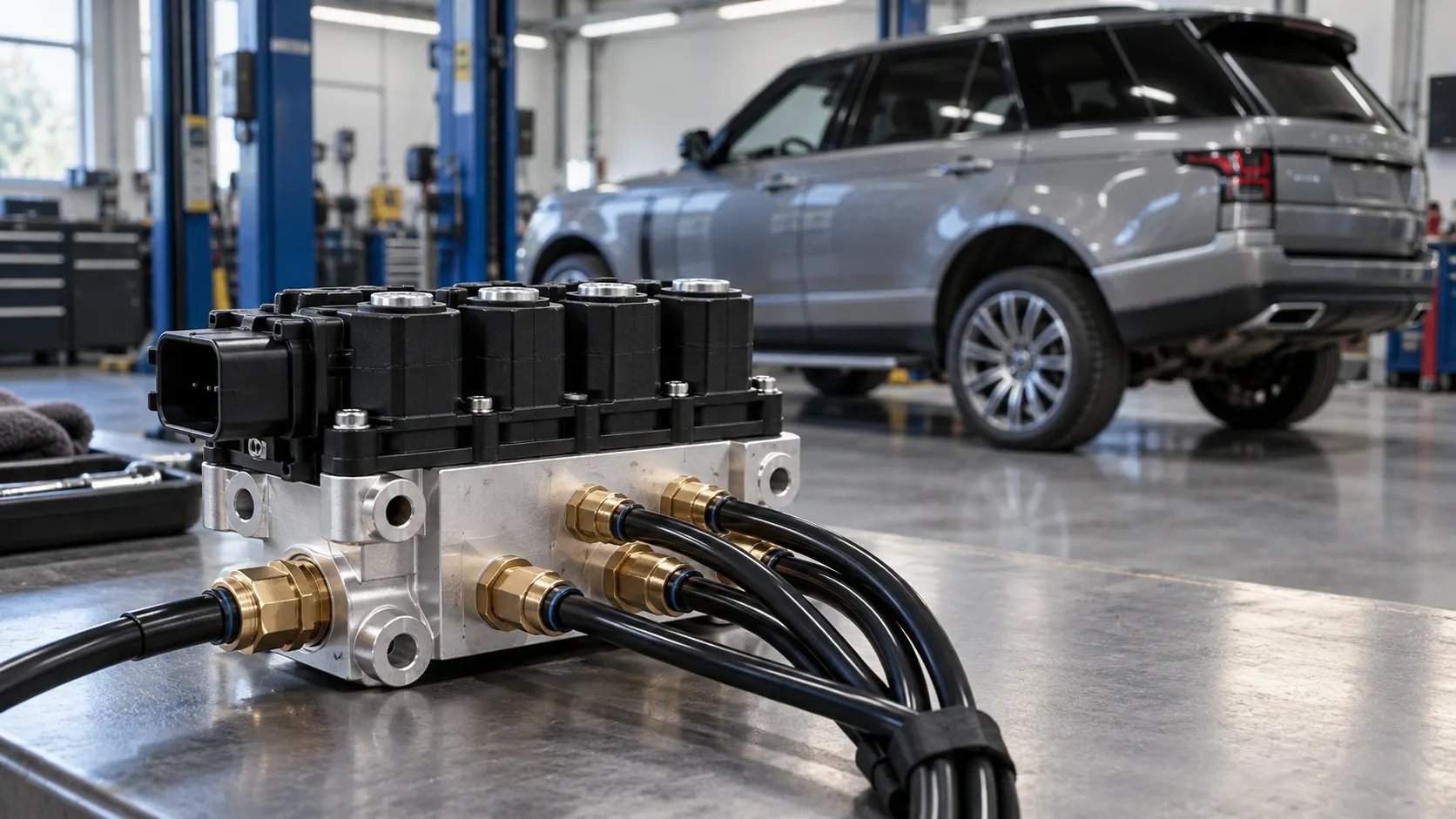
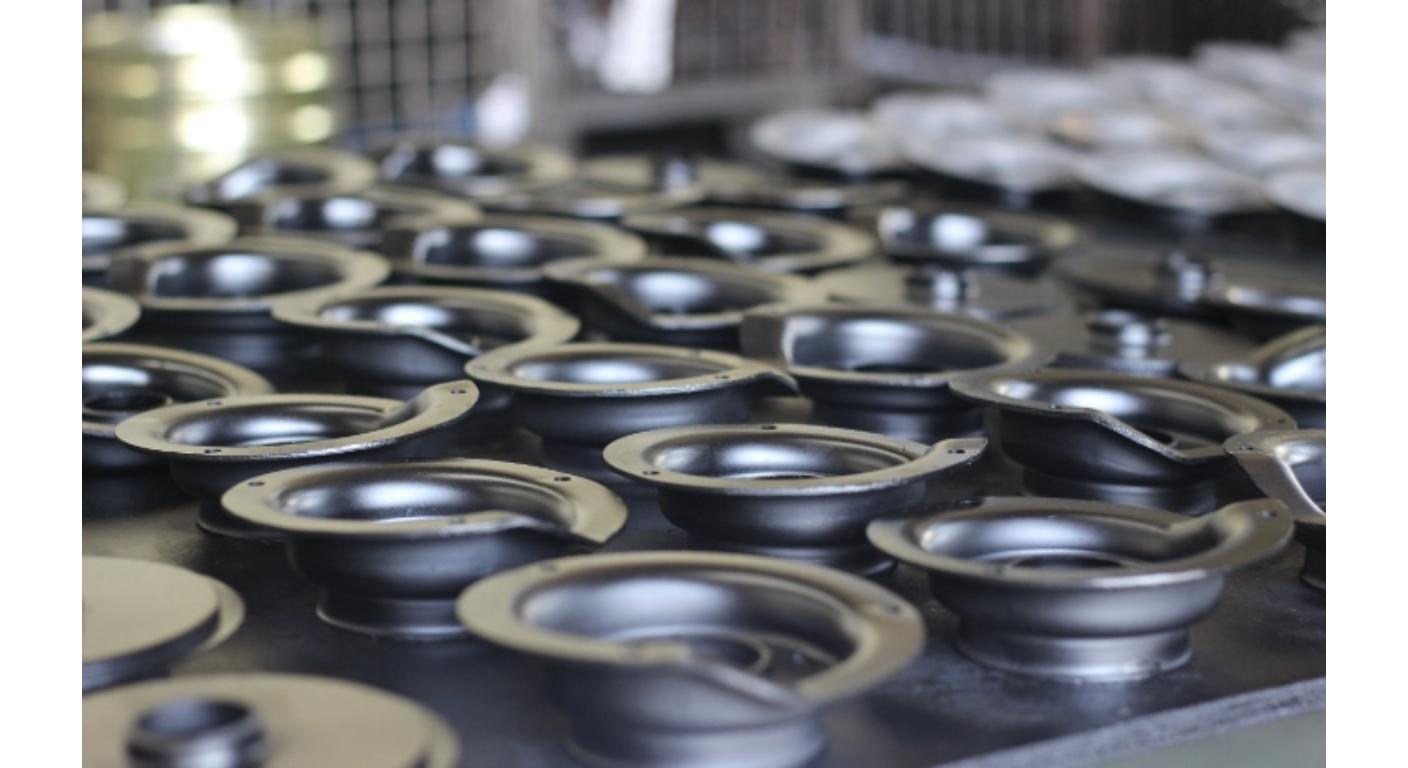
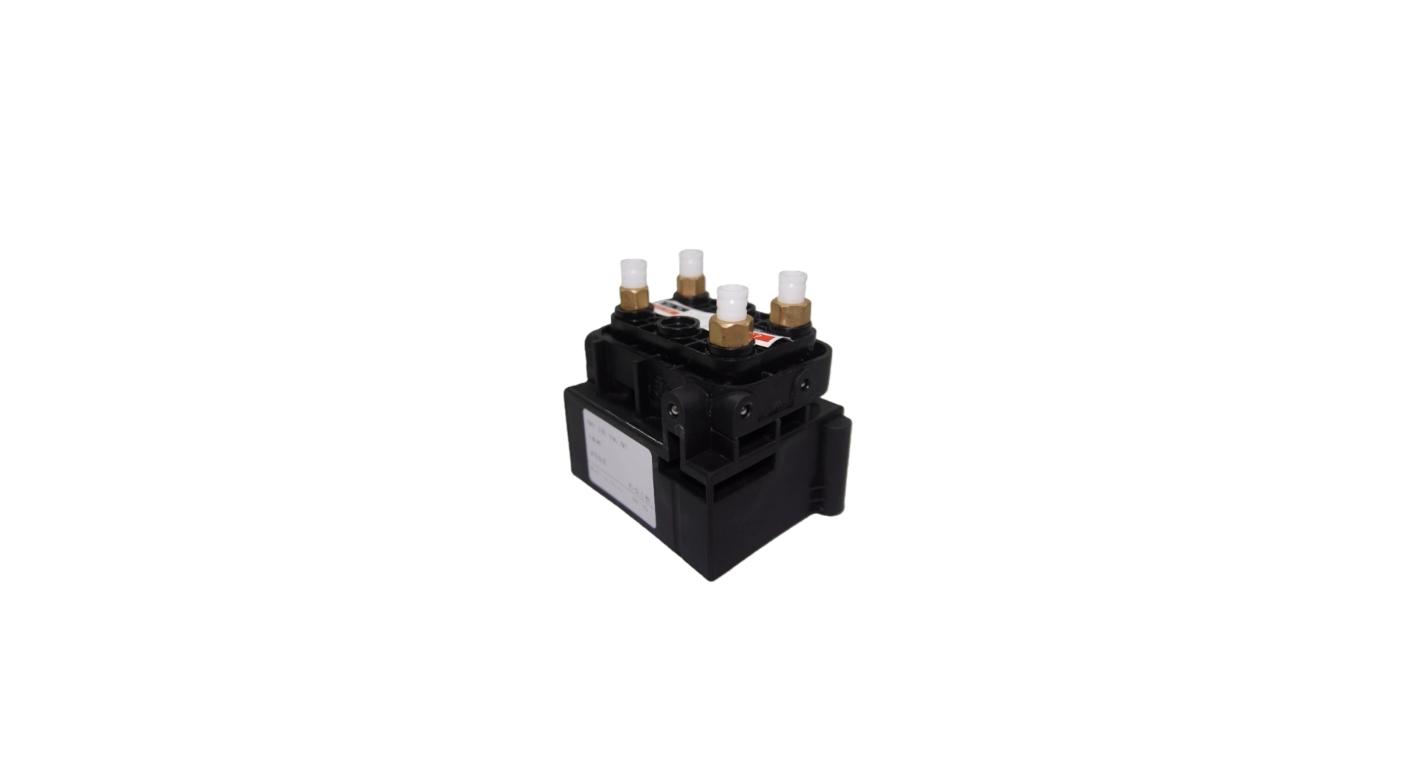
Mercedes Airmatic is an air suspension that uses air springs and a compressor to manage ride height and load support, while Active Body Control (ABC) is an electronically controlled hydropneumatic system that uses hydraulic pressure to counter body lean, dive and squat. The two systems serve different functions, use different components, and appear on different Mercedes models.
Key takeaways
- Aktiv Automotive describes Airmatic as using air springs, a compressor, valves and control electronics, while Wikipedia describes ABC as electronically controlled hydropneumatic suspension with hydraulic servos at the wheels.
- Wikipedia treats E-Active Body Control as a later development, not a synonym for conventional ABC.
- Aktiv Automotive links air leaks to increased compressor workload in Airmatic, and lists fluid degradation, seals, valves and sensors among ABC service concerns.
- Wikipedia and Kadunza give named model examples for both systems; those examples are not complete model-year ranges.
- No universal easier-to-own verdict is supportable from these sources — the fault type and vehicle condition matter more than the system name.
What Are Mercedes Airmatic and ABC Suspension?
Airmatic is an air-spring suspension, while Active Body Control is an electronically controlled hydropneumatic system that actively manages body movement. Both are Mercedes-Benz suspension systems, but they solve different problems with different hardware.
What Is Airmatic?
Airmatic is a Mercedes-Benz air suspension that supports the vehicle and manages ride height using compressed air. According to repair guide Aktiv Automotive, Airmatic uses air-filled rubber bellows or air struts together with a compressor, valves and control electronics to manage air pressure at each spring element.
What Is Active Body Control (ABC)?
Active Body Control is an electronically controlled hydropneumatic suspension. Wikipedia's Active Body Control reference page describes a system that operates hydraulic servos at the wheels to counter body lean, dive and squat, and states that ABC first appeared in production on the Mercedes-Benz CL-Class C215 in 1999. E-Active Body Control appeared later and is a related but distinct system.
[DIAGRAM: side-by-side air circuit (air spring or strut, compressor, valve block, control electronics) and hydraulic circuit (pump, high-pressure lines, accumulators, hydraulic servos, sensors)]
How Airmatic Works: Air Springs, Ride Height, and Load Support
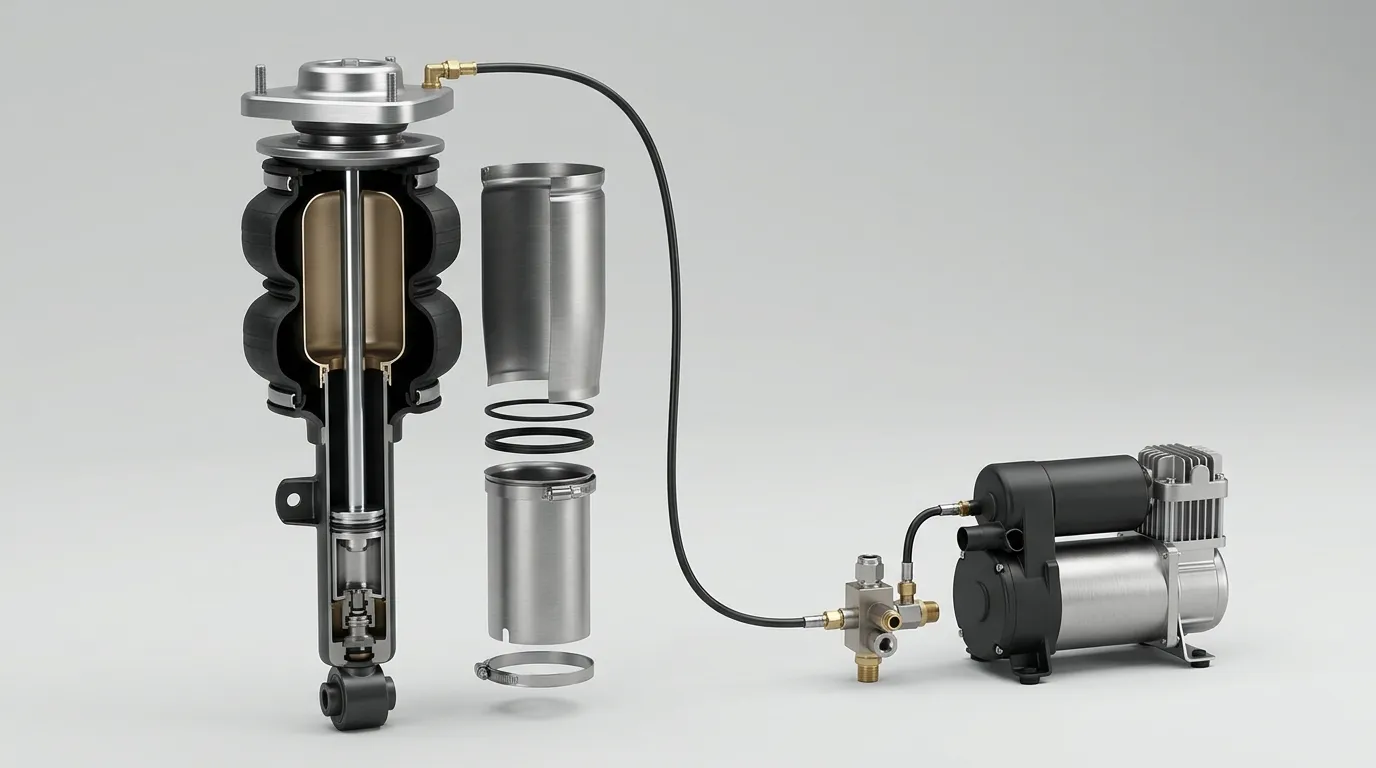
Airmatic uses compressed air inside spring elements to support the vehicle and manage ride height and load behaviour. Aktiv Automotive describes air-filled rubber bellows or air struts working with a compressor, valves and control electronics, where the compressor supplies pressure that the valves direct to each spring element.
Because the system holds pressure, leaks matter. Aktiv Automotive notes that leaks in the air circuit can increase compressor workload, since the compressor runs more often to replace lost pressure. That is why an unresolved leak can affect components beyond the leaking part.
For a broader explanation of the air circuit, how air suspension works covers the compressor, valve block and air-spring components in more detail.
How ABC Works: Hydraulic Control of Body Movement
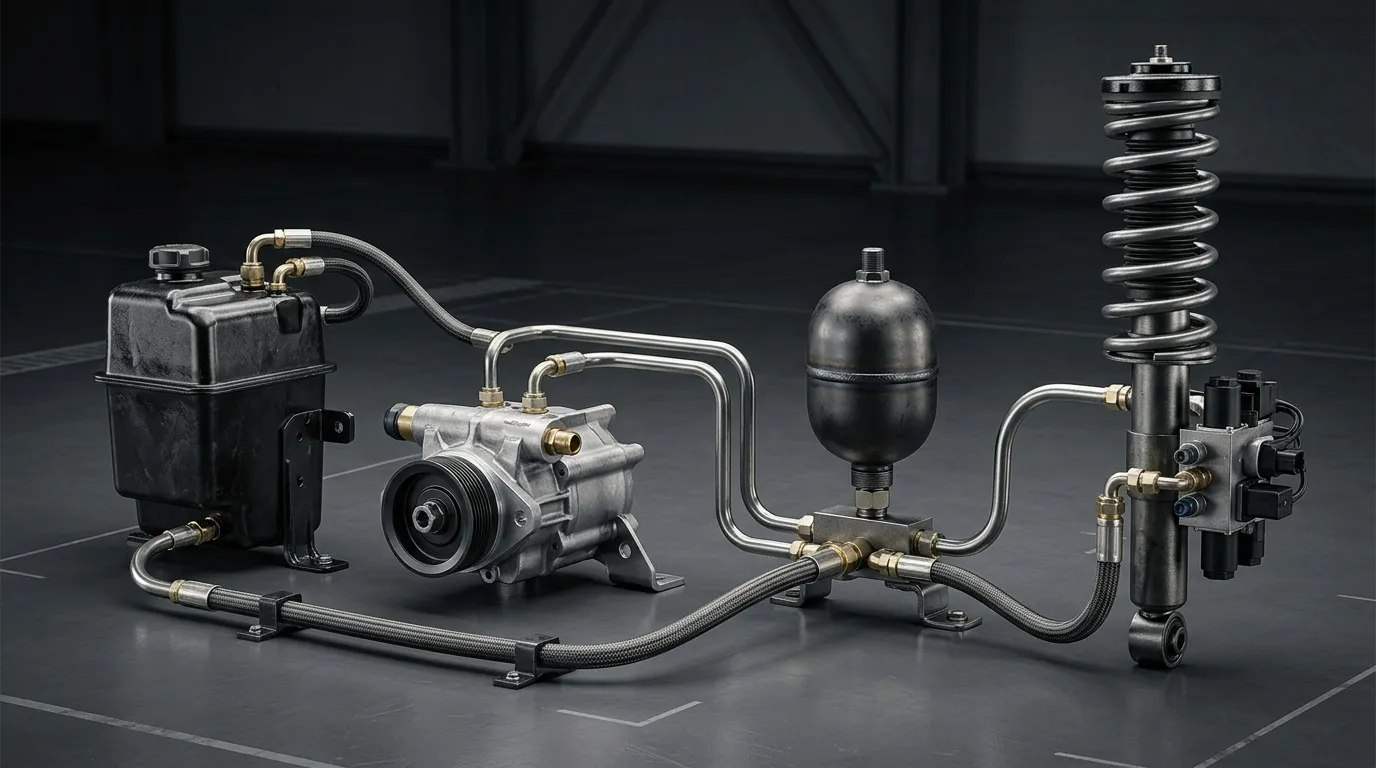
Active Body Control uses hydraulic pressure and electronic control to actively counter body movement rather than simply supporting load. Wikipedia's Active Body Control page states that an ABC control unit receives sensor data and operates hydraulic servos at the wheels to counter body lean, dive and squat.
Wikipedia's description also reports a 3,000 psi operating pressure for the high-pressure radial-piston hydraulic pump and sensor data supplied every 10 milliseconds. Those figures come from a single reference page and describe a specific system generation, so they should be read as source-specific rather than universal across every ABC-equipped Mercedes. Wikipedia further notes that a second-generation version is described on the C216 CL-Class in 2006.
Airmatic vs ABC: Key Differences at a Glance
The central difference is medium and purpose: Airmatic manages ride height and load support with air, while conventional ABC manages body motion with hydraulic pressure.
| Feature | Airmatic | Active Body Control (ABC) |
|---|---|---|
| Operating medium | Air | Hydraulic fluid (hydropneumatic) |
| Primary function | Ride height, load support, adaptive air springing | Active control of body lean, dive and squat |
| Key components | Air springs or struts, compressor, valves, control electronics | Hydraulic pump, high-pressure lines, accumulators, hydraulic servos, sensors |
| Typical service concerns | Air leaks, compressor workload, valve and control components | Fluid degradation, seals and valves, sensors, pump and lines |
| Example applications | Kadunza names S-Class, E-Class and GL-Class | Kadunza names SL-Class, CL-Class and high-performance AMG models |
| Identification | Confirm by build data or VIN, then inspection | Confirm by build data or VIN, then inspection |
Component names and service concerns in the table come from Aktiv Automotive and Wikipedia, and the example applications come from Kadunza. No cell in this table should be read as a complete fitment list.
[INFOGRAPHIC: two-panel function graphic showing Airmatic supporting load and ride height, and ABC countering body lean, dive and squat]
Which Mercedes Models and Years Use Airmatic or ABC?
Available sources give named examples rather than a complete model-and-year map, so the table below lists applications with their source. Model year, market, trim and build data must be checked for any specific vehicle.
| Model or family | System named | Source | Verification note |
|---|---|---|---|
| CL-Class C215 | ABC | Wikipedia | Introduced in production in 1999 |
| CL-Class C216 | ABC | Wikipedia | Second-generation version described in 2006 |
| GLE (V167) | E-Active Body Control | Wikipedia | Debuted on the fourth-generation GLE; the 2019 GLE 450 4MATIC is identified as the first all-wheel-drive model to have ABC available |
| S-Class, E-Class, GL-Class | Airmatic | Kadunza | Examples only, not a complete range |
| SL-Class, CL-Class, high-performance AMG models | ABC | Kadunza | Examples only, not a complete range |
E-Active Body Control deserves a separate note. Wikipedia states that E-Active Body Control debuted on the fourth-generation GLE (V167), and identifies the 2019 Mercedes-Benz GLE 450 4MATIC as the first all-wheel-drive model to have ABC available. That system is a later development and should not be treated as interchangeable with conventional ABC when researching parts or service.
Airmatic and ABC Failure Points: What Commonly Goes Wrong
Airmatic faults commonly centre on air leaks and the components that manage air pressure, while ABC faults commonly centre on hydraulic fluid condition, seals, valves and sensors. Neither list is a diagnosis — fault codes and a physical inspection are needed to identify an actual failure.
Airmatic Failure Points and Symptoms
According to Aktiv Automotive, Airmatic uses air-filled rubber bellows or air struts, a compressor, valves and control electronics, and leaks can increase compressor workload. That combination shapes the usual trouble spots:
- Air leaks at spring elements or lines, which can make the compressor run more often.
- Compressor strain or failure after prolonged running with a leak.
- Valve or control-component faults that affect how pressure is distributed.
Replacement air components are model-specific. HUIJIE lists a W222 Airmatic valve block for the W222 application and a Mercedes R-Class Airmatic repair kit for the R-Class, both within its air suspension range. Confirm the fault by inspection rather than by symptom alone.
ABC Failure Points and Symptoms
According to Aktiv Automotive, ABC uses a hydraulic pump, high-pressure lines and a reservoir, and lists fluid degradation, seals and valves, and sensors among potential service concerns. Because ABC actively counters body lean, dive and squat according to Wikipedia, a fault can affect that control function as well as ride quality.
- Hydraulic fluid condition and contamination.
- Leaks at seals, valves or lines.
- Sensor or control faults that interrupt pressure control.
Exact symptoms and fault codes vary by model and generation, so a diagnosis should come from inspection and fault-code reading on the specific vehicle.
Maintenance and Repair Complexity: Which Is Easier to Own?
There is no universal easier-to-own answer; the system design, the specific fault and the vehicle determine maintenance complexity and cost.
The two systems have different service profiles rather than a ranking. Aktiv Automotive notes that Airmatic leaks can increase compressor workload, which makes prompt leak repair relevant to the rest of the air system, and the same guide lists fluid degradation, seals and valves, and sensors among ABC service concerns.
Cost figures also vary widely by market. Kadunza's guide, dated 14 July 2025, gives Airmatic struts at $1,200 to over $2,000 per corner and ABC pump replacement at $2,500–$4,000+, but it does not fully specify the market, parts choice and labour assumptions behind those numbers. Treat them as one source's estimates rather than standard prices.
HUIJIE manufactures replacement air suspension parts for European and luxury vehicles, including Mercedes-Benz, with more than 2,000 products listed and parts identified by OE number. Its customers include distributors, wholesalers and repair shops worldwide, and it provides a one-year warranty and lists ISO 9001:2015, CE and IATF certification. Its listed range covers air springs and air suspension struts, air suspension compressors, valve blocks, air shock absorbers and air spring repair kits, which is relevant to Airmatic-style systems; it is not a source of ABC hydraulic components. Buyers comparing air suspension replacement options can browse European car air suspension parts.
How to Identify Whether a Mercedes Has Airmatic or ABC
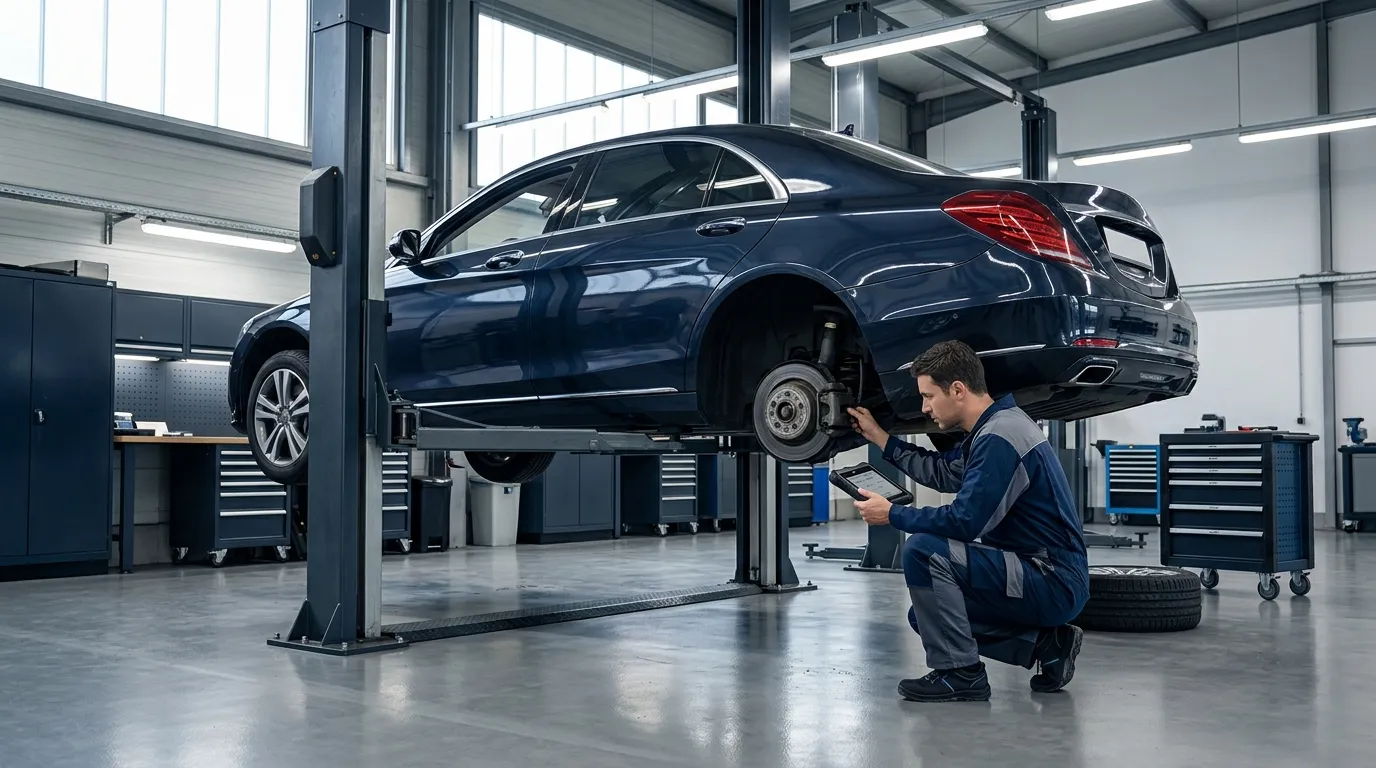
The reliable way to identify the system is to confirm it from the vehicle's build data or VIN, then inspect the components if the record is unclear. A visual check alone is not definitive, because both systems can look similar from underneath.
- Check the vehicle's build sheet, VIN decode or factory specification for the suspension option.
- Look for the documented system name or option code on that record.
- If the record is unclear, have a qualified technician inspect the spring and strut assembly and the air or hydraulic components.
- Do not rely on a single visual cue. ImportCar's summary notes that air lines can help visually distinguish Airmatic from ABC, which is a useful clue rather than proof.
[DIAGRAM: identification flow — build data or VIN check, option or system confirmation, visual clue if present, qualified inspection]
FAQ
What is the main difference between Airmatic and ABC?
Airmatic uses air springs, a compressor and valves to manage ride height and load support, according to Aktiv Automotive. ABC is an electronically controlled hydropneumatic system that uses hydraulic servos at the wheels to counter body lean, dive and squat, according to Wikipedia. They are different systems with different components, service concerns and model applications.
Does Mercedes still use ABC suspension?
Conventional ABC has evolved. Wikipedia states that E-Active Body Control debuted on the fourth-generation GLE (V167), and identifies the 2019 Mercedes-Benz GLE 450 4MATIC as the first all-wheel-drive model to have ABC available. Treat that as a documented example and verify current model specifications separately, because equipment varies by model, market and trim.
What years did Mercedes use ABC suspension?
Wikipedia places first production ABC on the CL-Class C215 in 1999 and describes a second-generation version on the CL-Class C216 in 2006. Those are examples rather than a complete year range. Because model year, market and trim affect availability, check the build data for the specific vehicle before ordering parts.
How much does it cost to repair ABC or Airmatic?
Kadunza's guide, dated 14 July 2025, estimates Airmatic struts at $1,200 to over $2,000 per corner and ABC pump replacement at $2,500–$4,000+. Those figures are one source's estimates without fully specified market, parts and labour assumptions, so they should not be treated as standard prices.
Share on Social:


Contact Us
In This Article
- 1 Key takeaways
- 2 What Are Mercedes Airmatic and ABC Suspension?
- 3 How Airmatic Works: Air Springs, Ride Height, and Load Support
- 4 How ABC Works: Hydraulic Control of Body Movement
- 5 Airmatic vs ABC: Key Differences at a Glance
- 6 Which Mercedes Models and Years Use Airmatic or ABC?
- 7 Airmatic and ABC Failure Points: What Commonly Goes Wrong
- 8 Maintenance and Repair Complexity: Which Is Easier to Own?
- 9 How to Identify Whether a Mercedes Has Airmatic or ABC
- 10 FAQ
