


What Determines Rubber Air Spring Durability? Fatigue, Pressure and Leak Testing
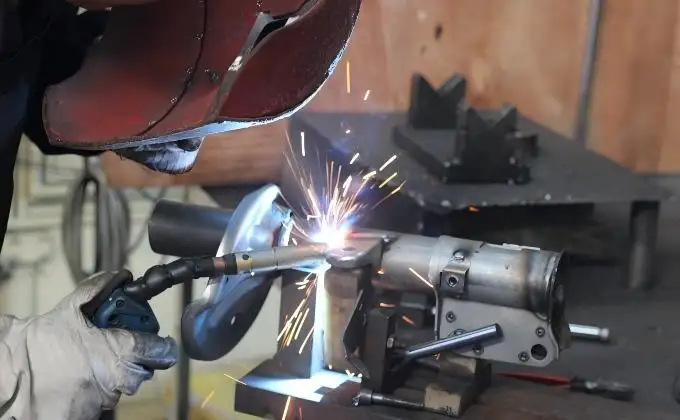
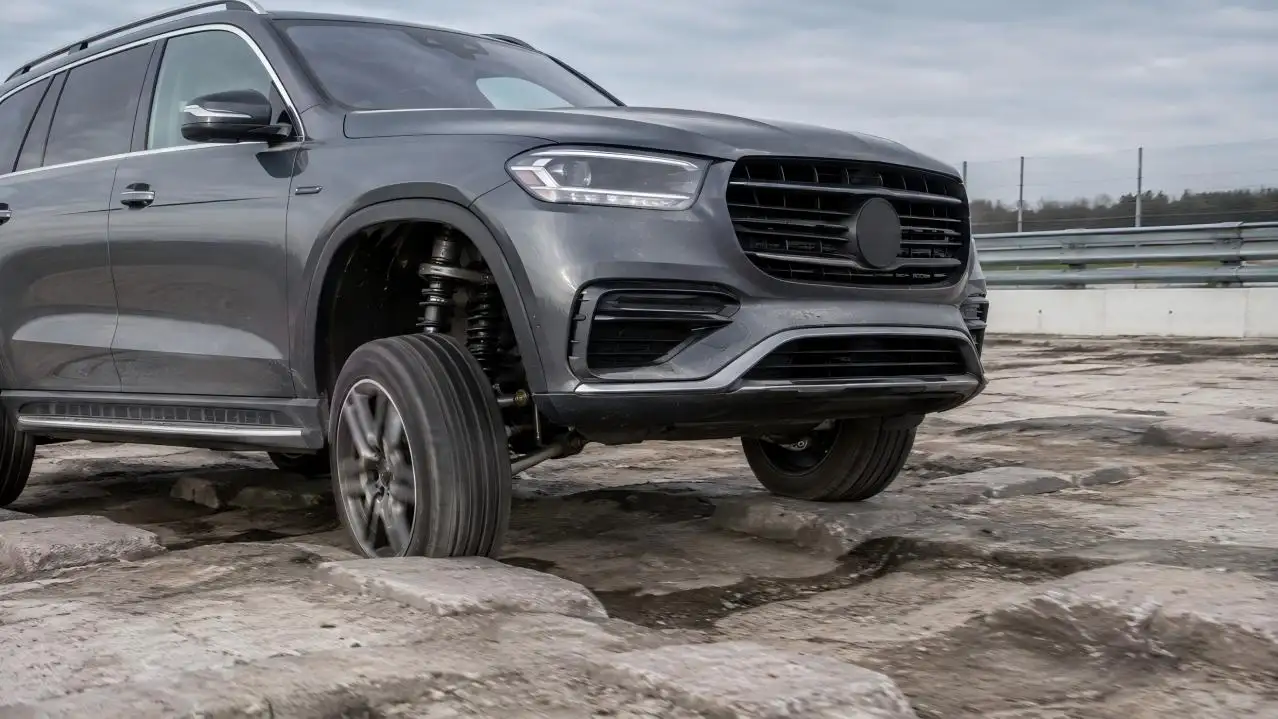
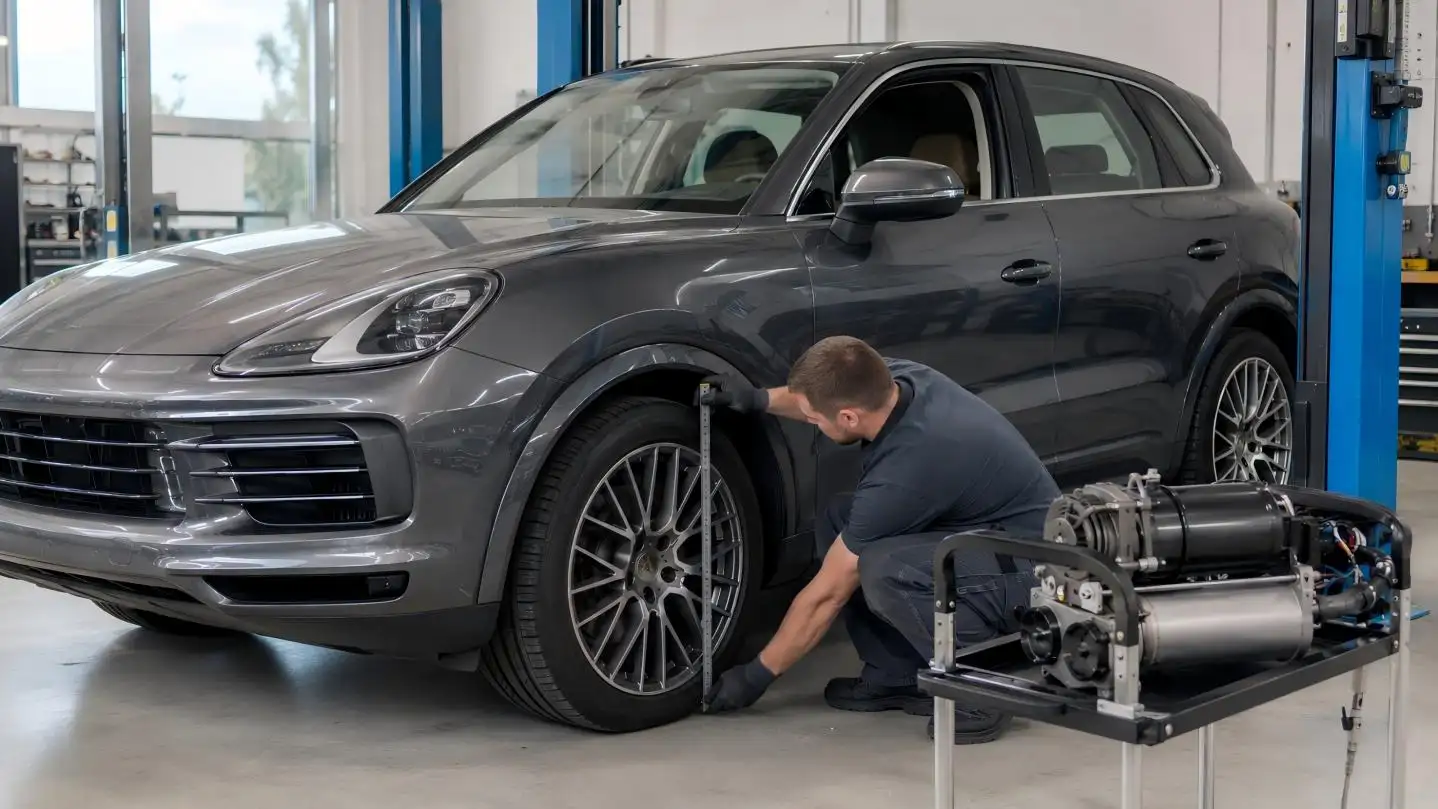
A Rubber Air Spring can pass a short leak check and still fail prematurely. Long-term durability depends on the interaction between rubber formulation, reinforcing cord, crimped interfaces, operating pressure, suspension stroke, temperature and installation geometry.
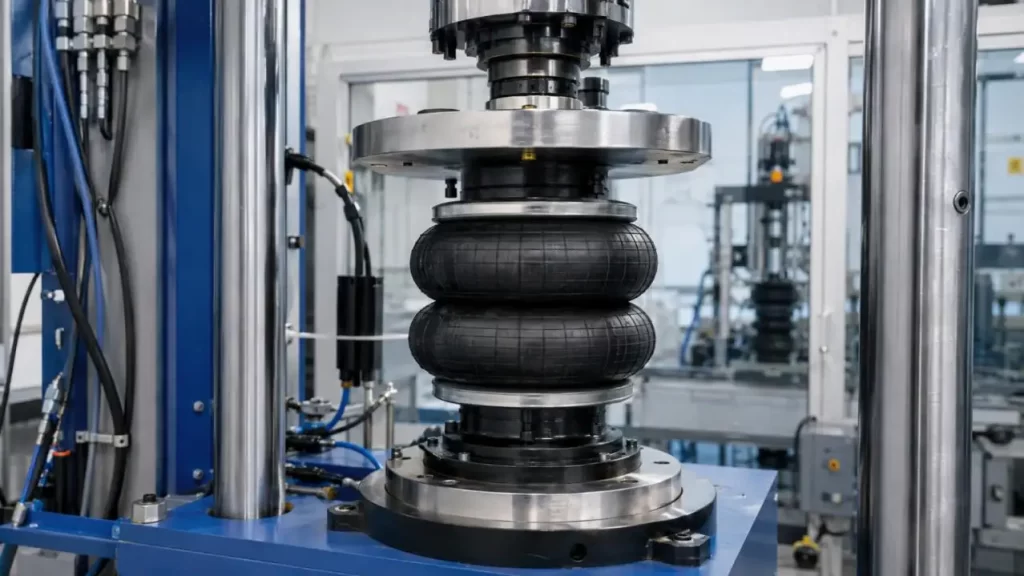
For engineers and buyers, a cycle count alone is not useful. A credible result must state the pressure, working height, stroke, temperature, frequency and failure criteria used during testing.
Why Rubber Air Spring Failures Often Begin as Small Ride Problems
A vehicle leaning after overnight parking is the most visible symptom, but early failure can also appear as:
• Frequent compressor cycling
• Slow recovery to normal ride height
• Uneven left-to-right chassis height
• Cracking around the bellows fold
• Air bubbles near a fitting or crimped interface
• A harsh or unstable ride under changing loads
These symptoms do not automatically identify the Rubber Air Spring as the cause. Air lines, connectors, valve blocks and check valves can produce similar pressure loss. The pneumatic circuits should therefore be isolated before replacing the spring.
A short pressure-hold test only evaluates sealing at that moment. It cannot reveal future ozone cracking, reinforcement separation, heat aging or flex-fatigue damage.
Pressure Supports the Vehicle, but Geometry Controls Durability
The vertical support force can be approximated as:
F≈Δp×Aeff(h)
The effective area Aeff changes with spring height. Consequently, two products operating at the same pressure may deliver different load capacity, ride height and bellows stress.
Air volume also affects spring rate. A small chamber experiences a larger pressure increase during compression, while additional volume generally softens the pneumatic response. The real force curve still depends on bellows profile, cord angle and rubber stiffness.
| Parameter Relationship | Durability Consequence |
| Higher pressure + large stroke | Greater cord and crimp-interface stress |
| Incorrect design height | Abnormal folding, overextension or rubbing |
| Low air volume + rapid compression | Higher pressure variation and heat generation |
| Higher rubber hardness | Better shape control but potentially reduced flex resistance |
| Weak rubber-to-cord adhesion | Internal separation before visible surface failure |
Rubber thickness is therefore not a sufficient quality indicator. Tensile strength, elongation, low-temperature flexibility, ozone resistance, dynamic cracking and rubber-to-textile adhesion must be assessed together.
Fatigue, Pressure and Leak Testing Measure Different Risks
The tests are complementary; one cannot replace another.
| Test | Typical Question | Required Report Data |
| Fatigue cycling | Can the bellows survive repeated movement? | Pressure, stroke, frequency, temperature and cycles |
| Proof pressure | Can the assembly withstand specified overpressure without permanent damage? | Test pressure, hold time and deformation |
| Burst pressure | Where is the ultimate structural limit? | Failure pressure and failure location |
| Pressure decay | Can the assembly retain air? | Initial pressure, stabilization time, temperature and pressure loss |
| Mass-flow leak test | What is the measurable leakage rate? | Test pressure, calibrated flow limit and instrument accuracy |
For commercial-vehicle reference, GB/T 13061-2017 specifies several useful benchmarks:
• General service temperature: −30°C to 57°C
• Maximum pressure loss: 0.05 MPa within 24 hours
• Breaking pressure: At least 2.5 times maximum pressure
• Frame fatigue life: At least 3 million cycles
• Reference fatigue condition: 0.70 MPa at standard height
These figures apply to the standard's commercial-vehicle scope. They should not be presented as automatic specifications for every passenger-car Rubber Air Spring, nor as confirmed Huijie values without a product-specific report.
How Huijie Builds and Identifies Its Rubber Air Spring Products
Huijie provides more useful engineering detail than a generic "premium rubber" description. Depending on the application, its Rubber Air Spring construction includes:
• Multi-layer reinforced rubber bellows
• Internal high-strength fiber reinforcement
• Heavy-duty metal crimping rings
• Robust molded plastic components
• Corrosion-resistant connectors
• Airtight release valves inspected individually before assembly
Huijie's products are tested before shipment. Specific listings also describe one-by-one valve leakage inspection, but buyers should still request the actual test pressure, stabilization period and allowable leak threshold.
| Huijie Application | Fitment Data | Manufacturing Detail |
| Maserati Levante | OE 670100715; rear left/right | Multi-layer rubber, fiber reinforcement and individual valve leak inspection |
| Mercedes-Benz R-Class W251 | OE 2513203013/3113/5613/5713; front left/right; 2006–2013 | Reinforced sleeve, crimping rings and individually inspected air valve |
| BMW X5 E53 | OE 37116757501/37116761443; front left; four-corner leveling only | OE-specific repair-kit configuration and leakage inspection |
This OE-based control is important because matching only the vehicle name is insufficient. Chassis code, production year, axle position, left/right orientation and suspension configuration can change the required geometry.
System Matching Is Part of Rubber Air Spring Durability
A correctly manufactured Rubber Air Spring may still fail early when another system component is defective. A leaking valve block can cause overnight sagging, while a weak compressor may leave the spring below its intended working height. Continuous low-pressure operation increases folding and bottoming risk.
Before installation, technicians should verify:
• Correct OE number and chassis application
• Specified design height and suspension travel
• Mounting alignment and surrounding clearance
• Air-line and connector condition
• Valve-block isolation and compressor output
• Height-sensor operation and calibration
The bellows must not twist or contact brackets, cables or sharp edges throughout its full stroke. After installation, the system should reach a stable ride height without repeated compressor operation.
Verify the Evidence Before Choosing a Supplier
Material methods such as ISO 37 for tensile properties, ISO 188 for heat aging, ISO 1431-1 for ozone cracking, ISO 132 for flex cracking and ISO 36 for rubber-to-textile adhesion can support validation. ISO 9001 and IATF 16949 demonstrate quality-system control, but they do not replace product-level pressure, fatigue or leak reports.
A serious Rubber Air Spring RFQ should request:
• Drawing and OE cross-reference
• Fatigue test profile and failure criteria
• Proof and burst-pressure results
• Quantified leakage limit
• Material aging data
• Batch traceability and inspection records
• Warranty and engineering-change procedure
Huijie combines 15+ years of air-suspension experience, an OE-organized product range, individual leakage inspection on specified products and 1–3-day availability for regular items. Buyers can submit the OE number, chassis, model year and axle position through the Huijie Rubber Air Spring catalog to confirm fitment and request the relevant test data before ordering.
FAQs
Q1. What Rubber Air Spring applications does Huijie supply?
Huijie provides OE-level products for Audi, BMW, Mercedes-Benz, Land Rover, Porsche, Maserati, Volvo, Tesla and more vehicle platforms. Availability is based on chassis, model year, and suspension configuration.
Q2. How does Huijie match a Rubber Air Spring to a vehicle?
Huijie locates OE numbers, chassis codes, vehicle models, production years, and mounting positions. Buyers also need to indicate if the part is front or rear, or left or right.
Q3. What materials are used in Huijie Rubber Air Spring products?
Huijie's products utilize reinforced rubber sleeves, internal high-strength fiber, heavy-duty crimping rings, and application-specific plastic or metal components. Construction will vary based on OE application.
Q4. Does Huijie perform leak testing before shipment?
Huijie's products are tested before shipment. Some Rubber Air Spring products undergo Leak inspection, air valve, and assembly individually prior to shipment.
Q5. Does 100% testing mean every spring receives a fatigue test?
Fatigue and burst tests are normally destructive or time-consuming sampling tests. Therefore, at the end of the production line, testing on every unit may be done. However, the buyer should ask Huijie which tests are conducted on every unit and which tests are conducted on a sampling basis.


Contact Us
In This Article
- 1 Why Rubber Air Spring Failures Often Begin as Small Ride Problems
- 2 Pressure Supports the Vehicle, but Geometry Controls Durability
- 3 Fatigue, Pressure and Leak Testing Measure Different Risks
- 4 How Huijie Builds and Identifies Its Rubber Air Spring Products
- 5 System Matching Is Part of Rubber Air Spring Durability
- 6 Verify the Evidence Before Choosing a Supplier
