


Air Suspension vs Traditional Suspension: Key Differences
Air suspension and traditional suspension are the two suspension system types compared here: air suspension uses pressurized air springs with a compressor and controls, while traditional suspension uses passive steel springs—coil or leaf—with hydraulic shock absorbers. The practical differences show up in ride-height adjustment, load response, complexity, maintenance and typical vehicle applications.
Key takeaways
- Air suspension replaces steel springs with air-filled rubber bellows, also called air springs. — Geotab, 2025
- Traditional passive suspension includes both coil springs and leaf springs; leaf springs are stacked curved metal strips used on heavy-duty trucks, trailers and off-road vehicles. — Geotab, 2025
- Air suspension can adjust ride height and air pressure in response to load or road conditions. — Geotab, 2025
- Air-ride systems cost more to install and repair than leaf-spring systems and need inspection of air components. — Geotab, 2025
- Application decides the fit: passenger cars, towing duties, commercial vehicles and off-road use place different demands on the system.
Air Suspension vs Traditional Suspension: The Short Answer
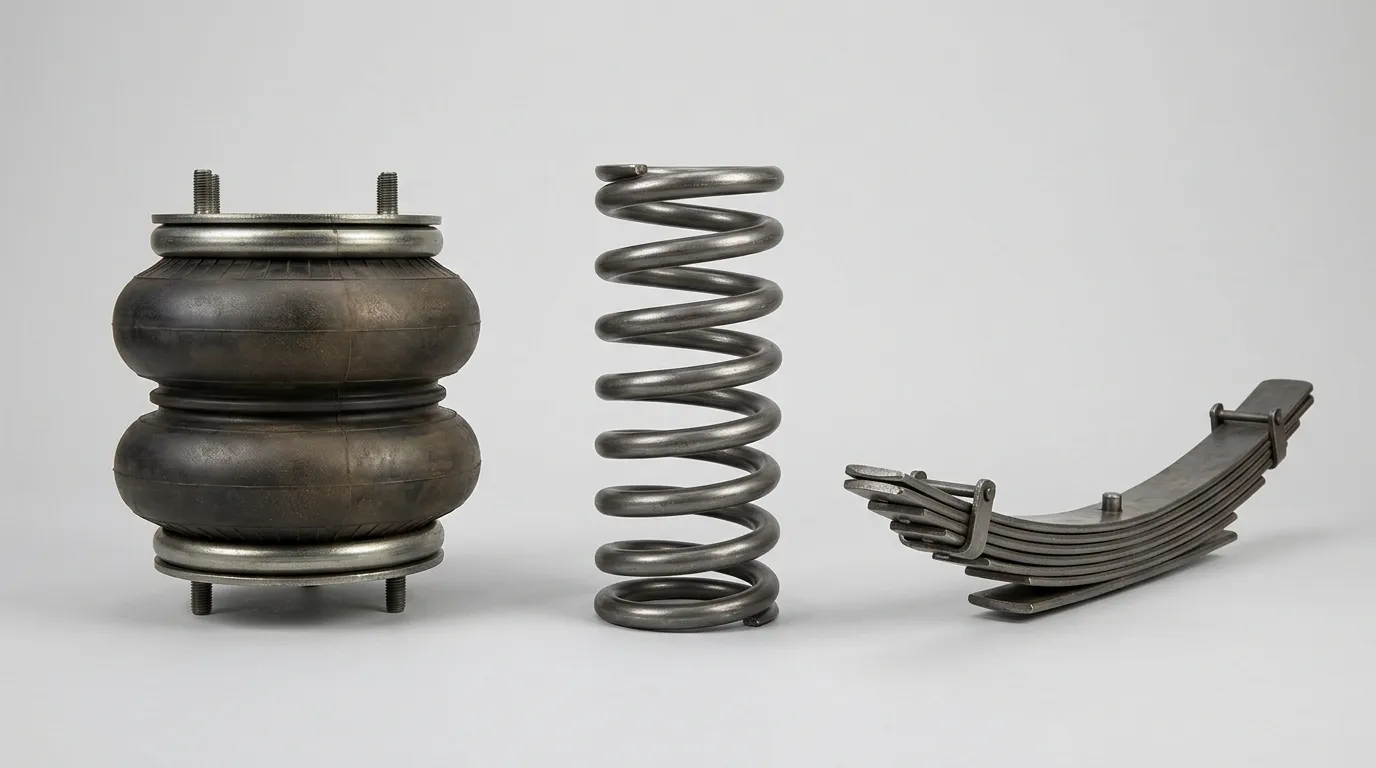
Air suspension uses air-filled rubber bellows supported by a compressor and control system, while traditional suspension relies on passive steel springs with hydraulic shock absorbers.
According to Geotab's 2025 air-ride suspension glossary, air-ride suspension replaces traditional steel springs with air-filled rubber bellows. Monroe's technical resource describes standard suspension as hydraulic shocks or struts paired with steel coil springs, and air suspension as hydraulic shocks or struts paired with pneumatic springs.
[DIAGRAM: cross-section comparing an air spring, a steel coil spring and a leaf spring]
| Comparison point | Air suspension | Traditional coil-spring suspension | Traditional leaf-spring suspension |
|---|---|---|---|
| Spring medium | Compressed air in rubber bellows (Geotab) | Steel coil springs (Monroe) | Stacked curved metal strips (Geotab) |
| Ride-height adjustment | Can adjust ride height and air pressure in response to load or road conditions (Geotab) | Fixed | Fixed |
| Load response | Air pressure can be changed as load changes (Geotab) | Fixed spring rate | Fixed spring rate |
| System complexity | Compressor, valves, sensors, control system, air lines (AccuAir) | Springs and hydraulic dampers | Springs and hydraulic dampers |
| Maintenance focus | Air components require inspection (Geotab) | Springs and dampers | Springs and dampers |
| Typical applications | Heavy-duty trailers, commercial motor vehicles, recreational vehicles (Geotab) | Passenger cars (Monroe) | Heavy-duty trucks, trailers, off-road vehicles (Geotab) |
| Cost tendency | Higher install and repair cost than leaf-spring systems (Geotab) | Not stated in the cited sources | Lower than air-ride in the cited comparison (Geotab) |
Air suspension itself is not a new idea. Readers who want the historical background rather than the technical comparison can find it in HUIJIE's note on the first use of air suspension.
How Air Suspension Works
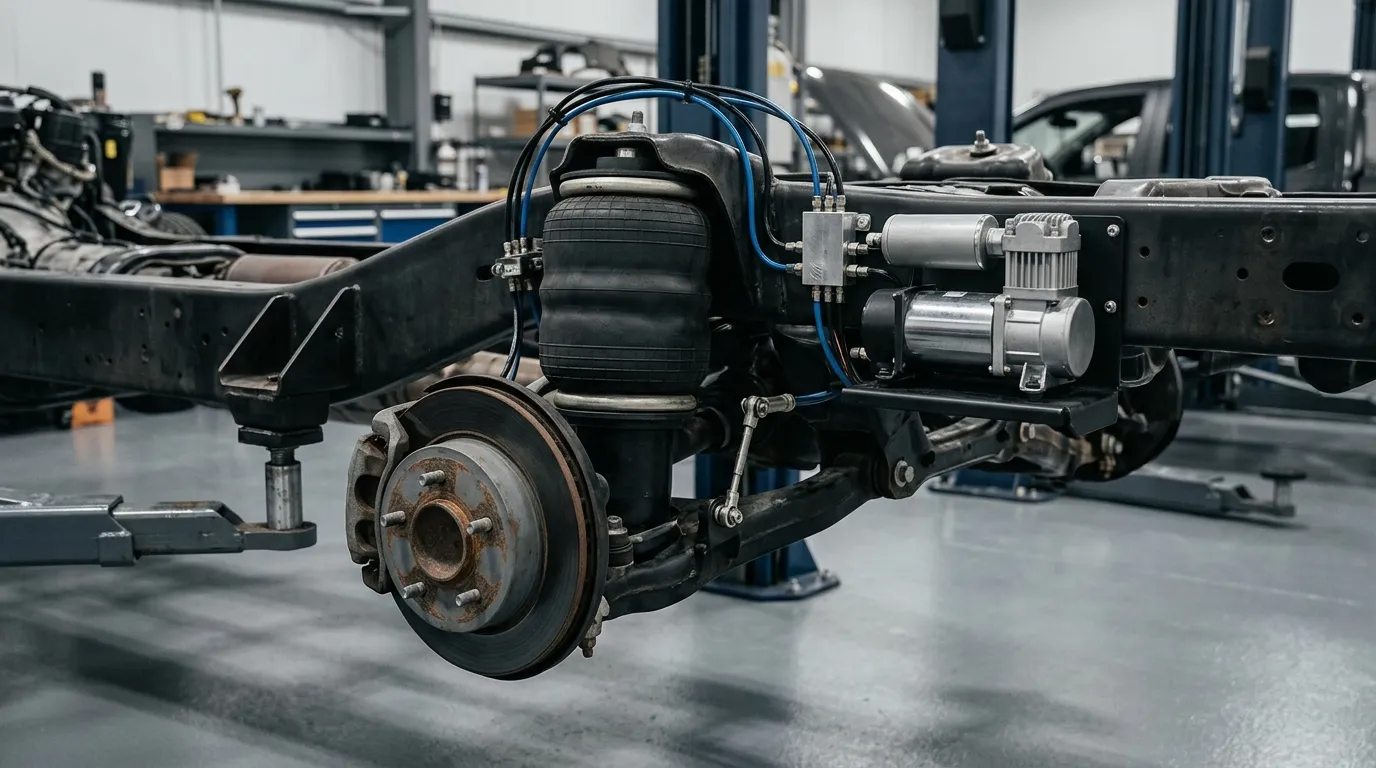
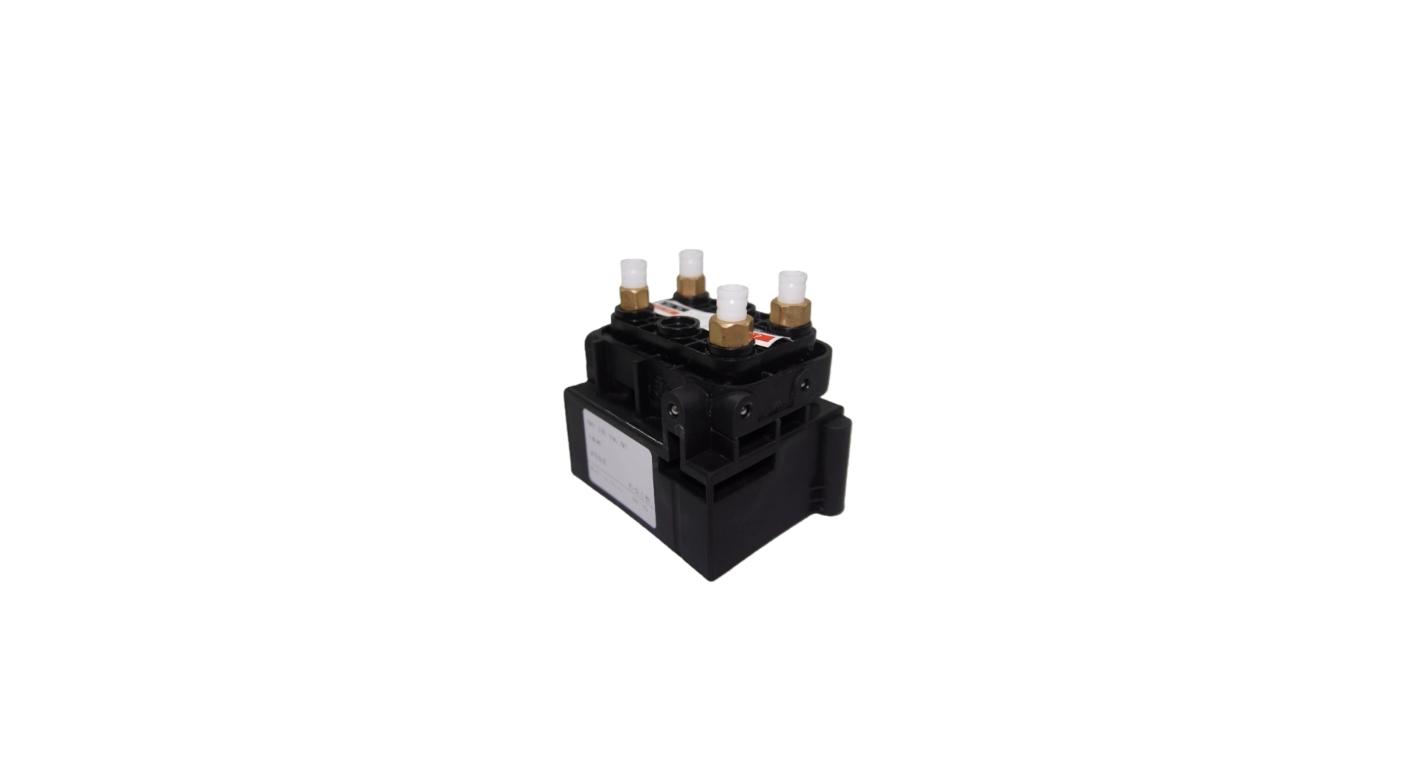
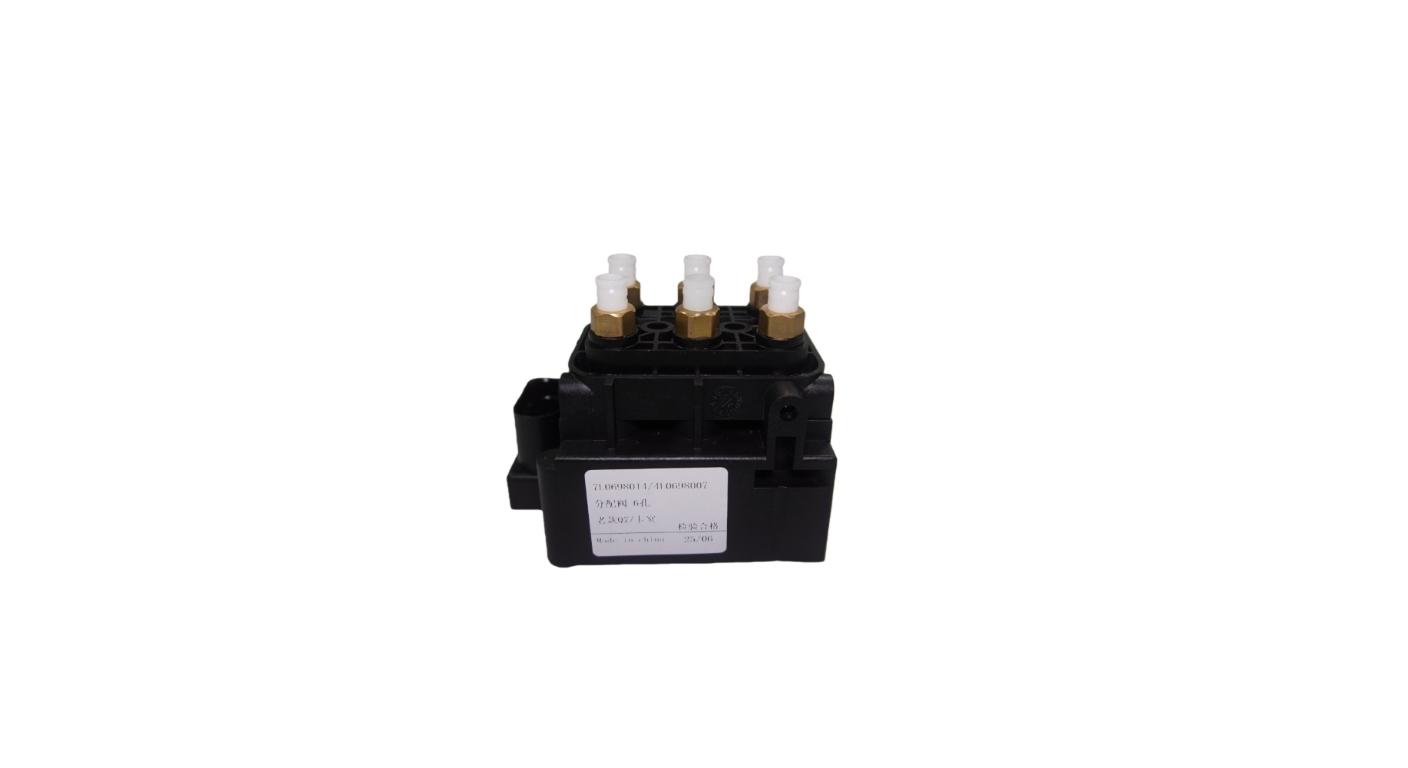
An air suspension system uses air springs as the load-carrying spring, with a compressor, height sensors, valves and a control system that change air pressure inside the bellows.
Geotab's 2025 glossary describes exactly that component set: air springs, a compressor, sensors, valves and a control system. The same source states that air suspension adjusts ride height and air pressure in response to load or road conditions, which is the main functional difference from a fixed steel spring.
The adjustment sequence is straightforward:
- The air springs carry the vehicle load.
- Height sensors read the vehicle's position.
- The control unit compares that reading with the target height.
- Valves open to let the compressor add air, or to release air.
- Ride height and spring pressure change accordingly.
For a deeper explanation of the components and their interaction, HUIJIE's guide to how air suspension works covers the system in more detail.
[DIAGRAM: air-suspension flow — compressor → valve block → air springs → height sensors → control adjustment]
What Counts as Traditional Suspension? Coil Springs and Leaf Springs
In this comparison, traditional suspension means passive steel spring systems: coil springs on many passenger cars, and leaf springs on heavy-duty trucks, trailers and off-road vehicles.
Geotab compares air-ride suspension with leaf springs, describing leaf springs as stacked curved metal strips and noting their use on heavy-duty trucks, trailers and off-road vehicles. Monroe's technical resource associates standard suspension with steel coil springs working alongside hydraulic shocks or struts. Neither spring type changes its rate on its own, which is the defining limitation of passive steel suspension.
Air Suspension vs Coil Springs: Key Differences
Coil springs provide a fixed spring rate and simple construction, while air springs can change pressure and ride height; coil-spring questions usually come down to passenger-car ride and replacement details rather than system capability.
Monroe's technical resource places steel coil springs on the standard-suspension side of the comparison, and Geotab's 2025 glossary places air-filled bellows on the air-ride side. AccuAir's shop talk comparison notes that an air setup can adjust ride height and lists cost, durability and system malfunction as its disadvantages. Because coil springs are a single passive component, wear and replacement decisions depend on the specific vehicle, so confirm fitment rather than assuming a universal rule.
Air Suspension vs Leaf Springs: Load and Commercial Use
Leaf springs are passive stacked-metal springs used on heavy-duty trucks, trailers and off-road vehicles, while air suspension uses adjustable air pressure and appears on heavy-duty trailers, commercial motor vehicles and recreational vehicles.
Geotab's 2025 glossary places leaf springs on heavy-duty trucks, trailers and off-road vehicles, and lists heavy-duty trailers, commercial motor vehicles and recreational vehicles among air-ride applications. Premier Trailer Leasing's fleet blog states that standard steel-spring ride suspensions are 50–75 pounds lighter than "most air suspensions" — a trailer and fleet context claim, not a universal passenger-car comparison.
HUIJIE manufactures commercial vehicle air spring components as part of its air suspension range, which also includes replacement air springs, struts, compressors, valve blocks, air shock absorbers and repair kits.
Ride Height, Load Leveling, and Comfort: What Changes in Practice
Air suspension can adjust ride height and air pressure in response to load or road conditions, which may help comfort and load leveling, but the outcome depends on vehicle design, system condition, setup and load.
Geotab's 2025 glossary attributes ride-height and pressure adjustment to air suspension, and AccuAir notes that an air-suspension setup can adjust ride height. AccuAir also flags cost, durability and malfunction as disadvantages of the same system. No retrieved source provides a controlled, model-matched test comparing air and steel suspension on the same vehicle, so a claim that one type always rides better is not supported.
Use this decision rule instead: match the system to the job. Where ride height must change with load, air suspension has the capability. Where the load is consistent and the vehicle was designed around passive springs, a steel setup may be the simpler engineering choice.
Maintenance, Complexity, and Cost Trade-Offs
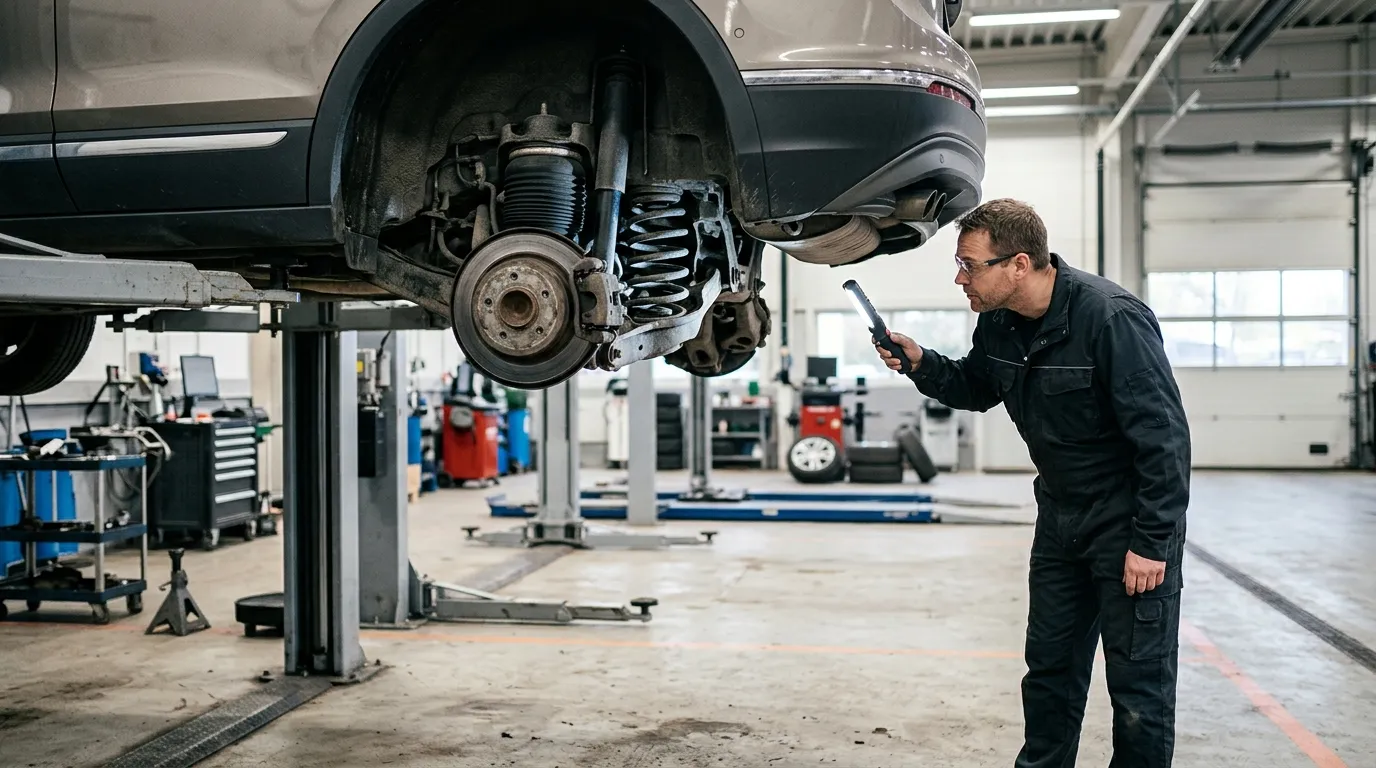
Air suspension has more parts — compressor, valves, sensors, air lines and control system — so it can require more inspection and repair attention than a passive steel-spring setup.
Geotab's 2025 glossary states that air-ride systems cost more to install and repair than traditional leaf-spring systems and require inspection of air components. AccuAir's component list for the aftermarket system it describes includes an air compressor, tank, manifold, air lines and air struts, and the same page lists cost, durability and system malfunction as disadvantages. Higher part count is the reason the maintenance burden differs, not an automatic reliability problem.
When comparing replacement options, work through this checklist:
- Air spring and bellows condition, including visible cracking or leaks
- Compressor operation and noise
- Valve block and air line integrity
- Height sensor readings and control response
- Strut or shock absorber condition
HUIJIE manufactures replacement air springs, air suspension struts, air suspension compressors, valve blocks, air shock absorbers and air spring repair kits, with more than 2,000 products listed and most of the range fitting European and luxury vehicles such as Audi, BMW, Mercedes-Benz, Land Rover, Porsche, Jaguar, Volvo, Volkswagen, Bentley and Rolls-Royce. Parts are identified by OE number, which helps match a replacement to the correct position, and buyers can review the full suspension system parts range for component-level detail. HUIJIE provides a 1-year warranty and lists ISO 9001:2015, CE and IATF certification.
Which System Suits Which Vehicle? Selection Checklist
Air suspension tends to suit applications where ride-height adjustment, load leveling or variable load response matter, while passive coil or leaf springs tend to suit simpler applications where a fixed spring rate is acceptable.
Geotab's 2025 glossary lists heavy-duty trailers, commercial motor vehicles and recreational vehicles among air-ride applications, and places leaf springs on heavy-duty trucks, trailers and off-road vehicles. The same source notes that air-ride systems cost more to install and repair than leaf-spring systems. That combination makes cost tolerance and duty cycle the deciding factors, not a blanket preference for either system.
[DIAGRAM: selection path — ride-height or load-leveling need → complexity and maintenance tolerance → passenger, towing or commercial application]
Work through these questions before choosing:
- What vehicle type and typical load will the system carry?
- Does ride height need to change with load, or is a fixed height acceptable?
- How much compressor, valve and sensor complexity can the owner maintain?
- Is there access for inspection and service of air components?
- What is the repair cost exposure over the ownership period?
- Has fitment been confirmed for the exact vehicle rather than a similar model?
Common Mistakes When Comparing Suspension Types
The most common mistake is treating "traditional suspension" as only coil springs, or treating air suspension as universally better; the cited sources cover different applications, different component sets and different trade-offs.
Geotab's 2025 glossary covers leaf springs as well as air-ride systems, and Premier Trailer Leasing's 50–75 pound weight statement applies to a trailer and fleet context rather than every vehicle. Geotab also states that air-ride systems cost more to install and repair than leaf-spring systems, and AccuAir lists cost, durability and malfunction among air suspension's disadvantages. State the condition and the source before repeating any comparison figure.
What are the downsides of air suspension?
Air suspension adds a compressor, valves, sensors and a control system, so it has more components that can malfunction. Geotab's 2025 glossary notes that air-ride systems cost more to install and repair than leaf-spring systems and require inspection of air components. AccuAir also lists cost, durability and system malfunction as disadvantages.
Which suspension gives the smoothest ride?
There is no universal answer in the cited sources. Geotab's 2025 glossary states that air suspension can adjust ride height and air pressure in response to load or road conditions, which may help comfort, but the result depends on vehicle design, system condition, setup and load. No controlled model-matched comparison was retrieved.
Can you replace air suspension with normal suspension?
Compatibility is vehicle-specific, and the cited sources do not establish a universal rule. Replacing air suspension with conventional steel springs may require different springs, mounts, shocks and control changes. Confirm fitment for the exact vehicle, using the OE number where available, rather than treating the change as a simple swap.
HUIJIE supplies OEM and aftermarket buyers worldwide, including distributors, wholesalers and repair shops, and offers custom and ODM development for buyers who need specific fitments.


Contact Us
In This Article
- 1 Key takeaways
- 2 Air Suspension vs Traditional Suspension: The Short Answer
- 3 How Air Suspension Works
- 4 What Counts as Traditional Suspension? Coil Springs and Leaf Springs
- 5 Air Suspension vs Coil Springs: Key Differences
- 6 Air Suspension vs Leaf Springs: Load and Commercial Use
- 7 Ride Height, Load Leveling, and Comfort: What Changes in Practice
- 8 Maintenance, Complexity, and Cost Trade-Offs
- 9 Which System Suits Which Vehicle? Selection Checklist
- 10 Common Mistakes When Comparing Suspension Types
