


Do You Need an Alignment After Replacing a Control Arm?
Installing the new control arm is a key vehicle suspension repair, which can enhance vehicle stability, steering response and road grip. But, when installing a new control arm, some drivers are not sure if they need to do a wheel alignment. Yes, it is recommended to get a wheel alignment after replacing a control arm as part of the repair, particularly if they are replaced parts that impact wheel alignment.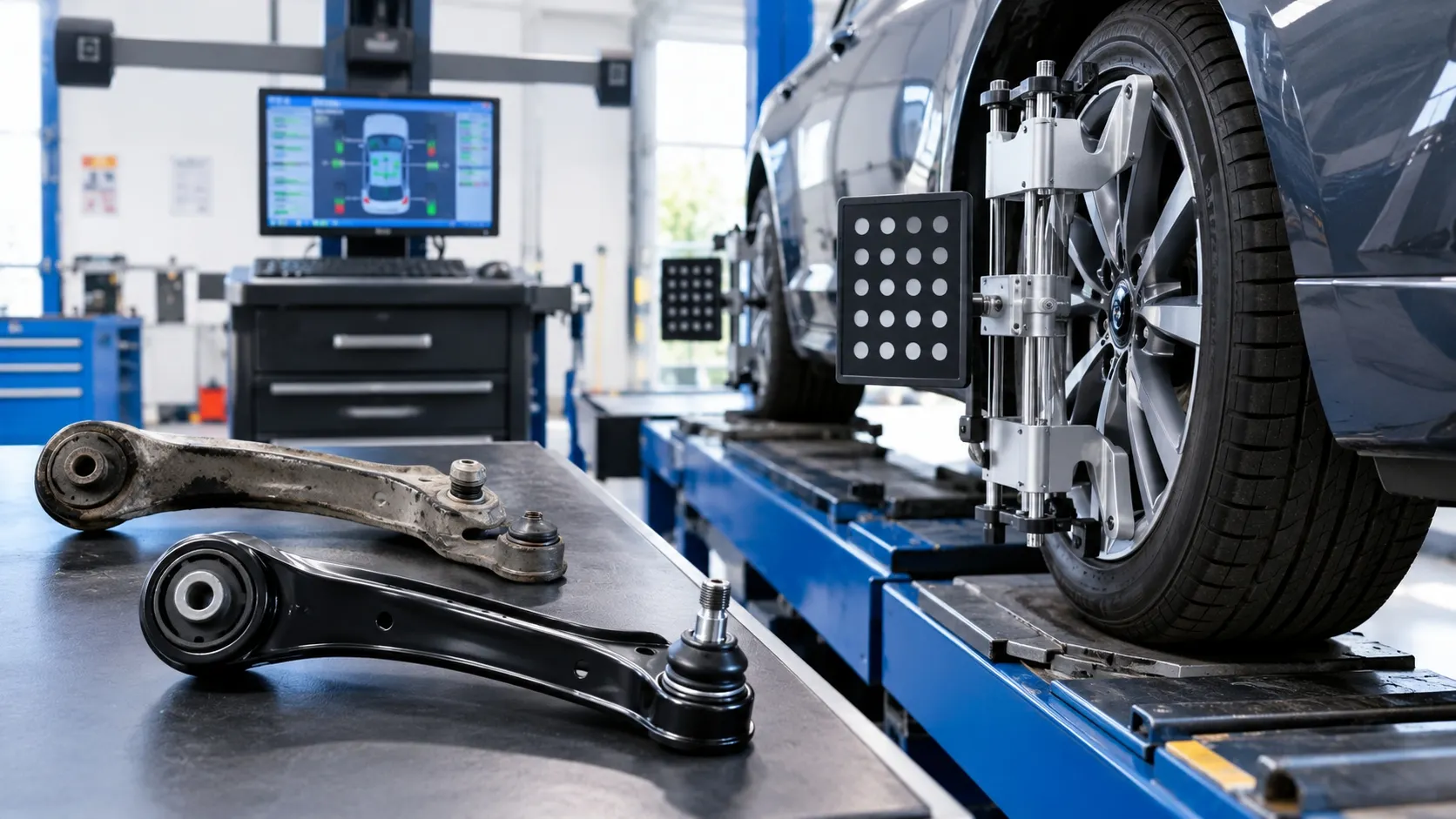
A control arm connects the vehicle's suspension to its chassis and helps maintain the correct position of the wheel as the suspension moves. This part can affect the suspension geometry, which means that changing it can alter other alignment angles like camber, caster and, in some suspension designs, toe.
This guide offers insight into why it is important to have alignment following the replacement of your control arm, the consequences of not doing so, the costs of this process and when to consider getting your vehicle checked.
1. Why Is Wheel Alignment Important After Replacing a Control Arm?
A wheel alignment corrects the angles of the wheels to the manufacturers' specifications. These angles are a factor in the vehicle handling, tyre wear and the way the tyres grip the road.
Control arm is a key component to keeping suspension geometry correct. It is usually attached to the frame or subframe and the steering knuckle or wheel assembly. The bushings and ball joint enable the wheel to move at a controlled speed and maintain its position.
There are many considerations that may impact alignment when a control arm is replaced:
-
Different component dimensions: Even a high-quality replacement part may have small dimensional differences compared with a worn or damaged component.
-
Changed suspension geometry: Removing and reinstalling the control arm can affect the wheel's position relative to the chassis.
-
Bushing positioning: Rubber bushings may settle into their normal operating position after installation, depending on the suspension design and installation procedure.
-
Previous suspension damage: If the original control arm was bent by a pothole, curb impact, or collision, other suspension components may also have shifted or become damaged.
A professional alignment check can help detect these problems, and let you know if the wheels are still within the vehicle's manufacturer's recommended specifications.
2. What Happens If You Skip an Alignment?
Don't assume that if you don't align your vehicle after the replacement of control arms, it won't cause problems. If the alignment angles are in specification then the vehicle can be driven normally. But if there are any misalignment, there are a few problems that can occur.
Uneven Tire Wear
The most frequent problem caused by misalignment is tire wear. Tires can wear more on the inside or outside edges if they don't fit right in terms of camber or toe.
For instance, excessive negative camber can lead to increased wear on the inner shoulder and incorrect toe settings can lead to uneven or feathered tread wear.
The cost of tire replacement can be a lot more than the cost of an alignment inspection. Proper alignment can help maximize the life span of tires and help to minimize unnecessary tire replacement costs.
Steering Wheel Misalignment
The steering wheel won't be straight when driving on a level road if the front suspension geometry is altered during replacement of the control arm.
It may seem as though the car is driving straight, but it will be tilted slightly to one side. This may mean that alignment is an issue that needs to be checked out.
Vehicle Pulling to One Side
If a vehicle is dragging of the left or right tire, it could be due to a problem with the tires, suspension, or the alignment angles may be incorrect, or there may be tire pressure problems.
An alignment inspection is a good option if pulling starts shortly after replacing control arm. It is also suggested that the technician should inspect to make sure that the replacement part is proper, and that all suspension fasteners are installed and secured correctly.
Reduced Handling Performance
Wrong alignment will cause straight-line tracking, steering response, and cornering stability problems. The car might be less responsive, especially at a brake and rough roads.
While it's not the only solution for all suspension issues, getting the wheel alignment back to the manufacturer's specifications is an important step towards getting proper handling.
3. Which Alignment Angles Can Change After Control Arm Replacement?
Understanding the main alignment angles helps explain why a control arm replacement may require additional adjustments.
Camber
Camber refers to the inward or outward tilt of a wheel when viewed from the front or rear of the vehicle.
-
Negative camber: The top of the wheel tilts inward.
-
Positive camber: The top of the wheel tilts outward.
A control arm helps determine the wheel's position relative to the chassis. If its dimensions, mounting position, or associated joints differ from their previous condition, camber may change.
Some vehicles allow direct camber adjustment, while others require specific adjustment procedures or inspection for bent components.
Caster
Caster describes the forward or backward tilt of the steering axis when viewed from the side of the vehicle.
Caster affects steering stability, steering-wheel return, and directional control. Depending on the suspension design, replacing a control arm may affect caster because the component helps locate the steering knuckle.
If caster is outside the specified range, a technician may need to inspect the control arm mounting points, bushings, subframe position, or other suspension components.
Toe
Toe describes whether the front edges of the tires point toward or away from each other when viewed from above.
-
Toe-in: The front edges point slightly toward each other.
-
Toe-out: The front edges point slightly away from each other.
Control arm replacement does not directly change toe on every vehicle, but changes in suspension geometry can influence it. Toe is particularly important because incorrect settings can cause rapid tire wear.
A four-wheel alignment system measures the relevant angles and compares them with the manufacturer's specifications.
4. Do You Always Need a Wheel Alignment After Replacing a Control Arm?
In most cases, getting an alignment check is the safest approach. However, the exact requirement depends on the vehicle's suspension design and the type of repair.
Front Control Arm Replacement
After replacing a front control arm, an alignment is generally recommended. Front suspension geometry influences steering behavior, tire wear, and directional stability.
Even if the control arm appears to fit perfectly, the technician should verify the alignment angles rather than assume they remain correct.
Rear Control Arm Replacement
Rear control arms can also affect alignment, particularly on vehicles with independent rear suspension.
Replacing a rear suspension arm may change rear camber or toe. Incorrect rear alignment can cause uneven tire wear, unstable handling, or a steering sensation commonly described as the vehicle tracking sideways.
If the vehicle has adjustable rear alignment settings, a four-wheel alignment may be appropriate.
Replacing a Control Arm on a Vehicle With Fixed Alignment Angles
Some vehicles have limited factory alignment adjustments. If the measurements fall outside specification after replacement, the technician may need to investigate bent components, worn bushings, incorrect parts, or subframe movement.
An alignment machine can identify the problem, but an adjustment is not always possible without correcting the underlying mechanical issue.
Practical recommendation: Budget for an alignment check after control arm replacement, even if the vehicle seems to drive normally. Follow the repair procedure and alignment requirements specified by the vehicle manufacturer.
5. How Much Does an Alignment Cost After Control Arm Replacement?
The cost of wheel alignment depends on the vehicle, suspension design, service location, and whether a two-wheel or four-wheel alignment is required.
Typical U.S. price ranges are:
|
Service |
Estimated Cost |
|---|---|
|
Front-end alignment |
$50–$100 |
|
Four-wheel alignment |
$100–$200 |
|
Alignment for some luxury or specialized vehicles |
$150–$300+ |
|
Additional suspension inspection or repairs |
Varies |
These figures are general estimates, not guaranteed quotes. Local labor rates and vehicle-specific requirements can significantly affect the final price.
In many cases, an alignment is billed separately from control arm replacement. Some repair shops may offer a discounted alignment when suspension work is performed at the same appointment.
When requesting a quote, ask whether the price includes:
-
A pre-alignment inspection.
-
Measurement of all relevant wheels.
-
Adjustments to the manufacturer's specifications.
-
A printed or digital before-and-after alignment report.
-
Additional charges for seized adjustment bolts or damaged suspension components.
A proper alignment should include measurements and adjustments where possible, rather than simply resetting the steering wheel position.
6. How Soon Should You Get an Alignment?
Have alignment checked as soon as possible after installing the control arm, but before driving on the street.
When a repair shop can do both things at once, it's typically the easiest choice.
If the vehicle is showing no unusual handling characteristics and the suspension has been fitted properly, a short trip to an alignment shop may be warranted. Drive along on the other hand, if you're experiencing heavy steering changes, odd wheel movements, unusual noises coming from the suspension, or instability.
In such cases, have it inspected and do not drive it until it has been.
Control arm fasteners are also torque driven; they need to be torqued to the manufacturer's specifications. In some cars, some of the bonded rubber suspension bushings have to be tightened at the specified ride height to prevent premature bushing failure.
It is essential that the control arm is installed correctly and the suspension fastener tight.
7. Signs Your Vehicle May Need an Alignment After Control Arm Replacement
Even if you are unsure whether the alignment has changed, watch for the following symptoms:
-
The steering wheel is off-center when driving straight.
-
The vehicle pulls to one side on a reasonably level road.
-
The tires show uneven or accelerated tread wear.
-
The steering feels different from before the repair.
-
The vehicle feels unstable or does not track straight.
-
Alignment measurements fall outside the manufacturer's specifications.
These symptoms can also result from tire pressure differences, damaged tires, worn steering components, or other suspension problems. A qualified technician should inspect the complete system rather than assume alignment is the only cause.
8. Can You Align Your Wheels Yourself After Replacing a Control Arm?
Simple inspections like checking tire pressure and visually inspecting the condition of the tires can be done at home. But the proper wheel alignment is typically only achievable using special equipment.
Today, alignment systems are based on cameras, sensors or other scientific instruments. The technician then moves the available alignment points as per the vehicle manufacturer's specification.
The self-alignment techniques are approximate and can miss minute errors that can impact wear and handling. In addition, some of today's newer vehicles may need special procedures or extra calibration after specific suspension repairs.
Most drivers find it better to get professional alignment, as it is more reliable and affordable.
9. How to Choose a Reliable Alignment Service
After replacing a control arm, choose a repair shop that understands your vehicle's suspension system and has suitable alignment equipment.
Before approving the service, consider asking these questions:
-
Will you check both front and rear alignment angles?
-
Can you provide a before-and-after alignment report?
-
Are all measured angles within the manufacturer's specifications?
-
If an angle cannot be adjusted, will you inspect the suspension for damaged components?
-
Does my vehicle require any additional steering or driver-assistance calibration after this repair?
A competent technician will be able to describe any measurements that are not within the specification and determine if further repairs are required.
Depending on the advanced driver-assistance systems (ADAS) fitted in the vehicle and the work carried out, steering-angle sensor checks and/or ADAS calibration may be necessary for vehicles with these systems.
Conclusion
Should control arm replaced require an alignment? Yes, in most cases—an alignment check is strongly recommended, at least. Control arms have an impact on suspension geometry, and it could impact camber, caster or toe, depending on the vehicle's design.
This can cause uneven tire wear, steering issues, poor handling and adding unneeded repair costs to the bill. Some may take the correct alignment automatically after the repair is made, but measuring the wheel angles is the best way to be sure that everything is in the manufacturer's specifications.
The suspension should be installed properly, check any related steering and suspension parts and schedule a professional wheel alignment before driving normally again. This will keep your tires safe, ensure safe handling and extend the life of your control arm.
Share on Social:


- PREV: air suspension pressure sensor failure symptoms
- NEXT: Null
Contact Us
In This Article
- 1 1. Why Is Wheel Alignment Important After Replacing a Control Arm?
- 2 2. What Happens If You Skip an Alignment?
- 3 3. Which Alignment Angles Can Change After Control Arm Replacement?
- 4 4. Do You Always Need a Wheel Alignment After Replacing a Control Arm?
- 5 5. How Much Does an Alignment Cost After Control Arm Replacement?
- 6 6. How Soon Should You Get an Alignment?
- 7 7. Signs Your Vehicle May Need an Alignment After Control Arm Replacement
- 8 8. Can You Align Your Wheels Yourself After Replacing a Control Arm?
- 9 9. How to Choose a Reliable Alignment Service
- 10 Conclusion
