


air suspension pressure sensor failure symptoms
The purpose of the air suspension system is to keep the vehicle at the right height, enhance comfort and stability in various load states. The pressure sensor is one of the main elements in many air suspension systems that utilize electronic control. This sensor is used to measure air pressure in the system and pass the data to the suspension control module to adjust air springs, compressors and valves.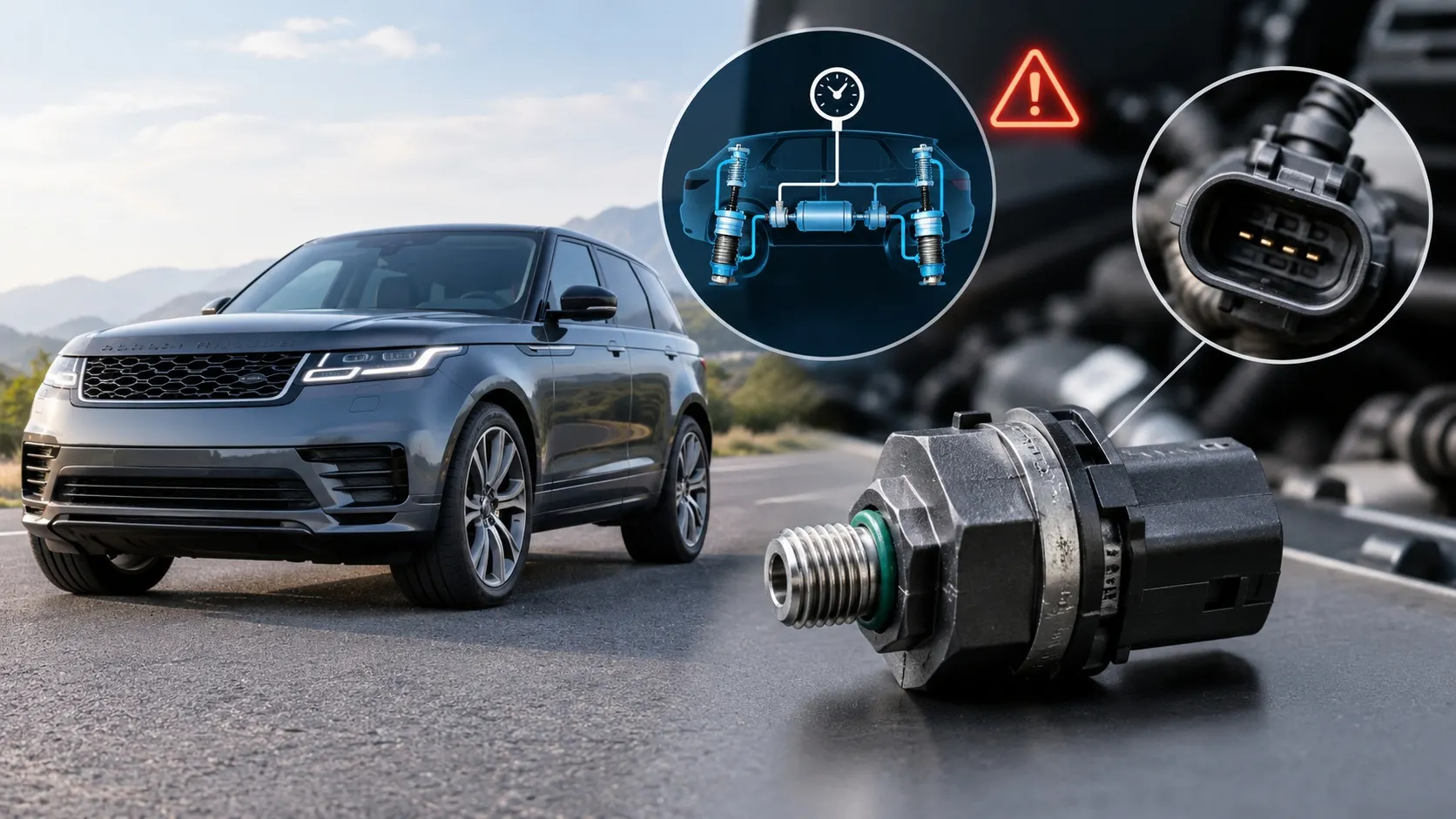
A failed air suspension pressure sensor can cause the system to lose the proper ride height or not adjust the ride height properly when driving conditions change. Avoiding additional damage and reducing the repair costs and function of the suspension, if it continues to operate normally, by identifying signs of trouble early on.
The most common symptoms of air suspension pressure sensor failure, its possible causes, diagnosis and when replacement may be required are explained in this guide.
What Is an Air Suspension Pressure Sensor?
The air suspension pressure sensor measures the pressure of the compressed air in a particular component of the air suspension system. It senses the pressure of the air reservoir, compressor line, or another pressurized system (circuit), depending on the vehicle design.
The sensor converts the pressure into an electrical signal which the suspension control module can read. With this data, the system can decide if more air is needed, if the pressure is in the target band and if the compressor or the valves are to be activated.
An effective pressure sensor enables a consistent suspension performance. Failure of the sensor to provide accurate readings or to communicate with the control module can result in incorrect adjustments or a fault warning being set.
Pressure sensor is very different from air suspension height sensor. A pressure sensor provides air pressure information and a height sensor provides the height of the vehicle body to the wheels and/or suspension. Both can lead to suspension problems and need different diagnostic procedures.
7 Common Air Suspension Pressure Sensor Failure Symptoms
1. Air Suspension Warning Light
The most obvious pressure sensor issue is the air suspension warning light appearing on the instrument panel. Messages may appear on some vehicles, including "Air Suspension Fault" or "Suspension System Service Required," or "Compressor Pressure Error.
These warnings can occur if the pressure being detected by the sensor is outside of the acceptable range, if the sensor is giving an implausible signal or if the sensor stops communicating with the control module.
Just because a warning light is on, however, doesn't necessarily indicate that the pressure sensor is broken. Similar warnings can be generated by air leaks, compressor issues, damaged wires, or damaged valves.
The first step is to perform a diagnostic scan with the equipment that fits the suspension system.
2. Vehicle Sags or Sits Unevenly
The air delivery control module might not adjust air delivery properly if the pressure sensor is incorrect. Depending on the system design, the vehicle might be lowered as compared to its normal height, especially at one corner or on one axle.
On the other hand, you may find the car is not level when parked at night or the rear suspension gets too low when loading any passengers or load.
Another symptom of leaking air springs, broken air lines or faulty valve blocks is an unequal ride height. Thus, these components need to be checked before replacing the sensor.
3. Suspension Takes Too Long to Raise
Slow suspension lifting is also another possible symptom. The vehicle may require more time to attain the desired body height after starting or changing to a higher ride-height level.
If the pressure sensor is faulty, the information it supplies to the control module about pressure can be incorrect and the control module may misjudge if it has sufficient compressed air.
However, it can behave in the same way due to a weak compressor, limited air line capacity, leaking air spring, or moisture caused damage. If compressor is operating continuously and vehicle is not getting higher, the entire air supply system should be checked.
4. Air Suspension Compressor Runs Too Frequently
The compressor is usually activated when the system requires to be pressurized. Excessive starts and/or extended operating times could indicate a failure to achieve or maintain the desired pressure.
Inaccurate pressure reading from the pressure sensor can occur, either giving a false low or high pressure reading. This may result in unnecessary compressor operation or inability to operate the compressor when necessary depending on control strategy.
If the compressor is cycling frequently, it may be due to an air leak. If it is operated under abnormal conditions for a long time, it is easy to cause the compressor to overheate and reduce the service life.
Repeat compressor operation while the vehicle is parked or on short trips is not a normal operation; schedule a prompt check, do not assume that the sensor is the only issue.
5. Incorrect Pressure Readings or Diagnostic Trouble Codes
A pressure sensor failure can produce trouble codes that identify pressure-related measurements, electrical circuit diagnostics or implausible pressure readings. Codes may differ depending on the manufacturer, model and suspension design.
A scan tool can display unchanging pressure readings, erratic readings or no difference when the compressor is running.
Common possibilities include:
-
An internally defective pressure sensor.
-
An open circuit or short circuit in the sensor wiring.
-
Corroded or loose electrical connectors.
-
A failed reference voltage or ground connection.
-
Actual air pressure outside the permitted range.
-
A problem with the suspension control module.
Technicians should compare live sensor data with manufacturer specifications and, where appropriate, an independent pressure measurement. A fault code is useful evidence, but it does not prove that the sensor itself has failed.
6. Harsh Ride Quality or Reduced Driving Comfort
Air suspension systems control air pressure and ride height to achieve the desired comfort and vehicle handling. If the pressure information is not reliable, the system may not act as expected.
Some drivers might experience a stiffer ride, peculiar bouncing, erratic suspension response or a decreased number of ride-height adjustments.
Failure of the pressure sensor isn't the only reason for these symptoms. Other electronic faults such as worn dampers, damaged air springs, incorrect ride-height calibration and more can also impact ride quality.
Do not drive longer than necessary until the suspension system is inspected if it becomes unstable, bottoms out often or if it doesn't handle correctly.
7. Suspension Enters Limp Mode or Disables Height Adjustment
In some vehicles, suspension faults are detected and result in restricting the operation of the system. The vehicle can be kept at a set height, off road/raised ride height may be disabled, or a message may be displayed to the driver to get to the suspension service.
Protective operation may be performed as a result of an inability of the control module to accurately estimate the pressure in the system, or when the module identifies a potentially unsafe operating condition.
Even in some instances the vehicle may still be driving, but not necessarily safe. Depending on driving conditions, if the suspension is lowered considerably, the tires may touch the body, or the handling of the vehicle may be affected; follow the instructions of the vehicle manufacturer.
What Causes an Air Suspension Pressure Sensor to Fail?
Several factors can cause a pressure sensor to malfunction.
Electrical problems: Damaged wiring, poor grounds, loose connectors, and corrosion can interrupt the sensor signal.
Internal sensor wear: Electronic components and sensing elements can deteriorate over time, producing inaccurate or intermittent readings.
Moisture and contamination: Water, dirt, or contaminants entering an unsuitable sensor or connector can affect its performance.
Abnormal system pressure: Repeated exposure to operating conditions outside the sensor's specified range may contribute to damage, depending on the component design.
Related suspension faults: A leaking air spring, failing compressor, or defective valve block can create abnormal pressure readings even when the sensor remains functional.
Correct diagnosis should identify whether the problem originates in the sensor, the electrical circuit, or the pneumatic system.
How to Diagnose an Air Suspension Pressure Sensor Problem
A systematic inspection is more reliable than replacing parts based on symptoms alone.
Step 1: Scan the Suspension Control Module
Use a compatible diagnostic scanner to retrieve stored and current fault codes. Record the codes and relevant freeze-frame or live-data information before clearing anything.
Step 2: Inspect the Wiring and Connectors
Check for loose terminals, corrosion, damaged insulation, water intrusion, and broken wires. Verify the sensor's power supply, reference voltage, ground, and signal circuit according to the vehicle's wiring diagram.
Step 3: Compare Live Pressure Data
Observe the reported pressure with the system in the operating states specified by the manufacturer. Determine whether the reading changes plausibly as the compressor operates or pressure conditions change.
Never exceed the system's rated pressure or disconnect pressurized lines without following the required safety procedure.
Step 4: Check for Air Leaks and Compressor Problems
Inspect air lines, fittings, air springs, reservoirs, and valve blocks for leaks or damage. Evaluate compressor operation and actual pressure against manufacturer specifications.
Step 5: Confirm the Diagnosis Before Replacement
If the electrical circuit is correct but the sensor signal remains outside specifications, sensor replacement may be justified. Follow the manufacturer's procedures for installation, calibration, fault-code clearing, and system testing.
How Much Does Air Suspension Pressure Sensor Replacement Cost?
The cost of replacing an air suspension pressure sensor depends on the vehicle, sensor location, part availability, and labor rates.
A sensor that is easy to access may require relatively little labor. A sensor integrated into a larger assembly, located in a difficult-to-reach area, or requiring specialized calibration may cost considerably more to repair.
Additional expenses may arise if diagnosis reveals damaged wiring, a leaking air spring, a defective valve block, or a failing compressor.
For an accurate estimate, provide a repair shop with the vehicle's make, model, model year, and diagnostic trouble codes. Request separate estimates for diagnosis, parts, labor, and any required calibration.
How to Prevent Air Suspension Pressure Sensor Problems
Although sensors eventually wear out, proper maintenance can help reduce the risk of related failures.
-
Inspect suspension wiring and connectors during routine service.
-
Address air leaks promptly to avoid excessive compressor operation.
-
Keep the air intake and filtration components maintained according to the manufacturer's schedule.
-
Investigate dashboard warnings instead of repeatedly clearing fault codes.
-
Use replacement parts that meet the vehicle's specifications.
-
Follow the correct service procedure when depressurizing or repairing the system.
Regular inspections are especially important for vehicles that carry heavy loads, operate on rough roads, or experience frequent temperature changes.
Frequently Asked Questions
Can you drive with a faulty air suspension pressure sensor?
It depends on the severity of the fault and the vehicle's behavior. If the suspension warning appears but ride height and handling remain normal, consult the owner's manual and arrange diagnosis promptly. If the vehicle sags significantly, becomes unstable, or bottoms out, stop driving when it is safe to do so and arrange professional assistance.
Will a faulty pressure sensor cause the air suspension compressor to fail?
A defective sensor may contribute to excessive compressor operation if the control system repeatedly attempts to correct an incorrectly reported pressure. However, compressor failure can also result from air leaks, overheating, electrical faults, or internal wear. Both components should be evaluated before replacement.
How do I know whether the pressure sensor or the air compressor is faulty?
A diagnostic scan, live pressure data, electrical testing, and an independent pressure check can help distinguish the two. If the compressor operates correctly and actual pressure is normal but the reported value is incorrect, the sensor or its circuit may be responsible. If the compressor cannot build sufficient pressure, further testing of the compressor and air supply system is necessary.
Is an air suspension pressure sensor the same as a height sensor?
No. A pressure sensor measures air pressure, while a height sensor measures suspension position or vehicle ride height. Their symptoms can overlap, so diagnosis should follow the vehicle's specific fault codes and service procedures.
Conclusion
Some air suspension pressure sensor failure signs are warning lights, uneven ride height, slow lift, excessive compressor operation, abnormal pressure reading, poor ride quality and inability to lift.
These, however, may also be caused by air leaks, compressor faults, valve issues, wiring damage or height sensor problems. The best way to replace parts is to use diagnostic trouble codes, live sensor data and electrical checks, and a visual inspection of the pneumatic system.
Early diagnosis can save valuable suspension components, good ride and keep the vehicle controllable. Check the system if the warning is being displayed or if the ride height is fluctuating over a period of time, using special diagnostic procedures developed by the vehicle's manufacturer, by a qualified technician.
Share on Social:


- PREV: Air Suspension Check Valve Failure Symptoms: Causes and Fixes
- NEXT: Null
Contact Us
In This Article
- 1 What Is an Air Suspension Pressure Sensor?
-
2
7 Common Air Suspension Pressure Sensor Failure Symptoms
- 2.1 1. Air Suspension Warning Light
- 2.2 2. Vehicle Sags or Sits Unevenly
- 2.3 3. Suspension Takes Too Long to Raise
- 2.4 4. Air Suspension Compressor Runs Too Frequently
- 2.5 5. Incorrect Pressure Readings or Diagnostic Trouble Codes
- 2.6 6. Harsh Ride Quality or Reduced Driving Comfort
- 2.7 7. Suspension Enters Limp Mode or Disables Height Adjustment
- 3 What Causes an Air Suspension Pressure Sensor to Fail?
- 4 How to Diagnose an Air Suspension Pressure Sensor Problem
- 5 How Much Does Air Suspension Pressure Sensor Replacement Cost?
- 6 How to Prevent Air Suspension Pressure Sensor Problems
- 7 Frequently Asked Questions
- 8 Conclusion
