


Bad Control Arm Bushing Symptoms: 7 Warning Signs
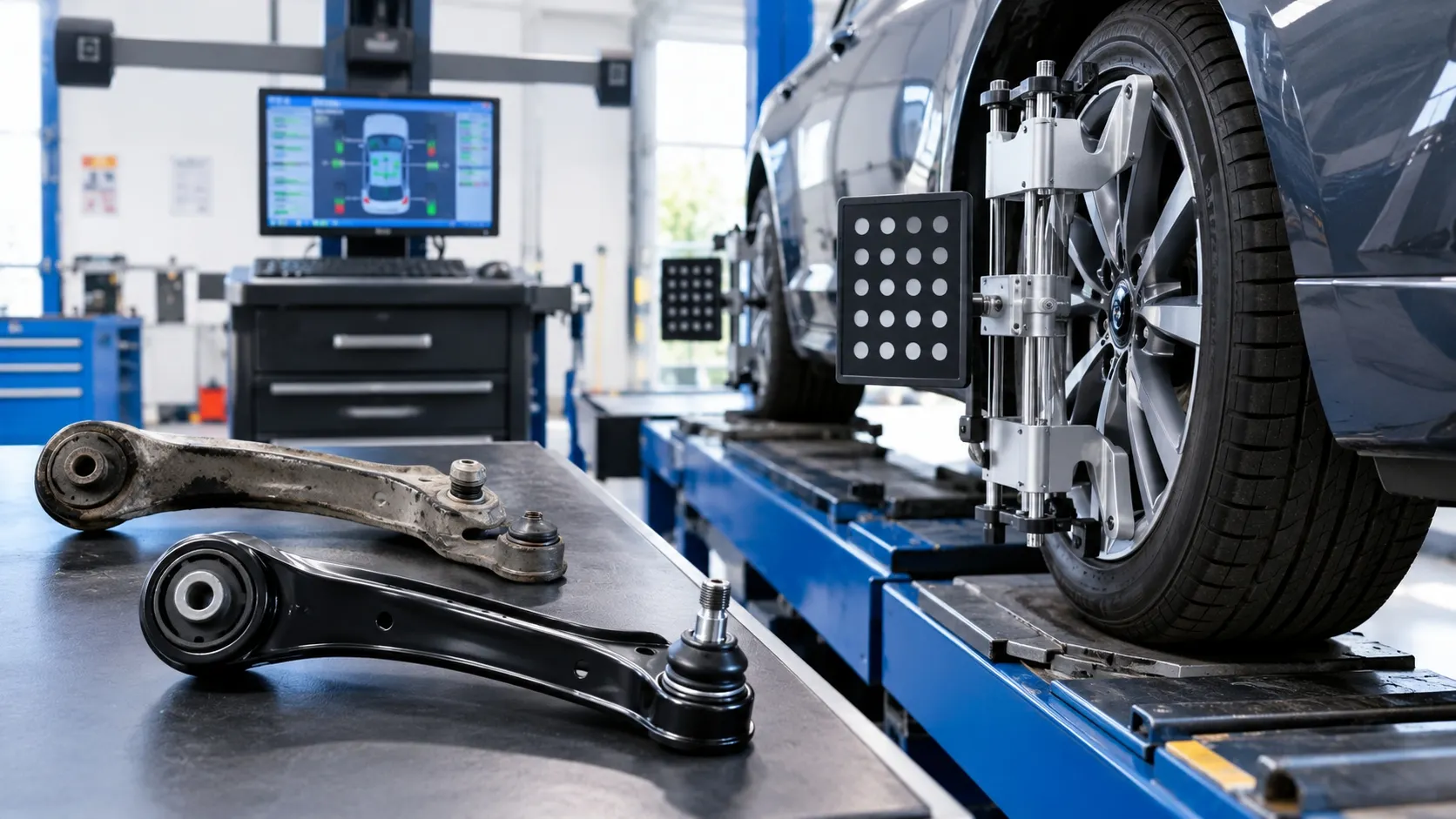
The control arm bushings are a small part of the suspension system of a vehicle. They join the control arms to the subframe or frame of the vehicle and are used to control wheel alignment, dampen road noise and vibrations. These items are made of rubber or polyurethane and are engineered to resist repeated motion and road wear, but can fail over time.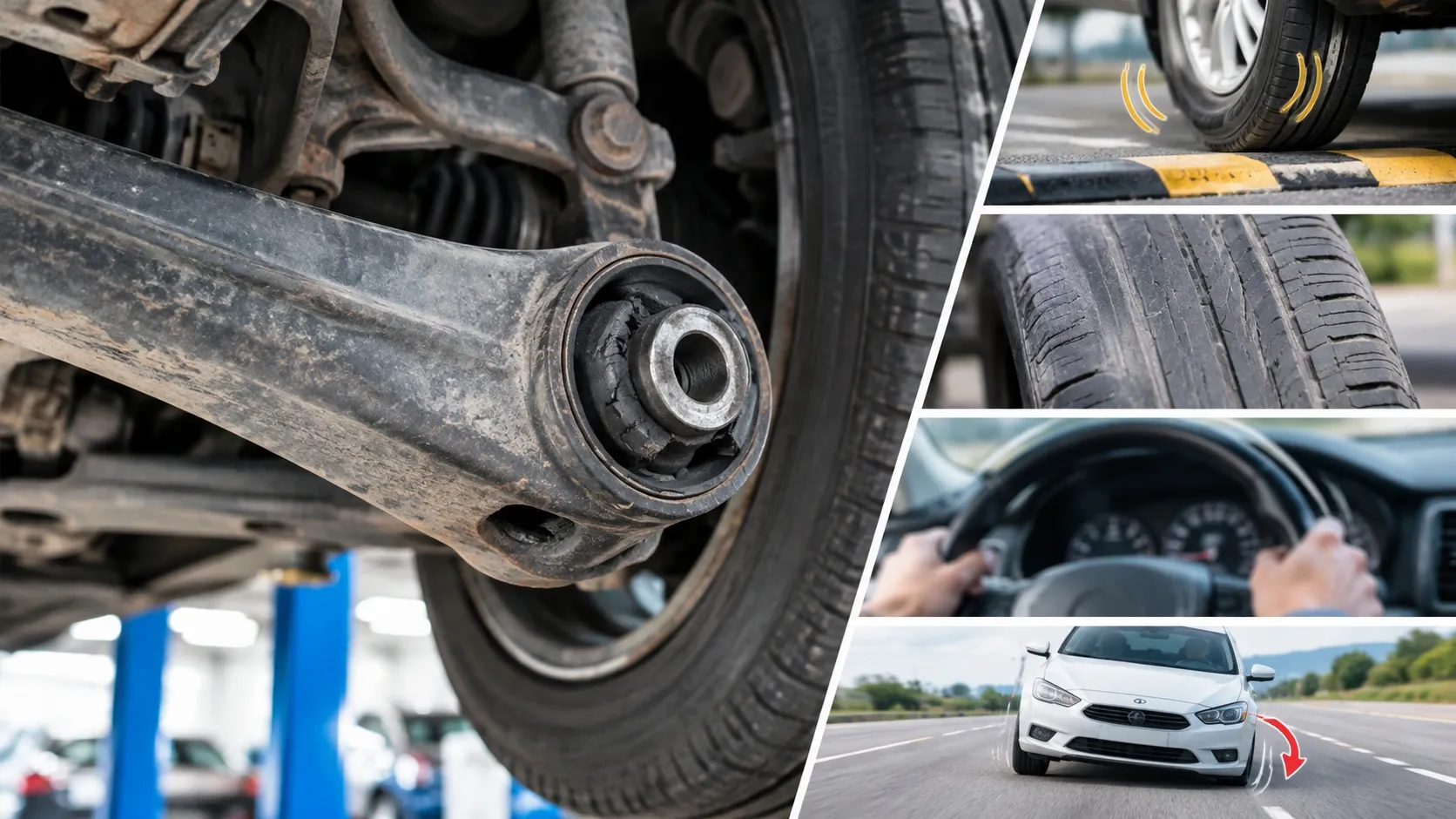
Being able to detect signs of bad control arm bushings in good time can save drivers from having to deal with problems such as uneven tire wear, sub-optimal handling, excessive suspension noise and a potentially unsafe driving experience. Worn-out control arm bushings can cause the vehicle to clunk over bumps, pull to one side, or be unstable while braking.
This guide covers the most common signs of failing control arm bushings, why they fail, how to diagnose the issue and when to replace them.
What Is a Control Arm Bushing?
A control arm bushing is a flexible mounting point between a vehicle's subframe or chassis and a suspension control arm. The majority of the conventional bushings are composed of rubber component joined to an inner sleeve and an outer metal casing.
The bushing gives the control arm a certain range of motion, but restricts unintended movement. This allows the suspension to keep wheels in the proper position when driving across rough roads, accelerating and decelerating.
Control arm bushings can be either natural rubber, synthetic rubber or polyurethane, depending on the design of the vehicle. Rubber bushings normally offer excellent vibration isolation and ride comfort, while polyurethane types may be more resistant to some forms of deformation, but may transmit more noise and vibration.
Control arm bushings are very important to the geometry of the suspension system, and also influence steering precision, tire wear, and the general balance of the vehicle.
7 Common Bad Control Arm Bushing Symptoms
1. Clunking or Knocking Noises
The most common sign of a bad control arm bushing is the clunk or knock in the front or rear suspension.
The sound can be heard when driving over potholes, going around speed bumps, down a driveway or rough roads. It can also be seen when the car is accelerating and decelerating.
As a bushing wears, cracks may develop, it may separate from its metal sleeve or it may be too loose, allowing the control arm to move more than it should. This motion can cause the suspension parts to move, and make a difference.
There are actually control arm bushings that do not make the noise of clunking. Similar noises can be caused by worn ball joints, sway bar links, strut mounts, and other suspension parts. A good inspection is required to determine the source.
2. Uneven or Premature Tire Wear
Worn out control arm bushings will also cause uneven tire wear.
Suspension components are kept in their intended position with healthy bushings. If they become too soft, cracked or split, the control arm could move when loaded. This can change the wheel alignment, especially when braking, accelerating and cornering.
Drivers may notice:
-
Excessive wear along the inside or outside edges of a tire.
-
Feathered tire tread patterns.
-
Uneven wear between the left and right tires.
-
Tires wearing out faster than expected.
Sometimes the pattern is caused by trouble in the wheel alignment, incorrect tire pressure, worn ball joints or other suspension issues.
Do not put on new tires just because of unusual wear, investigate the suspension and the wheel alignment first.
3. Loose or Unstable Steering
Worn out control arm bushings can introduce less precision to the steering. Excessive steering correction may be necessary to maintain straight steering, particularly at highway speeds or on uneven pavement.
The control arm can flex under cornering forces as the bushings wear out. This can alter the wheel position in relation to the chassis and have an impact on steering response.
Suspicious symptoms include poor steering, loss of steering grip or a vehicle that doesn't feel as grounded when making turns.
The following symptoms should not be overlooked. The condition, alignment, steering linkage, ball joints and other suspension parts should also be inspected as they can cause similar handling issues.
4. Vehicle Pulling to One Side
If you have a car that has a tendency to pull to one side or the other, it could be a suspension or alignment problem, such as worn-out control arm bushings.
If one bushing has more mobility than the other, the suspension geometry could be different on each side of the vehicle. This may impact the traction of the wheels during acceleration, deceleration and cornering.
Don't automatically assume that the control arm bushings are at fault; there are other possible causes such as uneven tire pressures, conicity in tires, brake drag or improper wheel alignment.
If the car pulls to one side, especially after leaving a pothole or curb, make arrangements to check the car as soon as possible.
5. Excessive Vibration and Road Noise
Control arm bushings are used to isolate motion and shocks to the road from the vehicle body. If the rubber wears out or comes loose, less vibration will be absorbed efficiently.
Some steering, floor or seat vibration may be noticed, particularly at higher speeds on rough roads. There may also be more rattle or harshness on some cars when bumping over bumps.
However, vibration is a general symptom. Other suspension issues such as unbalanced tires, damaged wheels, worn engine mounts, wheel bearings, etc. can also present similar issues.
The type of vibration, its location, and how it is being generated can help a technician determine a cause.
6. Excessive Suspension Movement During Braking
If the control arm bushings are worn, they can cause movement in the control arm during braking or acceleration.
When braking, the front suspension loads may cause over-travel of bushes. The driver might feel a clunk, feel a different steering input or feel the car moving or shifting more than usual.
Under load the front wheels can move slightly, which can have an impact on directional stability and alignment.
Worn ball joints, loose suspension fasteners or brake issues also may lead to these symptoms. Unusual braking movement or noise, which is a requirement for a safe and good braking performance, should be checked immediately.
7. Visible Cracks, Separation, or Rubber Deterioration
A visual inspection can sometimes reveal a failing control arm bushing.
Look for signs such as:
-
Deep cracks in the rubber.
-
Rubber separating from the inner sleeve or outer shell.
-
Missing or badly deteriorated rubber material.
-
Excessive movement between the control arm and its mounting point.
-
Contact marks suggesting that components are shifting beyond their normal range.
Some surface cracking may occur as rubber ages and does not automatically mean a bushing has failed. Certain hydraulic bushings may also show fluid leakage when damaged.
A technician should assess the severity of the damage and compare component movement with the manufacturer's specifications. Never place yourself beneath a vehicle supported only by a jack.
What Causes Control Arm Bushings to Wear Out?
Control arm bushings deteriorate through a combination of age, repeated suspension movement, environmental exposure, and mechanical stress.
Normal wear and aging: Rubber gradually loses elasticity and may become brittle, cracked, or permanently deformed.
Rough road conditions: Frequent potholes, speed bumps, and rough surfaces increase the loads placed on suspension components.
Heat and environmental exposure: High temperatures, road contaminants, and certain oils or chemicals can accelerate rubber deterioration.
Driving habits: Aggressive cornering, hard braking, and repeated impacts can increase suspension loads.
Improper installation: Incorrect installation procedures or tightening suspension fasteners in the wrong suspension position can place unnecessary stress on certain bonded-rubber bushings. Always follow the vehicle manufacturer's service instructions.
Heavy loads: Regularly carrying heavy cargo or towing loads beyond the vehicle's intended operating conditions may increase suspension stress.
The service life of a control arm bushing varies by vehicle, material, road conditions, and driving habits. There is no single mileage interval that applies to every vehicle.
How to Diagnose a Bad Control Arm Bushing
Accurate diagnosis is important because several suspension problems can produce similar symptoms.
Step 1: Identify When the Symptoms Occur
Pay attention to the conditions that trigger the noise or handling change. Clunking over bumps, steering instability during cornering, and movement during braking provide useful clues.
Record whether the symptoms occur at low speeds, highway speeds, or only on uneven roads.
Step 2: Perform a Visual Inspection
With the vehicle safely supported using appropriate lifting equipment, inspect the control arm bushings for cracking, separation, deformation, or other damage.
Check the surrounding suspension components as well, including ball joints, sway bar links, tie rods, and mounting hardware.
Step 3: Check for Excessive Movement
A qualified technician can assess whether the control arm moves beyond the manufacturer's permitted range. Specialized tools or suspension-loading procedures may be needed to identify a worn bushing accurately.
Do not rely solely on a simple pry-bar test or assume that all bushing movement indicates failure. Some movement is normal by design.
Step 4: Inspect Wheel Alignment and Tires
Check tire pressure, tread wear, and wheel alignment measurements. Alignment readings outside the specified range may indicate a suspension problem, although they do not independently prove that a control arm bushing is defective.
Step 5: Confirm the Root Cause
Before replacing parts, determine whether the problem comes from the bushing itself, the complete control arm assembly, or another suspension component. This helps prevent unnecessary repairs and repeat labor costs.
Can You Drive With a Bad Control Arm Bushing?
This will depend upon the severity of the damage and symptoms.
Early signs of wear and tear could include noise or poor ride quality. A bushing that is worn or separated, however, can permit excessive suspension movement, adversely impact wheel alignment, and can reduce steering stability.
Do not drive a vehicle that has extreme steering looseness, steering pulling, excessive suspension motion, or loud impacts that change handling. Make sure to have professional inspection and towing done, if needed.
If the car is still drivable, it's important to identify a weak bushing ASAP rather than waiting for other components to fail.
Control Arm Bushing Replacement: What to Expect
Replacement varies with car suspension design.
In some cars, mechanics can push the damaged bushing and replace it. In other cases, a replacement of the entire control arm assembly is more feasible since the bushing is not easily accessible for service or other parts are worn as well.
The repair can be performed by removing suspension parts, employing a hydraulic press or specially designed tools, and tightening fasteners per manufacturer's instructions. To prevent premature stress on some bonded-rubber bushings, they need to be tightened at the recommended normal ride height.
If the control arm or other alignment parts are removed or replaced, you may need to replace the wheel alignment, after replacement.
The cost of repair is dependent on parts quality, labor costs, the vehicle, and if the bushing or the whole control arm is replaced. Obtain an itemised quotation prior to approving the repair work.
Frequently Asked Questions
What is the most common symptom of a bad control arm bushing?
Clunking or knocking noises over bumps are common symptoms. Other signs include uneven tire wear, loose steering, vibration, and vehicle pulling. None of these symptoms alone confirms a failed bushing.
Can bad control arm bushings cause vibration?
Yes. Worn bushings may transmit more road vibration into the cabin or allow excessive suspension movement. However, tire imbalance, wheel damage, and other mechanical issues should also be considered.
Can bad control arm bushings cause uneven tire wear?
Yes. Excessive movement in the control arm can affect wheel alignment under load, potentially contributing to uneven tire wear. Incorrect alignment and tire pressure can produce similar patterns.
Should I replace control arm bushings in pairs?
Replacing bushings or control arms in pairs may be appropriate when both sides show comparable wear, but it is not universally required. The decision should depend on the condition of each component, vehicle design, and manufacturer recommendations.
Do I need a wheel alignment after replacing control arm bushings?
An alignment check is recommended when suspension work may affect wheel geometry. Whether a full alignment is necessary depends on the vehicle and the parts replaced. Follow the manufacturer's repair procedure.
How long do control arm bushings last?
Their lifespan varies significantly with vehicle design, bushing material, road conditions, climate, and driving habits. Inspect them periodically rather than relying on a universal replacement mileage.
Conclusion
When the bad control arm bushing occurs, symptoms may vary from suspension clunking and noise, to uneven tire wear, loose steering, and instability on braking. These signs also overlap with other suspension issues, so it is important to properly diagnose the issue before parts replacements.
Predictable handling and increased tyre life can be achieved through regular suspension inspections, timely repairs and correct wheel alignment. When you hear unusual noises, excessive steering movement or visible damage to the bushings, have the suspension checked by a qualified technician.
The early detection of worn control arm bushings can help avoid additional wear in the suspension and ensure safer, more dependable driving.
Share on Social:


- PREV: Do You Need an Alignment After Replacing a Control Arm?
- NEXT: Null
Contact Us
In This Article
- 1 What Is a Control Arm Bushing?
- 2 7 Common Bad Control Arm Bushing Symptoms
- 3 What Causes Control Arm Bushings to Wear Out?
- 4 How to Diagnose a Bad Control Arm Bushing
- 5 Can You Drive With a Bad Control Arm Bushing?
- 6 Control Arm Bushing Replacement: What to Expect
-
7
Frequently Asked Questions
- 7.1 What is the most common symptom of a bad control arm bushing?
- 7.2 Can bad control arm bushings cause vibration?
- 7.3 Can bad control arm bushings cause uneven tire wear?
- 7.4 Should I replace control arm bushings in pairs?
- 7.5 Do I need a wheel alignment after replacing control arm bushings?
- 7.6 How long do control arm bushings last?
- 8 Conclusion
