


Mercedes AIRMATIC Not Rising: Causes and Fixes
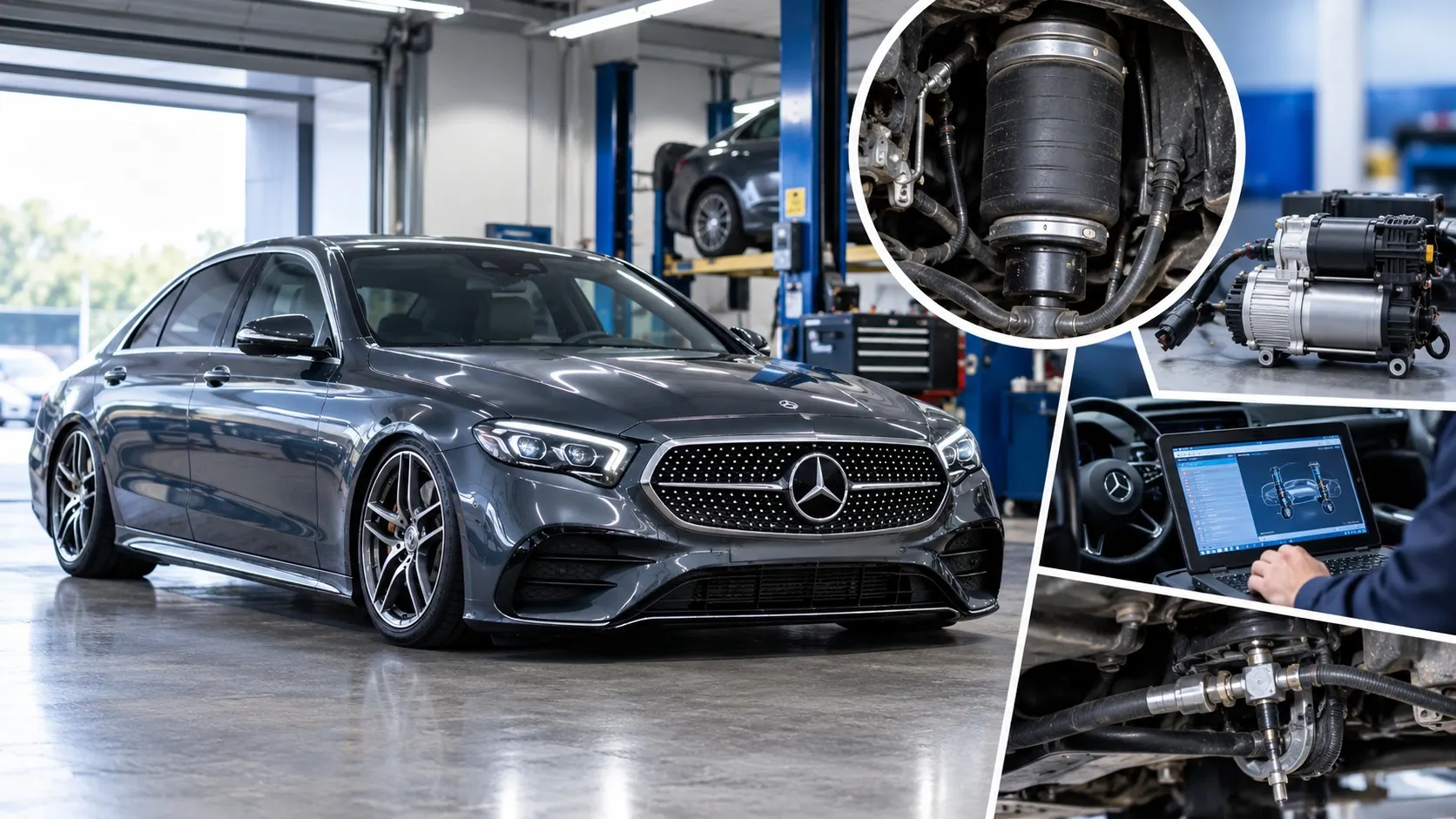
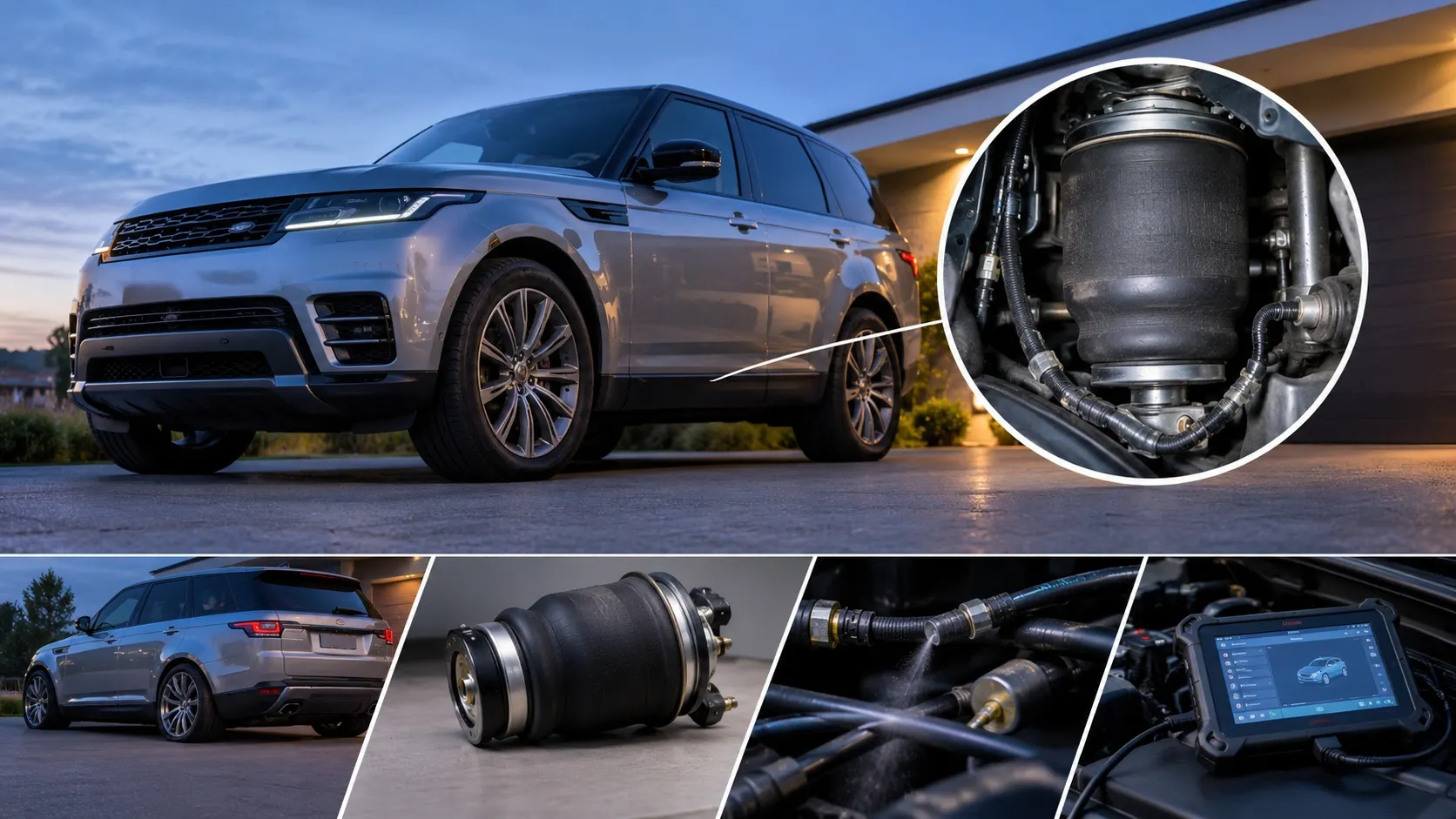
If a Mercedes-Benz fitted with AIRMATIC air suspension doesn't lift off the ground, it can be in a very low position, show a warning on the instrument panel or not lift off the ground even after the engine has been turned on. There are various implications of this problem in terms of ride comfort, vehicle stability and everyday driving.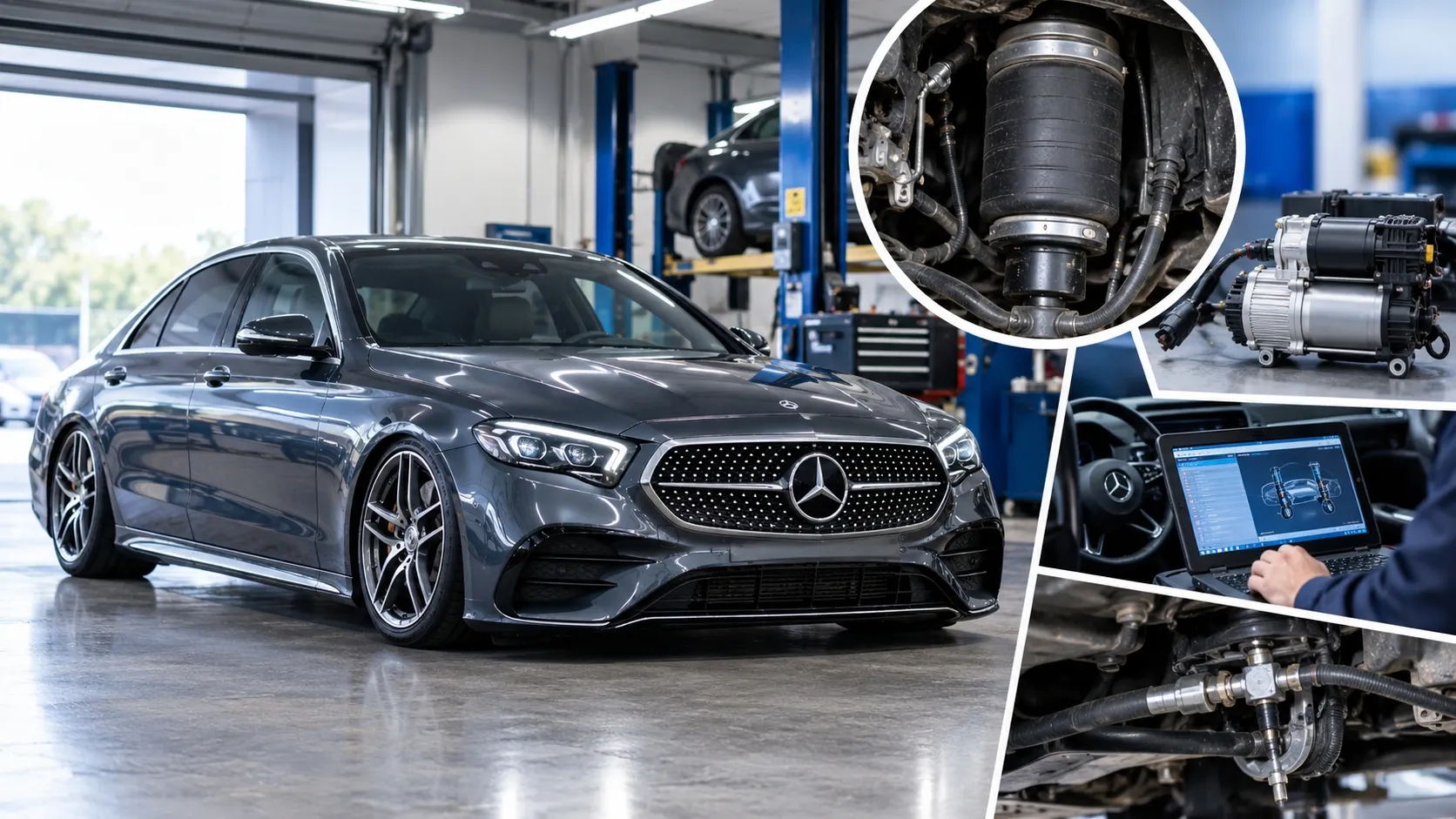
The electronically controlled air suspension parts of the Mercedes AIRMATIC system are responsible for varying ride height and keeping the driving experience comfortable. If one part fails, the system will not be able to raise the car to the proper height.
If your Mercedes AIRMATIC is not rising up, knowing the reason may help you to determine the likely problem, prevent extra parts being replaced and diagnosis it in a timely fashion.
This guide is designed to provide you with an understanding of the most prevalent issues, warning signs, diagnostic procedures, repair options, and maintenance tips associated with Mercedes-Benz AIRMATIC suspension issues.
What Is Mercedes AIRMATIC Air Suspension?
Mercedes-Benz AIRMATIC is an electronically-controlled air suspension system for selected models and model years. It can be seen on different Mercedes-Benz cars, including the S-Class, E-Class, CLS, GLE, GLS and others.
The AIRMATIC suspension features air springs, a compressor, Ride-height sensors, electronic controls, valves and air lines, instead of the traditional steel coil springs.
The system controls the air pressure to lift or lower the vehicle as per its operating conditions and the suspension settings available.
If the system functions properly, it can contribute to the provision of:
-
Adjustable ride height: Raises or lowers the vehicle when supported by the model and driving mode.
-
Improved ride comfort: Helps absorb bumps and uneven road surfaces.
-
Automatic leveling: Maintains appropriate vehicle height under changing load conditions where equipped.
-
Enhanced driving stability: Adjusts suspension behavior according to vehicle conditions and system design.
If your Mercedes AIRMATIC is not rising, one or more components may be unable to generate, distribute, or maintain the required air pressure.
1. Common Reasons Why Mercedes AIRMATIC Is Not Rising
Several faults can prevent the suspension from reaching its normal ride height. The most effective repair approach is to identify the underlying cause before replacing parts.
1.1 Failed or Weak AIRMATIC Compressor
The air suspension compressor supplies compressed air to the system. If the compressor fails, becomes weak, or cannot build sufficient pressure, the vehicle may remain low even when the engine is running.
Common symptoms include:
-
The vehicle does not rise after startup.
-
The compressor runs continuously or makes unusual noises.
-
A suspension malfunction warning appears on the dashboard.
-
The vehicle rises very slowly or only partially.
A failed compressor can result from normal wear, electrical problems, overheating, or excessive operation caused by an air leak elsewhere in the system.
Repair solution: A technician should check the compressor's power supply, electrical connections, operating current, and pressure output. If the compressor is defective, replacement may be necessary. Any underlying air leaks should also be repaired to prevent premature failure of the new unit.
1.2 Leaking Air Springs or Air Struts
Air springs and air struts support the vehicle using compressed air. Over time, rubber components can crack, dry out, or develop leaks.
A leaking air spring is a common reason a Mercedes-Benz sits too low or fails to maintain its ride height.
Typical warning signs include:
-
One corner of the vehicle sits lower than the others.
-
The rear suspension drops overnight.
-
The vehicle rises temporarily but lowers again.
-
The compressor runs more frequently than usual.
Repair solution: A qualified technician can inspect the air springs and struts for cracks, damaged seals, and air leaks. Depending on the design and condition, the faulty air spring or complete strut assembly may need replacement.
1.3 Air Leaks in Lines and Fittings
The compressor may be functioning correctly, yet the vehicle may not rise because compressed air escapes through a damaged line, loose fitting, or leaking connection.
Small leaks can be difficult to identify visually. They may become more noticeable when the suspension is pressurized or when the vehicle remains parked for several hours.
Repair solution: Perform a suitable leak test on the air lines, fittings, valve connections, and air springs. Replace damaged components and verify that the system can build and retain pressure.
1.4 Faulty Valve Block
The AIRMATIC valve block distributes compressed air to the appropriate suspension components. If its internal valves become stuck, leak, or fail electrically, the system may not deliver air where it is needed.
Possible symptoms include uneven ride height, one corner failing to rise, or suspension behavior that does not match the selected ride-height setting.
Repair solution: Test valve operation, electrical connections, and pressure distribution. Replace the valve block if testing confirms an internal or electrical failure.
1.5 Defective Ride-Height Sensor
Ride-height sensors measure suspension position and send information to the control unit. If a sensor or its linkage is damaged, the system may receive incorrect height measurements.
This can cause the vehicle to remain too low, refuse to adjust its height, or display a suspension warning.
Repair solution: Scan the suspension control module for diagnostic trouble codes, inspect sensor linkages and wiring, and compare live sensor readings. Replace a defective sensor and perform any required calibration.
1.6 Electrical or Control Module Problems
AIRMATIC depends on electrical power and electronic control. A weak battery, blown fuse, damaged wiring, poor ground connection, or control-module fault may prevent the compressor or valves from operating correctly.
Repair solution: Check battery voltage, fuses, relays where fitted, wiring, and module communication before assuming that a mechanical component has failed.
2. How to Diagnose Mercedes AIRMATIC Not Rising
A structured diagnostic process helps avoid unnecessary repairs and reduces the risk of replacing expensive components that still work.
Step 1: Check the vehicle's ride height
Observe whether the front, rear, or one individual corner sits lower than normal. Note whether the problem started suddenly or developed gradually.
Step 2: Listen for compressor operation
If the compressor does not run, investigate its electrical supply and control signals. If it runs continuously without raising the vehicle, check for leaks, insufficient output, and valve problems.
Step 3: Scan the AIRMATIC system
Use a compatible diagnostic tool to retrieve suspension fault codes and examine live data. Codes provide useful clues but should be confirmed with physical testing.
Step 4: Test air pressure and inspect for leaks
Check compressor output, air-line integrity, valve operation, and air-spring condition using appropriate workshop procedures.
The exact diagnostic procedure varies by Mercedes-Benz model, year, and suspension configuration. Avoid repeatedly commanding the suspension to rise if the compressor is running continuously or the vehicle remains very low.
3. Can You Drive a Mercedes With AIRMATIC Not Rising?
Driving safety depends on how severely the suspension has failed.
If the vehicle is sitting extremely low, a tire may contact the wheel arch, suspension travel may be restricted, and ground clearance may be insufficient. Handling and braking behavior may also be affected.
If a suspension warning appears alongside severe sagging, unusual noises, or unstable handling, stop in a safe location and arrange professional assistance or towing.
Do not crawl underneath a vehicle supported only by its air suspension. The vehicle can lose height unexpectedly. Properly rated mechanical supports and approved lifting procedures are essential.
4. Mercedes AIRMATIC Repair Cost: What Affects the Price?
The cost of repairing an AIRMATIC system depends on the failed component, vehicle model, labor rates, and whether original-equipment or aftermarket parts are selected.
|
Repair category |
Main cost factors |
|---|---|
|
Compressor replacement |
Compressor type, electrical diagnosis, labor |
|
Air spring or strut replacement |
Component design, axle location, parts quality |
|
Air-line or fitting repair |
Leak location, accessibility, replacement materials |
|
Valve block replacement |
Component price, diagnosis, system testing |
|
Height sensor replacement |
Sensor type, wiring condition, calibration |
|
Electrical repair |
Diagnostic time, wiring, control components |
A minor air-line leak may be relatively inexpensive to repair, while a failed air strut or compressor can cost considerably more. Replacing multiple components without confirming their condition can increase the total bill unnecessarily.
Request a diagnosis that identifies the failed component and explains the test results before approving major repairs.
5. How to Prevent Future AIRMATIC Problems
Although air suspension components wear over time, proper maintenance can help reduce avoidable failures.
-
Inspect the air springs regularly. Look for visible damage, cracking, or unusual deformation.
-
Address overnight sagging early. A vehicle that repeatedly drops while parked may have a leak that places additional demand on the compressor.
-
Investigate compressor noise. Frequent or prolonged operation should not be ignored.
-
Keep the electrical system healthy. Battery and charging-system problems can affect suspension operation.
-
Use model-specific diagnostic procedures. Correct testing helps prevent unnecessary part replacement.
-
Follow proper lifting procedures. Use the manufacturer-approved suspension or lifting mode when applicable and support the vehicle correctly.
6. Frequently Asked Questions
Why does my Mercedes AIRMATIC not rise after starting the engine?
Possible causes include a failed compressor, air leaks, a defective valve block, faulty height sensors, or an electrical issue. Diagnostic testing is needed to determine which component is responsible.
Why does my Mercedes rise in the front but not the rear?
The issue may involve a rear air spring, air line, valve circuit, height sensor, or another component specific to the affected suspension area. A scan and pressure test can help isolate the fault.
Why does my Mercedes AIRMATIC work intermittently?
Intermittent operation may result from a weak compressor, an electrical connection problem, a temperature-related fault, a pressure leak, or inconsistent sensor readings. Record when the issue occurs and check for stored fault codes.
Can a weak battery stop AIRMATIC from rising?
Yes. Low system voltage can interfere with compressor operation or trigger electronic faults. However, a weak battery should not be assumed to be the cause without testing the electrical system and suspension components.
Should I replace the compressor if AIRMATIC is not rising?
Not automatically. A compressor may fail because of wear, but it may also be overworked by leaking air springs or lines. Test compressor performance and inspect the complete air supply system before replacing it.
Conclusion
The compressor is either weak or failed, leaky air springs, broken air lines, a defective valve block, broken ride-height sensors, or electrical issues (most likely).
It is best to recognize the symptoms, obtain a diagnostic code, measure the air pressure, and then determine the damaged parts before deciding on the repair.
The sooner the problem is detected, the less damage will have been done and the better the ride height will be restored. If your Mercedes is low, drops over night and/or shows an AIRMATIC warning, call in a professional inspection instead of driving around with a potentially failing suspension.
Share on Social:


- PREV: BMW X5 Rear Air Suspension Sagging: Causes & Fixes
- NEXT: Null
Contact Us
In This Article
- 1 What Is Mercedes AIRMATIC Air Suspension?
- 2 1. Common Reasons Why Mercedes AIRMATIC Is Not Rising
- 3 2. How to Diagnose Mercedes AIRMATIC Not Rising
- 4 3. Can You Drive a Mercedes With AIRMATIC Not Rising?
- 5 4. Mercedes AIRMATIC Repair Cost: What Affects the Price?
- 6 5. How to Prevent Future AIRMATIC Problems
- 7 6. Frequently Asked Questions
- 8 Conclusion
