


BMW X5 Rear Air Suspension Sagging: Causes & Fixes
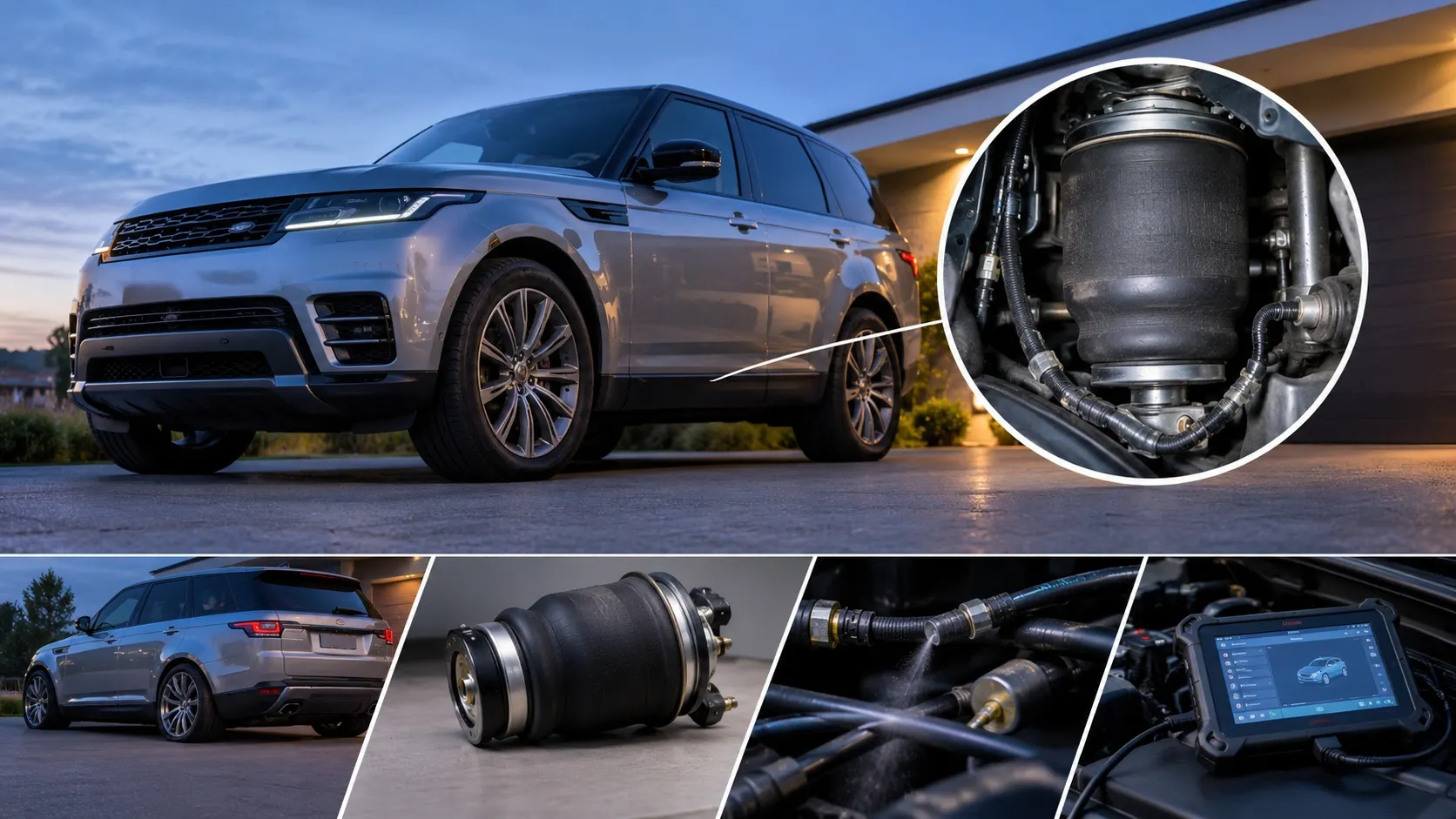
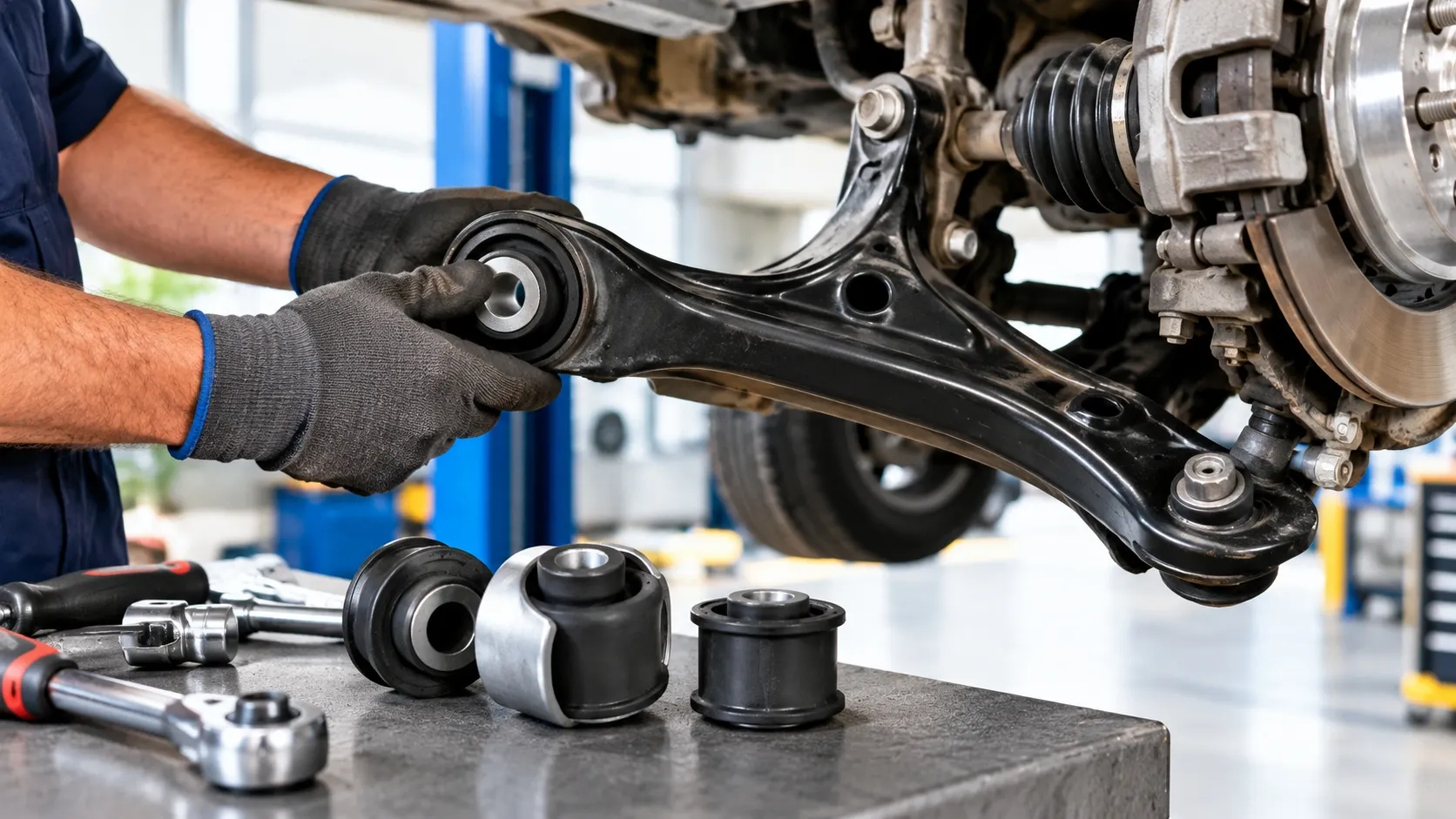
A rear air suspension sagging BMW X5 is a frequent issue that many owners of air suspension-equipped models have. If your BMW X5 rides lower at the back than the front, or one side drops overnight or it takes longer to get back into normal ride height, this could be due to an air spring leak, air suspension compressor failure, damaged air line or air suspension height sensor failure.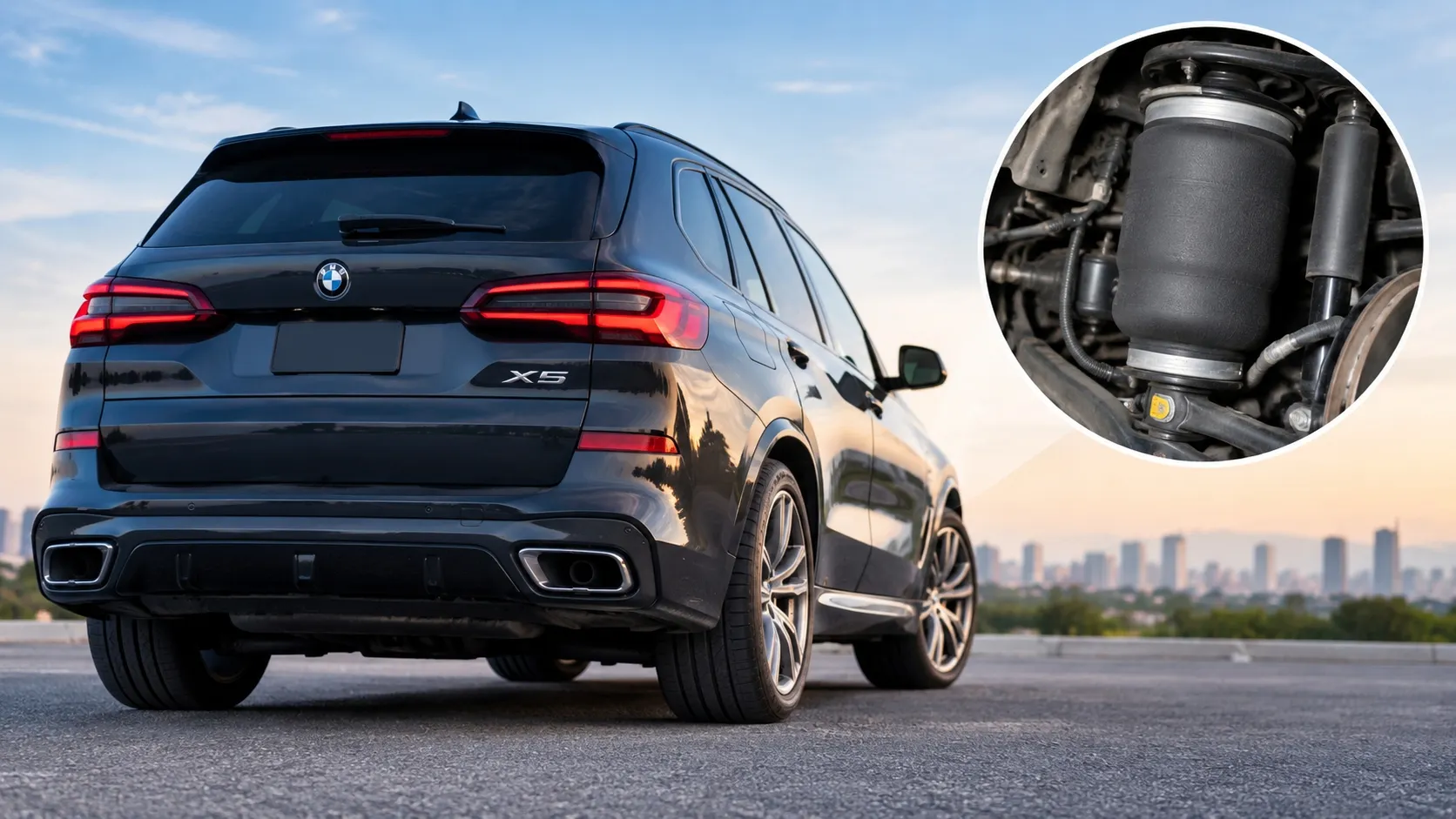
The BMW X5 is designed to provide a balance of comfort, stability, and performance. The air suspension system keeps the vehicle at a proper height according to the load (passenger or cargo) on board and reduces the effects of road irregularities. If a component fails, the vehicle may become unbalanced, lose its ride and steering qualities and change its ride.
BMW X5 owners can benefit from an understanding car sagging in the rear air suspension system to help recognize issues early, prevent unnecessary part replacements and select the right remedy. This guide covers the most common issues, diagnosis, repair and maintenance of BMW X5 rear air suspension problems.
What Causes BMW X5 Rear Air Suspension Sagging?
A combination of parts regulates the correct ride height. It is important to be able to identify the failed component as similar symptoms can be caused by different mechanical or electrical issues.
1. Leaking Rear Air Springs
A leaking air spring is a common potential cause of sagging rear suspension. Air springs are unlike the traditional steel coil springs, because they rely on flexible rubber bellows filled with compressed air instead of coils of steel to hold up the vehicle.
The rubber material will degrade over time due to factors such as changing temperature, road debris, moisture, and repeated suspension movement. Bellows can develop small cracks which permit air leakage.
If a leak is present in the BMW X5 rear air spring you can expect the following symptoms to appear:
-
The rear suspension sits lower after the vehicle has been parked overnight.
-
One rear corner drops more than the other.
-
The suspension rises after the engine starts.
-
The vehicle repeatedly adjusts its ride height.
-
A hissing sound comes from the rear suspension area.
If the vehicle rises after startup but sags again after parking, an air leak should be investigated. However, this behavior alone does not prove that the air spring is defective.
2. Faulty Air Suspension Compressor
Compressed air is provided to the system from the air suspension compressor. The compressor will operate with the valves, air lines and control electronics to maintain the desired ride height depending on the model and system configuration.
If the leak occurs, the compressor might run more often in an effort to make up for the loss of air pressure. Overeheating and increased compressor wear can be caused by long operation times.
If the compressor begins to fail, it can cause the following indications:
-
The rear suspension rises slowly or fails to rise.
-
The vehicle remains lower than its normal ride height.
-
The compressor runs unusually often or for extended periods.
-
A suspension warning appears on the dashboard.
-
Both rear sides remain low.
A compressor fault doesn't always result in the need to replace the compressor itself. Leaky air spring, insufficient air supply, valve malfunction, relay failure or electrical issues may also hinder suspension operation.
Important: If the source of the air leak is to be repaired prior to the installation of the replacement compressor, then the risk of damaging the new compressor is reduced.
3. Damaged Air Lines or Leaking Connections
Compressed air is piped from the compressor through the valve block to the air springs. The system must be tight (airtight) at all connectors and seals to operate properly.
Air lines can deteriorate due to abrasion, corrosion, heat or external forces over time. Air can also leak through other worn or damaged parts.
If there is an air line that has been damaged, it may cause one side of the rear to sag or may cause both sides to lose height or cause the suspension to act unevenly.
Technicians can access connections and can use the appropriate leak detection solution to detect any leaking air. If a leak is hard to spot, special diagnostic equipment might be needed.
4. Faulty Ride Height Sensors
The ride height sensors are used to gauge the position of the suspension and provide information to the electronic control system. This information is used by the system to raise or lower the suspension as needed.
Can be incorrect due to a damaged sensor, worn linkage, loose connector or wiring fault.
Symptoms can be an inconsistent ride height on the back, improper suspension settings, warnings, or not operating as expected.
Technicians should first check the mounting points, linkages, wiring and electrical connections of any sensor before replacing it. Some diagnostic trouble codes and live sensor readings can help identify if the sensor is sending a false reading.
5. Air Suspension Valve Block Problems
The valve block is used for guiding the compressed air to the right air spring and for controlling the pressure distribution. An internal valve that leaks or gets stuck could not maintain the proper height.
Sometimes a valve block problem can be confused for an air spring leak. When the air spring itself is in good condition, for example, one rear corner may gradually drop.
Diagnosis might require isolating suspension components, checking pressure changes and testing valve block as per vehicle service procedures.
How to Diagnose BMW X5 Rear Air Suspension Sagging
Accurate diagnosis helps prevent unnecessary repairs and reduces the chance of replacing a functioning component.
Step 1: Observe the Vehicle's Ride Height
Park the BMW X5 on a level surface and compare the rear ride height on both sides. Check whether the rear suspension is equally low or whether one corner sits noticeably lower.
If possible, compare the vehicle's height after parking with its height before driving. Consistent measurements can help establish whether the suspension is losing air while stationary.
Avoid placing any part of your body beneath a vehicle supported only by its air suspension.
Step 2: Check for Overnight Sagging
An overnight sagging problem often suggests an air leak or a valve that cannot maintain pressure.
Record the vehicle's approximate ride height when parked and inspect it again several hours later. If one side drops significantly, that observation can help narrow down the affected circuit.
However, suspension behavior varies by model, system configuration, temperature, and vehicle condition. Some systems may adjust their height under certain circumstances, so overnight sagging should be confirmed through further testing.
Step 3: Listen to the Compressor
When the system attempts to restore the correct ride height, listen for the compressor operating.
Repeated, prolonged, or unusually loud operation may indicate a leak or a compressor problem. A compressor that does not run could have an electrical fault, a control issue, or a mechanical failure.
Do not repeatedly activate the suspension to force it to rise if the system is clearly malfunctioning.
Step 4: Scan for Diagnostic Trouble Codes
A BMW-compatible diagnostic scanner can retrieve suspension-related fault codes and display relevant live data.
Depending on the model year and system, the codes may point toward compressor operation, ride height sensor signals, electrical circuits, or suspension control faults.
Fault codes should be interpreted alongside physical inspection and system testing. Clearing codes without addressing the underlying problem will not provide a lasting repair.
Step 5: Perform a Leak and Component Test
A qualified technician can inspect the air springs, lines, fittings, and valve block for leaks. Additional tests can evaluate compressor performance, electrical supply, and sensor readings.
The correct procedure depends on the specific BMW X5 generation and suspension configuration.
How to Fix BMW X5 Rear Air Suspension Sagging
The appropriate repair depends on the component responsible for the height loss.
|
Identified problem |
Potential repair |
|---|---|
|
Leaking rear air spring |
Replace the defective air spring |
|
Damaged air line or fitting |
Repair or replace the affected line or connection |
|
Worn or failed compressor |
Test the system and replace the compressor if confirmed defective |
|
Faulty ride height sensor |
Repair wiring or replace the sensor as necessary |
|
Leaking valve block |
Test and replace the defective valve block if required |
|
Electrical or control fault |
Diagnose the circuit, relay, power supply, or control system |
If both rear air springs are old or similarly deteriorated, a technician may recommend replacing them as a pair. This is not necessary in every case, so the decision should be based on their condition, the vehicle's mileage, and the manufacturer's repair guidance.
After certain repairs, the suspension may require a ride height calibration or system initialization. The correct procedure should be followed using equipment suitable for the vehicle.
How Much Does BMW X5 Rear Air Suspension Repair Cost?
The cost of repairing a sagging BMW X5 rear air suspension varies according to the model year, the failed component, the parts selected, and local labor rates.
Replacing an air spring is generally a different repair from replacing a compressor or diagnosing an intermittent electronic fault. Original equipment parts, aftermarket components, and independent BMW specialists may also have different pricing structures.
When requesting a repair estimate, ask the workshop to separate the following items:
-
Diagnostic labor and leak testing.
-
Replacement part and component brand.
-
Labor for installation.
-
Any required calibration or initialization.
-
Additional repairs identified during inspection.
For a meaningful estimate, provide the vehicle's model year, VIN, suspension configuration, and symptoms. A BMW X5 that sags on one side overnight may need a very different repair from one whose entire rear suspension remains low and will not rise.
Avoid choosing a repair solely by the lowest quoted price. Correct diagnosis and suitable replacement parts can help prevent repeat failures and additional compressor damage.
Can You Drive a BMW X5 With Rear Air Suspension Sagging?
Driving with a sagging rear suspension is not recommended until the cause and severity have been assessed.
A vehicle that sits too low may have reduced suspension travel, altered handling, uneven tire loading, or insufficient clearance over bumps. Severe pressure loss can also place additional strain on other suspension components.
If the rear suspension is significantly low, the vehicle is leaning, the tires are close to contacting the bodywork, or a warning indicates a serious suspension fault, stop driving and arrange professional assistance or towing.
Even if the suspension rises temporarily after starting the vehicle, an unresolved leak may cause it to sag again during the journey or after parking.
How to Prevent Future Rear Air Suspension Problems
Air suspension parts naturally wear over time, but proper maintenance will help to ensure that issues are identified early on before they become more serious and costly to repair.
Regularly check on the suspension. Check for uneven ride height, damaged rubber bellows, cracked air lines and loose connections.
Treat compressor overuse problems early. If the compressor is running frequently, it could mean that it has a leak and needs to be fixed.
Use appropriate replacement parts. Choose parts that match the model year and suspension of the vehicle.
Examine the entire system during repairs. If an air spring is broken, check the compressor, valve block and air lines for associated damage when replacing the air spring.
Provide proper service procedures. The calibration, pressure testing and electronic diagnostics should be carried out as specified in the relevant BMW service information.
Frequently Asked Questions
Why does my BMW X5 rear suspension drop overnight?
The most probable causes are a leaking air spring, an air line leak or a valve block that does not maintain pressure. A system leak test is important to determine the actual cause.
Why does my BMW X5 rear suspension rise when I start the engine?
Suspension system might be equalizing the ride height when the vehicle is parked and air has been lost. If the wheels keep dropping back during the night and lifting up upon start-up, check air springs, lines, valves and compressor.
Can a bad battery cause BMW X5 air suspension problems?
Yes. If the voltage in the system is too low or there is voltage fluctuation, it will affect the compressor operation and the suspension control. But a weak battery is not the culprit in all instances of overnight sagging, so air leaks must also be checked.
Should both rear air springs be replaced together?
If both are showing signs of deterioration due to age it may be prudent to replace them both, but this is not always the case. The condition of both springs should be evaluated by a technician and the advantages and disadvantages of replacing one versus both should be discussed.
Does every BMW X5 have rear air suspension?
Suspension equipment is different among the generations, model variant, market and optional packages. Before ordering parts, verify the equipment of the vehicle with its VIN or by using reliable vehicle specifications.
Conclusion
The causes of BMW X5 rear air suspension sagging are leaking air springs, damaged air lines, compressor failure, failure of the air suspension height sensors, or valve block issues. The best place to begin is to see if one tail end or both are sagging, if the vehicle is dropping in place and if the compressor can lift it to the correct height.
Diagnosis is a combination of physical inspection, leak test, electronic fault code analysis and component test. Substituting parts without diagnosis can not only cause the repair to be more expensive, but can also perpetuate the problem.
The BMW X5 owners who are aware of their vehicle's ride height and understand that they need to make this a habit early on in the car's life can help save the suspension system, keep their car stable, and sidestep more comprehensive repairs. If the vehicle is sitting much lower than normal or there is a significant warning for the suspension, schedule an inspection by a professional before driving it any further.
Share on Social:


- PREV: Air Suspension Leaking Overnight: Causes and Fixes
- NEXT: Null
Contact Us
In This Article
- 1 What Causes BMW X5 Rear Air Suspension Sagging?
- 2 How to Diagnose BMW X5 Rear Air Suspension Sagging
- 3 How to Fix BMW X5 Rear Air Suspension Sagging
- 4 How Much Does BMW X5 Rear Air Suspension Repair Cost?
- 5 Can You Drive a BMW X5 With Rear Air Suspension Sagging?
- 6 How to Prevent Future Rear Air Suspension Problems
- 7 Frequently Asked Questions
- 8 Conclusion
