


Air Suspension Height Sensor Calibration: Complete Guide
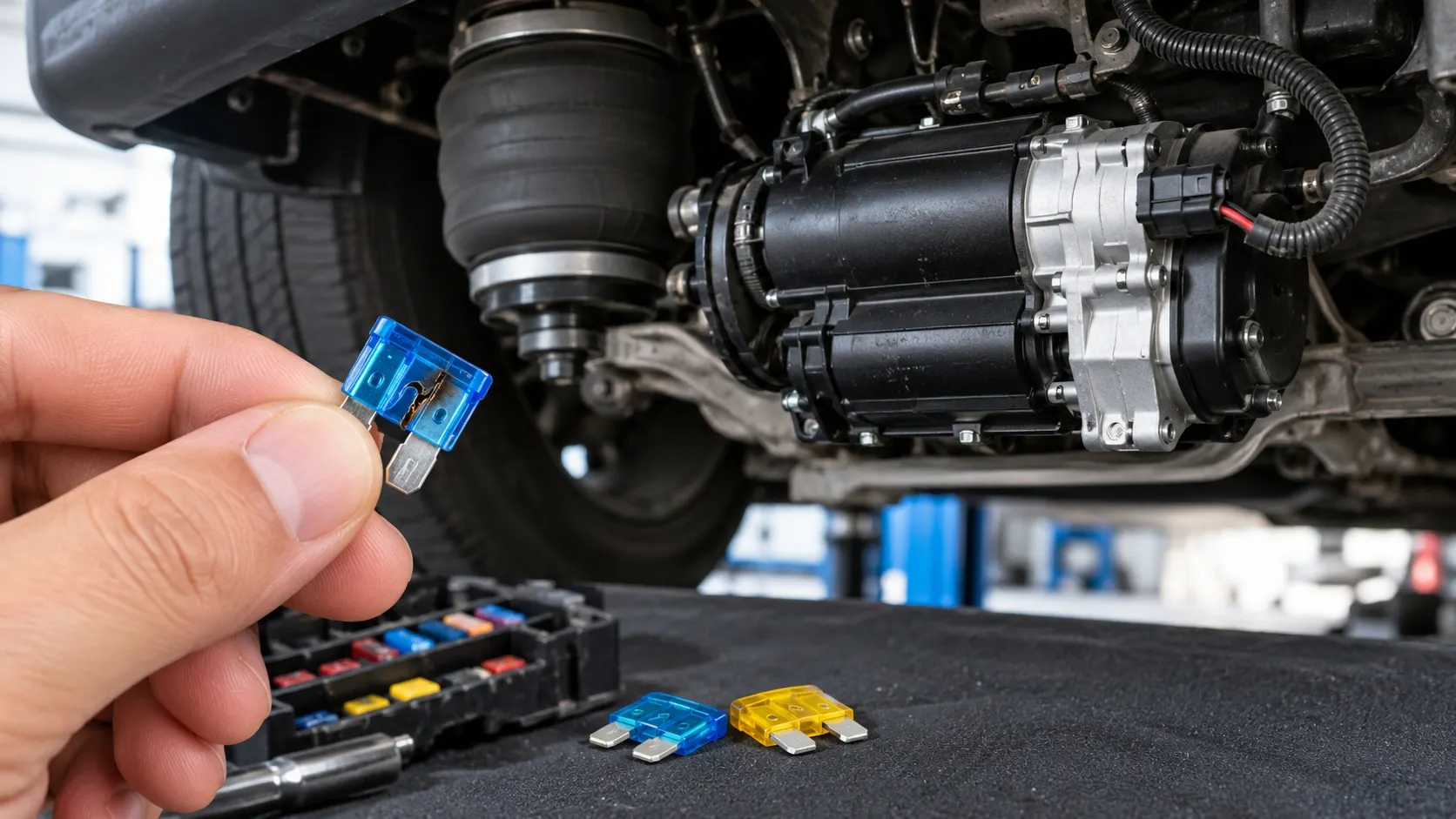
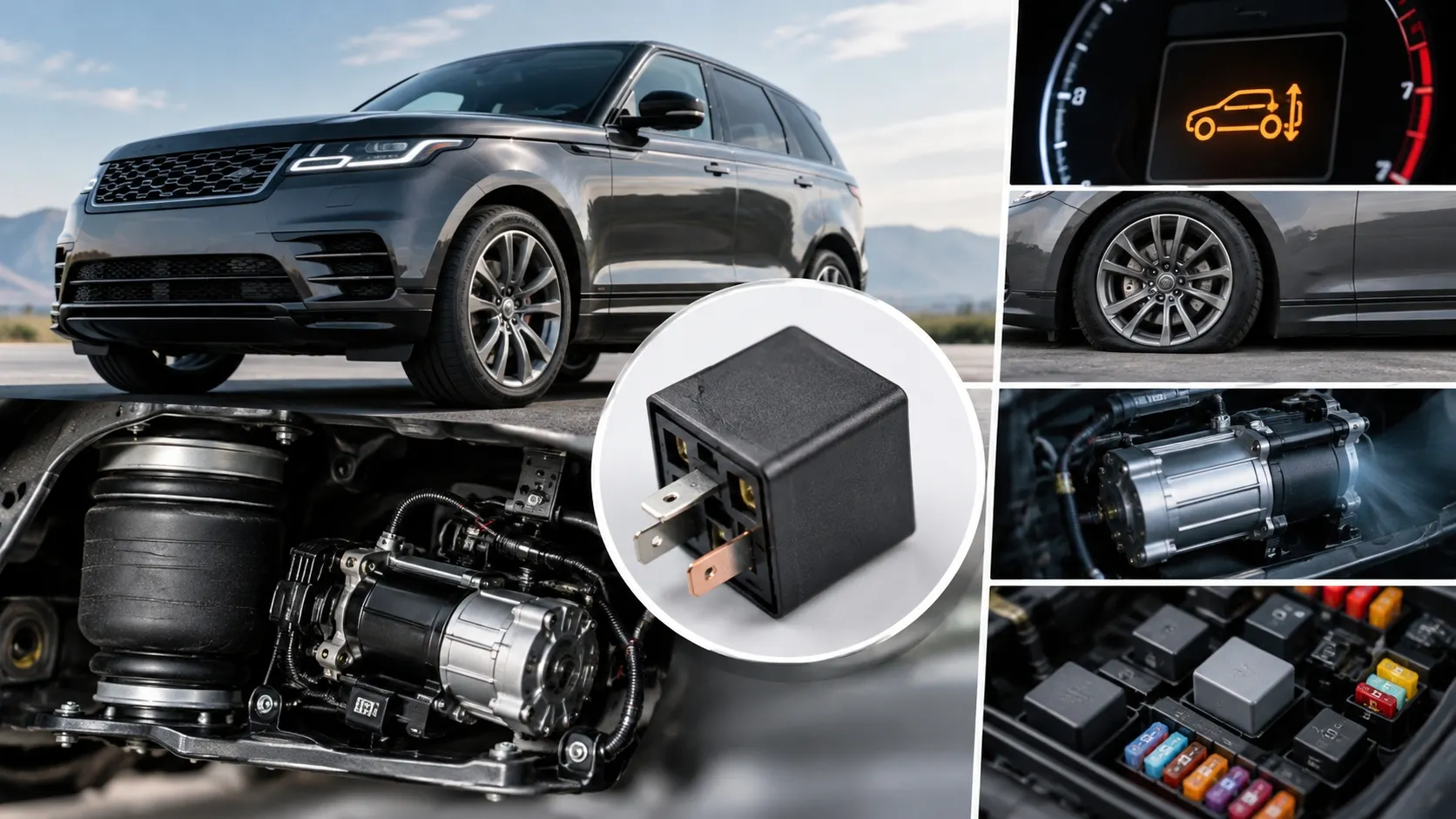
The air suspension system is often used in luxury cars, SUVs, trucks, buses, and more as a means to adjust the ride height, increase comfort, and maintain vehicle stability. The critical part in such systems is the air suspension height sensor. It records the gap between the suspension or axle and the vehicle body to enable the electronic control unit (ECU) to ensure a proper suspension height.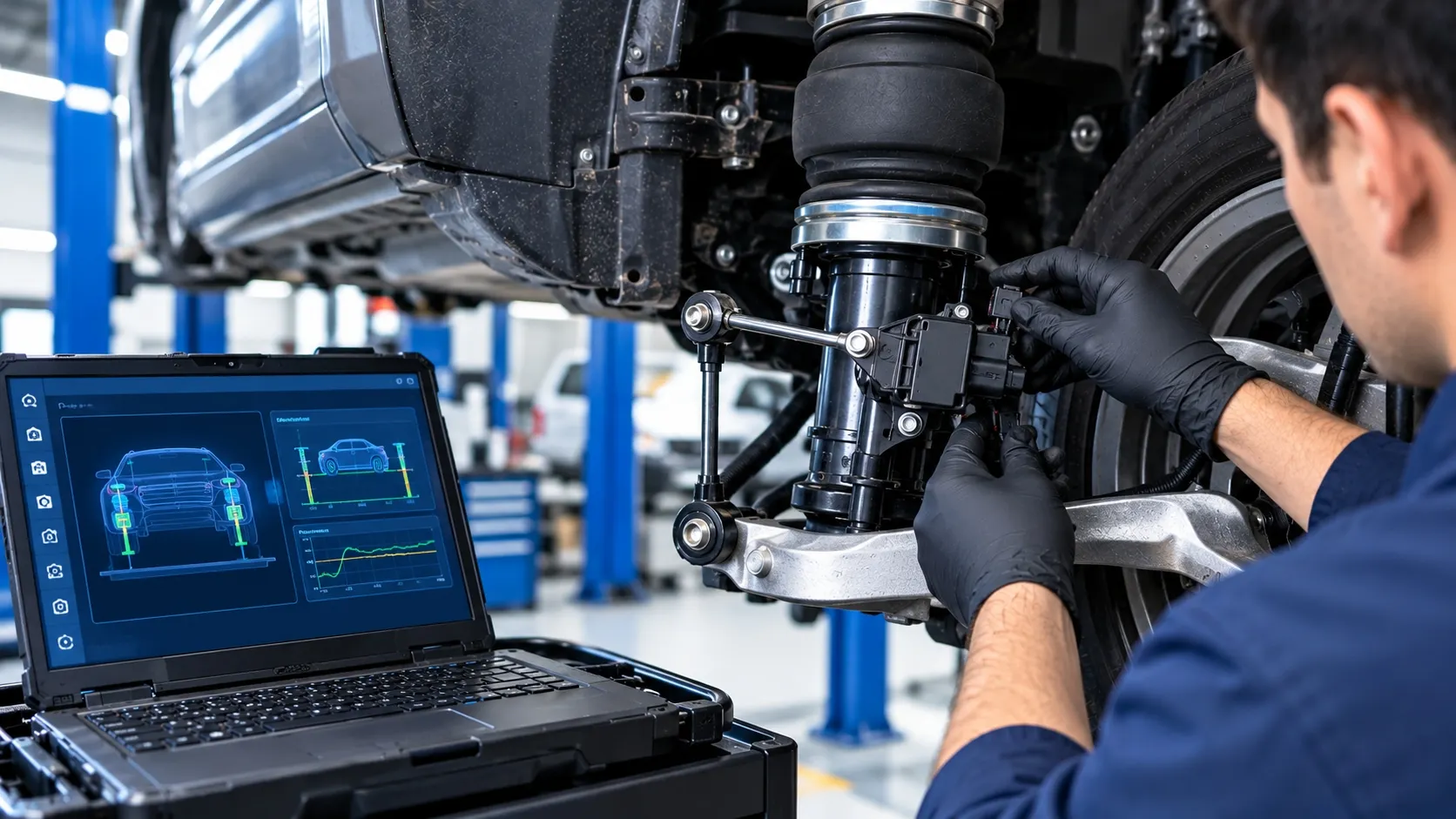
Air suspension height sensor calibration means the adjustment of the air suspension sensors to ensure that the readings from the sensor are the same as the actual position of the vehicle air suspension. Correct calibration ensures the vehicle is always at the correct height, enhances suspension performance and allows the compressor to operate as needed and maintains proper vehicle alignment.
One of the areas that might need to be explored is sensor calibration if a vehicle is too high or too low, if it shows an air suspension warning light, or if it is not maintaining the ride height that it was set to. But symptoms can also be caused by air leaks, sensor failure, faulty wiring, broken linkages and compressor issues.
The guide describes what air suspension height sensor calibration is, its need, how to do it and troubleshooting some common problems.
What Is an Air Suspension Height Sensor?
Air suspension height sensor is an electronic component which detects the relative position between the vehicle body and the air suspension. It transmits position information to the suspension control module to enable it to adjust air pressure in the air springs as appropriate.
The majority of height sensors are located next to the suspension arms, axles or vehicle chassis. The sensor is attached to a moving linkage to a suspension component. This linkage movement causes the corresponding electrical signal in the movement of the suspension up or down.
The most common air suspension height sensors are:
-
Rotary position sensors: Measure angular movement through a rotating arm and internal sensing element.
-
Hall-effect sensors: Use magnetic fields to detect position without relying on a traditional resistive contact.
-
Contact-based position sensors: Convert mechanical movement into a changing electrical signal.
The sensor type and calibration procedure vary by vehicle manufacturer and suspension design.
When the height sensor reports that the vehicle is below its target height, the control system may activate the compressor and open the appropriate valve to inflate the air springs. When the vehicle is too high, the system may release air through its valve block.
Accurate sensor readings are therefore essential for proper automatic ride-height control.
Why Is Air Suspension Height Sensor Calibration Important?
Correct calibration establishes the relationship between sensor output and the vehicle's specified ride height. Without this relationship, the control module may interpret the vehicle's position incorrectly.
1. Maintain the Correct Ride Height
Calibration helps the suspension system maintain the height specified by the manufacturer. Incorrect settings may cause one corner or an entire axle to sit too high or too low.
2. Improve Driving Stability
Ride height affects suspension geometry, vehicle balance, and handling characteristics. Incorrect height can influence alignment and vehicle stability, particularly in vehicles with electronically controlled suspension.
3. Reduce Unnecessary Compressor Operation
If the control module receives inaccurate position data, it may repeatedly attempt to correct a ride-height problem that does not actually exist. Correct calibration can help prevent this behavior when calibration is the underlying cause.
4. Support Load-Leveling Performance
Many commercial vehicles and SUVs use air suspension to compensate for changing passenger or cargo loads. Accurate height measurements allow the system to adjust the air springs appropriately.
5. Prevent Calibration-Related Fault Codes
Some vehicles store suspension fault codes when sensor values fall outside expected ranges or when a calibration routine cannot be completed. Correct calibration may resolve faults caused by incorrect reference values, although hardware or pneumatic faults must be repaired separately.
When Should You Calibrate an Air Suspension Height Sensor?
Air suspension height sensor calibration is not always required during routine maintenance. It is generally recommended when a repair, component replacement, or diagnostic result indicates that the stored ride-height reference values may be incorrect.
Common situations include:
-
Replacing a height sensor: A new sensor may require calibration or initialization before the control module can interpret its output correctly.
-
Replacing air springs or suspension components: Changes to suspension geometry or ride height may require the manufacturer's specified calibration procedure.
-
Performing suspension repairs: Removing or reinstalling sensor linkages, control arms, or mounting brackets can affect sensor positioning.
-
Adjusting vehicle ride height: Some vehicles require recalibration after approved ride-height changes.
-
Receiving suspension fault codes: Diagnostic trouble codes related to implausible height readings or calibration errors may indicate a need for further testing.
-
Experiencing uneven ride height: If the vehicle remains uneven after checking for air leaks and mechanical damage, sensor calibration may be appropriate.
Always consult the vehicle's service manual before beginning calibration. Some vehicles support electronic calibration through a diagnostic tool, while others require additional mechanical adjustments or manufacturer-specific procedures.
How to Calibrate an Air Suspension Height Sensor
The exact procedure varies between manufacturers and models. The following steps describe a general workflow for vehicles that support electronic ride-height calibration.
Step 1: Park the Vehicle on Level Ground
Park the vehicle on a flat, stable surface. Apply the parking brake and follow the manufacturer's instructions for preparing the suspension system.
Remove unnecessary cargo and ensure that tire pressures, loading conditions, and other factors affecting ride height meet the specified requirements.
If the vehicle must be raised, use appropriate lifting equipment and approved support points. Never work beneath a vehicle supported only by an air suspension system or an unsupported jack.
Step 2: Inspect the Suspension System
Before calibrating the sensor, inspect the relevant components.
Check for:
-
Damaged or disconnected sensor linkages.
-
Loose mounting brackets or fasteners.
-
Corroded connectors or damaged wiring.
-
Cracked air springs or leaking air lines.
-
Faulty compressor operation or valve-block problems.
-
Signs of suspension damage or incorrect component installation.
Calibration cannot reliably correct a broken linkage, defective sensor, or leaking air spring. Resolve these issues before proceeding.
Step 3: Connect a Compatible Diagnostic Tool
Connect a vehicle-compatible diagnostic scanner to the diagnostic port. Depending on the vehicle, the tool may need access to the suspension control module rather than only the engine control module.
Read and record any existing diagnostic trouble codes. Review live sensor data to determine whether the reported height values are plausible.
Some vehicles display sensor voltage or position counts, while others provide calculated ride-height measurements.
Step 4: Enter the Calibration Mode
Navigate to the appropriate suspension service function. It may be labeled Ride Height Calibration, Height Sensor Calibration, Suspension Leveling, or ECU Initialization.
Follow the diagnostic tool's instructions carefully. Some systems require the suspension to be placed in a specific operating mode before calibration can begin.
Do not select a generic procedure solely because the menu name appears similar. The correct function depends on the vehicle and control module.
Step 5: Measure the Actual Ride Height
Many calibration procedures require manual measurements from designated reference points.
The manufacturer may specify measurements from the wheel center to the fender edge, from the axle to the chassis, or between other defined suspension reference points.
Use the exact reference points, units, loading conditions, and target values specified in the service documentation. Record the measurements for each required wheel or axle.
Accurate measurements are important because incorrect reference values can cause the system to maintain the wrong ride height.
Step 6: Enter the Calibration Values
Enter the measured values into the diagnostic tool when prompted. Some systems instead guide the technician through raising or lowering each corner to a specified position.
Allow the control module to store the calibration values and complete any initialization sequence. Avoid disconnecting the diagnostic tool or interrupting the process unless the manufacturer's instructions require it.
Step 7: Verify the Calibration
After the calibration routine finishes, check for confirmation that the procedure completed successfully.
Clear fault codes only after recording them and addressing their underlying causes. Recheck live sensor readings, command the permitted suspension height settings, and confirm that the vehicle reaches the specified positions.
Finally, verify that the vehicle remains level and that no new suspension warnings appear.
Common Air Suspension Height Sensor Calibration Problems
Calibration may fail even when the diagnostic tool is connected correctly. Understanding the possible causes helps technicians avoid unnecessary parts replacement.
|
Problem |
Possible cause |
Recommended action |
|---|---|---|
|
Calibration will not start |
Incorrect procedure or unmet prerequisites |
Check service instructions and diagnostic conditions |
|
Vehicle remains uneven |
Air leak, mechanical fault, or incorrect reference values |
Inspect the suspension and verify measurements |
|
Sensor readings are unstable |
Damaged wiring, loose linkage, or defective sensor |
Test the electrical circuit and mechanical connection |
|
Calibration repeatedly fails |
Values outside the permitted range or unresolved faults |
Review fault codes and manufacturer specifications |
|
Compressor runs continuously |
Air leak, control fault, or inaccurate height feedback |
Diagnose the pneumatic and electronic systems |
|
Warning returns after calibration |
Underlying fault remains unresolved |
Perform a complete suspension diagnostic check |
These symptoms are not conclusive proof of a calibration problem. A systematic diagnosis is more reliable than repeatedly running the calibration routine.
Can You Calibrate an Air Suspension Height Sensor Yourself?
In some cases, yes. A technically capable vehicle owner may be able to perform calibration with a compatible diagnostic tool, accurate measuring equipment, and the correct service instructions.
However, calibration is not universally a simple do-it-yourself task. Some vehicles require manufacturer-specific software, advanced diagnostic access, or additional procedures involving the compressor and valve block.
Professional service is advisable when the vehicle has persistent suspension warnings, severe height differences, damaged components, or a calibration routine that repeatedly fails.
Safety is particularly important when working with air suspension systems. Air springs and associated components can contain pressurized air, and the vehicle may change height unexpectedly. Follow all specified depressurization, lifting, and support procedures.
How Often Should Air Suspension Height Sensors Be Calibrated?
There is no universal calibration interval for every vehicle. Many systems do not require periodic recalibration unless a repair, adjustment, or diagnostic condition makes it necessary.
Follow the manufacturer's maintenance schedule and service recommendations. If the suspension operates normally and the control module reports no relevant faults, routine calibration may not be needed.
After sensor replacement or suspension work, verify whether calibration is required rather than assuming every repair demands the same procedure.
Frequently Asked Questions
Does air suspension height sensor calibration require a scan tool?
Many modern vehicles require a compatible diagnostic scanner to access the suspension control module and save calibration values. Some systems use alternative procedures, so the vehicle's service documentation should determine the correct method.
Can a bad height sensor cause the vehicle to sag?
Yes. A defective sensor or damaged linkage can provide incorrect height information, potentially causing improper suspension adjustments. However, sagging is also commonly associated with leaking air springs, air lines, or valve components.
Will calibration fix an air suspension warning light?
It may resolve a warning caused by incorrect calibration values. It will not repair a failed sensor, electrical fault, air leak, defective compressor, or other hardware problem.
Is height sensor calibration the same as wheel alignment?
No. Height sensor calibration establishes the relationship between sensor readings and the suspension's ride height. Wheel alignment adjusts parameters such as toe, camber, and caster. Suspension repairs may require both procedures, depending on the vehicle manufacturer's instructions.
How long does calibration take?
The calibration routine itself may take only a few minutes on some vehicles. Inspection, fault diagnosis, accurate measurements, and verification can take considerably longer. The total time depends on the vehicle, diagnostic requirements, and condition of the suspension.
Conclusion
Accurate ride height control, consistent vehicle leveling and reliable suspension operation are all reasons why air suspension height sensor calibration is an important service procedure for the vehicle. Calibration can help restore normal system functioning after qualifying repairs or adjustments, by ensuring that the correct reference values are sent to the control module.
The best method is to check the suspension first, identify any faults or problems and follow the manufacturer's instructions for calibration and confirm the outcome. Correct calibration should not be considered a replacement for defective components, but rather as part of a complete diagnostic process.
Car owners, auto repair shops, and automotive service technicians will benefit from knowing how to perform air suspension height sensor calibration, as it makes troubleshooting easier, fewer parts are replaced, and the vehicle's suspension system performs better.
Share on Social:


- PREV: Air Suspension Compressor Fuse Keeps Blowing: Causes & Fixes
- NEXT: Null
Contact Us
In This Article
- 1 What Is an Air Suspension Height Sensor?
- 2 Why Is Air Suspension Height Sensor Calibration Important?
- 3 When Should You Calibrate an Air Suspension Height Sensor?
- 4 How to Calibrate an Air Suspension Height Sensor
- 5 Common Air Suspension Height Sensor Calibration Problems
- 6 Can You Calibrate an Air Suspension Height Sensor Yourself?
- 7 How Often Should Air Suspension Height Sensors Be Calibrated?
- 8 Frequently Asked Questions
- 9 Conclusion
